3 Days in Buenos Aires: A First-Time Itinerary
What can you realistically see in 3 days in Buenos Aires?
Three days is enough for a first, well-paced loop through the historic Microcentro, the antique-market barrio of San Telmo, and the leafier Palermo and Recoleta districts. It is not enough to cover the whole city — La Boca, Tigre, the pampas and Uruguay are better saved for a return trip or extra days.
Three days is not enough to see all of Buenos Aires — a capital this size, spread across dozens of distinct barrios, simply does not compress into a long weekend. What three days can give a first-time visitor is a well-paced loop through the city’s core: the historic centre, one classic barrio south of it, and the greener, more residential districts to the north. Everything below is reachable by Subte, by colectivo with a SUBE card, or on foot — no car, ever.
This itinerary assumes you are based somewhere central, ideally in or near Palermo, Recoleta or San Telmo, and that you arrive with your SUBE card already sorted or plan to buy one on day one. If your visit spans a Sunday, read the note under Day 2 before you lock the order of days.
If you’re flying in, budget time for the transfer before Day 1 properly begins: most international flights land at Ezeiza (EZE), roughly 40 minutes to an hour from the centre depending on traffic, while some regional and domestic routes use the closer Aeroparque (AEP) near Palermo. See the airport transfer guide for how to get from either one into the centre before you start ticking off Day 1.
Day 1: Microcentro and the Historic Centre
Start at the political and historic heart of the city: Plaza de Mayo, flanked by the pink Casa Rosada (the presidential palace) and the colonial-era Cabildo. A short walking tour of Plaza de Mayo puts these buildings in context before you push on into the Microcentro, the dense grid of banks, theatres and pedestrian shopping streets that forms downtown Buenos Aires.
Mid-morning, detour to the Teatro Colón, one of the world’s great opera houses. Unless you have booked an evening performance, the way in is a daytime guided tour, not a show — the two are sold and priced separately, so decide which one you actually want before arriving. See the Teatro Colón visitor guide for how the tour and the performance calendar work.
For lunch, stay in the Microcentro or walk toward Avenida Santa Fe for El Ateneo Grand Splendid, a former 1919 theatre converted into a bookshop — free to enter and worth ten minutes even if you buy nothing, though it is a shop rather than a monument, so keep the stop short. Round off the afternoon with a half-day city tour if you’d rather have the layout explained than puzzle it out from a map.
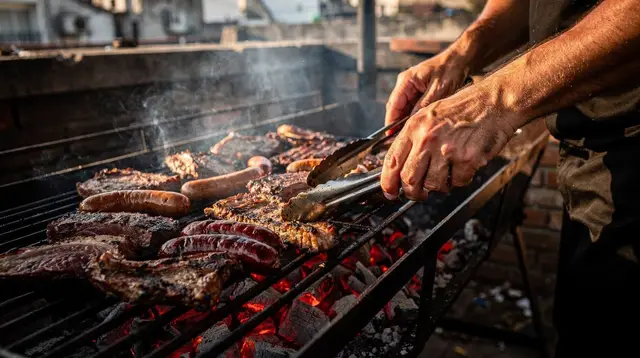
For a properly Argentine lunch rather than a quick bite, a parrilla — a grill restaurant built around beef cooked slowly over wood or coals — is worth seeking out even on this first, busiest day; the best parrillas near San Telmo list doubles as a preview of tomorrow’s barrio if you’d rather eat there instead of in the Microcentro.
In the evening, this is the natural night for a tango show: the dinner-and-show houses are the polished, visitor-facing version of tango, distinct from the social dance halls (milongas) you’ll hear about elsewhere on this site. A convenient option close to downtown is an evening tango show with dinner near the centre, which bundles the performance with a proper sit-down meal — useful on a first night when you don’t yet know the city’s restaurant scene.
Overnight in or near the Microcentro, or head back toward Palermo/Recoleta if that’s your base — either works for tomorrow’s plan.
Day 2: San Telmo (and Its Sunday Feria, If the Calendar Allows)
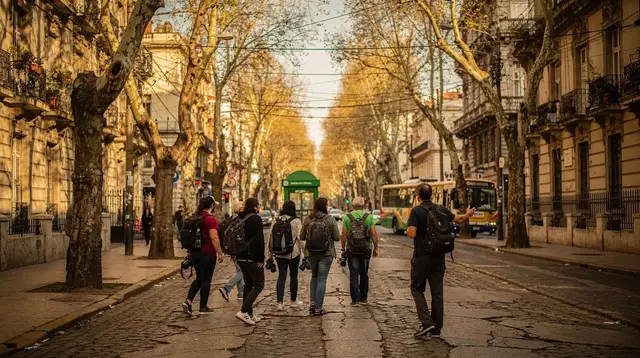
San Telmo is Buenos Aires’ oldest residential barrio, all cobbled streets, antique shops and tango bars. Its character changes completely depending on the day of the week: on Sundays, Defensa street and Plaza Dorrego fill with the Feria de San Telmo, a sprawling antiques-and-crafts street fair with tango dancers performing for tips. On any other day, the fixed antique shops and the Mercado de San Telmo food market are open, but the street fair itself is not — check your dates and, if you have any flexibility in ordering these three days, put San Telmo on a Sunday.
A San Telmo walking tour is the efficient way to see the barrio’s layout, its 19th-century mansions-turned-tenements, and its market in one loop; a guided option covering the history alongside the bars and tango scene is a walking tour through San Telmo’s history, bars and tango culture. Break for lunch at the Mercado de San Telmo or one of the barrio’s parrillas.
If your day does not land on a Sunday, don’t force the feria — instead spend the afternoon at the permanent antique shops along Defensa, or extend south briefly toward the edges of La Boca if you’re comfortable staying on the tourist strip in daylight (that neighbourhood deserves its own dedicated half-day, which this three-day loop deliberately leaves out).
In the evening, San Telmo has its own concentration of tango venues distinct from the dinner-show circuit downtown — worth an evening stroll through Plaza Dorrego even without booking anything further.
If you’d rather sit down than just stroll, San Telmo’s bar scene runs from old-school boliches to newer craft-beer spots — the San Telmo bars guide covers both, and pairs naturally with the barrio’s tango-heavy evenings.
Day 3: Palermo and Recoleta
The final day shifts north to the greener, more residential half of the city. Start in Recoleta, Buenos Aires’ most formal barrio, home to the Recoleta Cemetery — a walled city of elaborate mausoleums where Eva Perón (“Evita”) is buried in the Duarte family vault, not in a monument of her own, and easy to walk past without noticing unless you follow the signage.
Entry is ticketed for non-residents; see the Recoleta Cemetery guide equivalent for the barrio, the Recoleta Cemetery walking tour, or join a guided walk through Recoleta’s Belle Époque streets and cemetery for context on the architecture and the families behind it.
From Recoleta, it’s a short hop into Palermo, the largest and most varied barrio on this loop: the Bosques de Palermo parks for a green, open-air break, and the Palermo Soho and Palermo Hollywood districts for boutiques, street art and restaurants. A guided option that frames the barrio’s design and food scene is a Palermo Soho walking tour covering its design shops, street art and food culture. Lunch or an early dinner here rounds off the trip on a more relaxed note than the first two, busier days.
If you have any energy left and want one guided thread tying the historic and residential sides of the city together, a combined half-day tour linking La Boca, Recoleta and the Obelisk works well as either a substitute for parts of Day 1 or a wrap-up overview on Day 3, since it touches barrios from both ends of this itinerary.
Palermo is also the easiest barrio on this loop for a hands-on food experience: if a sit-down lunch feels too passive for your last afternoon, an empanadas cooking class in Palermo or an asado masterclass in the same neighbourhood turns the meal itself into the afternoon’s activity rather than just its ending.
How to Adapt This Itinerary
This order works well for a solo traveller or a couple with average stamina, but it isn’t the only valid sequence. Travelling with children tends to go more smoothly if Day 3’s parks come first, before fatigue sets in — see the Buenos Aires with kids guide for barrio-by-barrio notes on what works for families. If you’d rather have someone else handle the logistics of all three days, a private Buenos Aires tour can be built around this same route with a driver and guide, which is worth considering if you’re short on time or travelling with mixed interests in the group.
Returning visitors who have already done a version of this loop are usually better served by skipping straight to what’s genuinely missing from it — La Boca, a football match, or a day beyond the city limits — rather than repeating the Microcentro or Recoleta a second time. The five-day itinerary folds those extras into the same base loop rather than requiring a second, separate trip plan.
What This Itinerary Deliberately Leaves Out
Three days covers a genuine first loop, not the whole city. La Boca and Caminito deserve their own half-day rather than a rushed add-on; the football stadiums (La Bombonera and El Monumental) reward a dedicated stadium tour; and anything beyond the city limits — Tigre and the Paraná Delta, the pampas around San Antonio de Areco, or a day trip across the river to Colonia del Sacramento — needs a fourth day at minimum. If you have more time, see the five-day Buenos Aires essentials itinerary or the one-week complete itinerary for how those pieces fit in.
Practical Notes for These Three Days
| Day | Focus | Main transport |
|---|---|---|
| 1 | Plaza de Mayo, Microcentro, Teatro Colón | Subte / walking |
| 2 | San Telmo (feria if Sunday) | Subte / colectivo |
| 3 | Recoleta, Palermo | Subte / colectivo / walking |
All three days run entirely on the Subte, colectivo buses, and walking — buy a SUBE card on arrival, since drivers do not accept cash fares. Dinner in Buenos Aires runs late, rarely starting before 21:00, so don’t be surprised if restaurants look empty at 19:00.
First-Time Buenos Aires: Frequently Asked Questions
Is 3 days enough to see Buenos Aires?
Three days is enough for a solid first look at the historic centre, San Telmo and the Palermo/Recoleta area, but not for the whole city. Neighbourhoods like La Boca, the football stadiums, and anything outside the city (Tigre, the pampas, Uruguay) need extra days.
Do I need a car for this itinerary?
No. All three days are designed around the Subte, colectivo buses with a SUBE card, and walking. A car adds nothing in central Buenos Aires and complicates parking.
Should I visit San Telmo on a Sunday?
If your schedule allows it, yes — the Feria de San Telmo street fair only runs on Sundays, filling Defensa street and Plaza Dorrego with antiques stalls and street tango. On other days, San Telmo’s permanent shops and market are still open, just without the fair.
Can I see La Boca and Caminito in these 3 days?
Not comfortably within this particular loop. La Boca is best visited as its own half-day, in daylight, sticking to the Caminito/Vuelta de Rocha tourist strip rather than tacked onto an already full day.
What’s the difference between the tango show on Day 1 and San Telmo’s street tango?
The Day 1 recommendation is a dinner-and-show house — a polished, ticketed evening aimed at visitors. The tango you’ll see for tips in San Telmo’s Plaza Dorrego, typically on Sundays, is street performance, a different and more informal experience entirely.
Is the Recoleta Cemetery free to enter?
No, entry is ticketed for non-residents, and prices and hours have changed more than once — check current details before you go rather than assuming a fixed price.
Where should I stay for this itinerary?
Palermo, Recoleta or San Telmo all work well as a base, since each puts you close to at least one full day of this loop. See the neighbourhood guide to where to stay for a fuller comparison.
What should I do if I only have one extra day to add?
Add La Boca and Caminito, or a day trip to Tigre and the Paraná Delta — both are compact enough to fit into a single additional day without extending into an overnight trip.
How do I get from the airport to the city centre?
It depends which airport you land at: Ezeiza (EZE) handles most international flights and sits roughly 40 minutes to an hour from downtown, while Aeroparque (AEP) is closer in and mostly used for domestic and regional routes. See the EZE vs AEP guide if you’re choosing between connecting flights, or the airport transfer guide for how to book the ride itself.
Is Buenos Aires safe for a first-time visitor doing this itinerary?
The barrios in this itinerary — Microcentro, San Telmo, Palermo and Recoleta — are among the most visited and well-patrolled in the city, and are safe for normal daytime and evening tourist activity with the usual precautions (watch your phone and bag on the Subte, avoid empty streets late at night). See the Buenos Aires safety guide for a fuller picture beyond this three-day loop.
Trip Planning
Verified deep-linked GetYourGuide tours. Book through these links and we earn a small commission at no cost to you.
GetYourGuide does not provide a product photo for this activity — the image shows the meeting point, photographed by us.