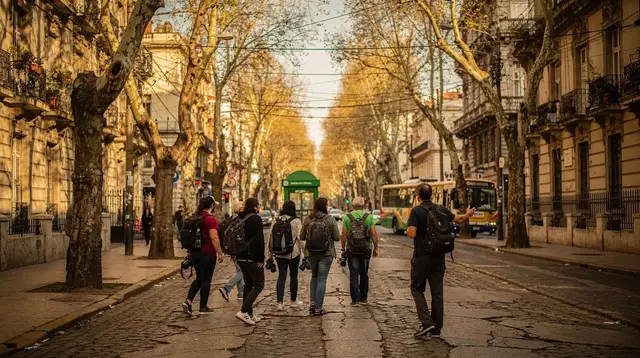
Ask a first-time visitor what Recoleta is, and most will answer “the cemetery.” That confusion undersells the barrio badly. Recoleta is one of Buenos Aires’s most elegant neighbourhoods in its own right — a grid of tree-lined avenues, mansard roofs and Haussmann-style apartment buildings that would not look out of place in a European capital, built on the wealth of the city’s early-twentieth-century elite. The walled cemetery where Eva Perón is buried sits inside this barrio and deserves its own separate visit, but it is one stop among several, not a synonym for the neighbourhood. This page covers Recoleta as a place to walk, browse and sit down for coffee; the cemetery has its own dedicated guide.
A Northern Barrio Built On Old Money
Recoleta takes its name from the Franciscan recoletos (recluse) friars who settled here in the eighteenth century, and it grew through the nineteenth and early twentieth centuries into the address of choice for Buenos Aires’s wealthiest families, many of whom had fled yellow-fever outbreaks further south. The result is a district of grand apartment buildings, private mansions turned into embassies and cultural centres, and a street plan that feels distinctly more Parisian than the rest of the city — hence the nickname “Little Paris” that still circulates in guidebooks and tour listings.
The barrio’s civic heart is the pair of squares — Plaza Intendente Alvear and Plaza Francia — flanking the cemetery walls, overlooked by the domed Basílica del Pilar and the Centro Cultural Recoleta, a former convent turned exhibition space. From here, Avenida Alvear runs south-east toward Retiro past some of the city’s most exclusive shopfronts, while Avenida Santa Fe and Avenida Las Heras carry the everyday commercial life of the barrio — banks, pharmacies, and the bookshop that gives many visitors their favourite photograph of the whole trip.
The single detail that turns a good Recoleta visit into a memorable one is timing it around the jacaranda trees. Between roughly September and November, the avenues around Plaza Francia and Avenida Alvear fill with a haze of violet-blue blossom that photographs even better than the architecture beneath it, and it is one of the reasons spring edges out every other season as the barrio’s best time to walk rather than rush through. Outside that window, the same streets are quieter and easier to photograph without crowds, which suits visitors who prefer the Haussmann façades to have their full attention.
El Ateneo Grand Splendid: A Theatre Turned Bookshop
The single most photographed interior in the neighbourhood is not a museum but a shop. El Ateneo Grand Splendid occupies a 1919 theatre on Avenida Santa Fe, converted into a bookshop while keeping its stage, boxes, frescoed ceiling and red velvet curtain intact. Entry is free, and browsing the shelves while ringed by tiers of theatre balconies is worth the short detour on its own — the former stage now houses a café, and the old boxes make quiet reading nooks.
Most visitors spend twenty to forty minutes here: enough for a slow circuit of the balconies and a coffee, not a lengthy outing. It sits a fifteen-minute walk from the cemetery gates, making it an easy add-on to any Recoleta itinerary; see the full El Ateneo Grand Splendid guide for opening hours and the best angles for photographs.
Cafés, Museums And A Weekend Fair
Recoleta’s café culture runs old-school: marble-topped tables, bow-tied waiters, and a pace built for lingering rather than takeaway coffee. La Biela, facing the cemetery on Plaza Intendente Alvear under a vast rubber tree, is the best-known address, historically a meeting point for racing drivers and now firmly on the tourist circuit — expect to pay a premium for the location and the shade. Quieter alternatives sit a few blocks back from the main squares, on the residential streets around Vicente López and Ayacucho, where the same marble-and-brass style comes without the queue.
Two serious art museums bookend the barrio. The Museo Nacional de Bellas Artes, Argentina’s national fine-arts collection, sits free to enter on Avenida del Libertador, a short walk from the cemetery. Further along the same avenue, toward Palermo, the MALBA holds one of Latin America’s best collections of twentieth-century Latin American art.
Neither is inside Recoleta’s historic core, but both are close enough to fold into a half-day visit without backtracking. Visitors who want the fine-arts museum paired with the cemetery in a single guided outing, rather than working out the walk between the two alone, can book a private tour combining the Museo Nacional de Bellas Artes with the Recoleta Cemetery.
On weekends, the squares beside the cemetery fill with the Feria Plaza Francia, a craft and design fair selling leatherwork, jewellery, mate gourds and artisanal goods, with street performers working the crowds drawn out of the cemetery gates. It runs Saturdays and Sundays; a weekday visit finds the same streets quieter, with shops and museums open but no stalls.
Shopping Along Avenida Alvear
Beyond the weekend fair, Recoleta carries its own retail character quite distinct from Palermo Soho’s independent boutiques or San Telmo’s antique dealers. Avenida Alvear, running from the cemetery gates toward Retiro, is lined with the international fashion houses and Argentine jewellers that gave the barrio its old-money reputation, while the side streets around Ayacucho and Quintana mix design studios with smaller galleries.
It is a pleasant stretch to walk even without buying anything, since the buildings themselves — many of them former private mansions — are as much the attraction as the shopfronts. Visitors comparing Recoleta’s upmarket, formal shopping with Palermo’s more casual scene will find the Palermo Soho and Hollywood guide useful for the contrast.
Quick Facts
| Travel time from Microcentro | 15–20 minutes by taxi, colectivo or ride-hailing app |
| Nearest Subte access | No line runs through central Recoleta; nearest stations are a 15–20 minute walk away |
| Weekend fair | Feria Plaza Francia, Saturdays and Sundays, beside the cemetery walls |
| El Ateneo Grand Splendid | Free entry, roughly 20–40 minutes, Avenida Santa Fe |
| Recommended half-day budget | ARS 35,000–70,000 (~US$30–60) for coffee, a museum and a taxi or two |
Prices are an approximate snapshot from September 2026; Argentina’s inflation and exchange-rate rules move quickly, so check a live rate and current card-payment rules before budgeting.
Getting There And Getting Around
Recoleta has no Subte station at its centre, which surprises visitors used to the Subte guide network covering most of the city. Colectivo buses running along Avenida Las Heras and Avenida Callao, paid with a SUBE card, are the practical public-transport option, alongside taxis, remises and ride-hailing apps from the Microcentro or Palermo, a ride of fifteen to twenty-five minutes depending on traffic.
On foot, Recoleta connects directly to Palermo’s parks to the north and to Retiro to the south-east, making it easy to string together with either neighbourhood in a single day. See the Recoleta neighbourhood guide for a fuller street-by-street breakdown.
Guided Ways To See Recoleta
Visitors short on time often prefer a guided introduction to the barrio’s architecture and history rather than working it out street by street. A dedicated half-day walking tour through Recoleta’s Little Paris streets covers the cemetery gates, the basilica and the main avenues with a local guide filling in the history behind the mansions.
For a wider sweep of the city in one outing, a combined tour taking in La Boca, Recoleta and the Obelisco pairs the barrio’s genteel streets with the very different, working-class energy of La Boca on the same day. Visitors planning a longer stay sometimes prefer to fold Recoleta into a broader city introduction, such as a multi-day tour covering Buenos Aires’s main neighbourhoods over four days, which gives more breathing room than a single rushed afternoon.
Pairing The Barrio With The Cemetery
Most visitors who allow half a day for the neighbourhood still want to step inside the cemetery walls before or after, rather than treating the two as entirely separate trips. A guided cemetery tour in English is the most straightforward way to make sense of the maze of mausoleums and find the Duarte family vault without wandering, and it slots naturally onto either end of a barrio walk since the entrance sits right beside Plaza Intendente Alvear.
Visitors who would rather set their own pace, or who are travelling with a small group and prefer not to join a scheduled departure, can instead book a private cemetery tour with tickets included, which folds the entry fee and the guide into one booking. For a slower, more unusual way to spend an hour among the statuary, a sketching session inside the cemetery gives art-minded visitors a reason to linger rather than move quickly from vault to vault. Full opening hours, ticket prices and etiquette live on the dedicated Recoleta Cemetery guide.
Recoleta In Context
Recoleta is best understood alongside its neighbours rather than in isolation. It sits between San Telmo to the south, with its antique markets and colonial-era streets, and Palermo to the north, with its parks and restaurant scene — a useful way to think about the contrast is the Palermo vs Recoleta vs San Telmo comparison. Many visitors combine Recoleta with a stroll through Puerto Madero’s modern riverfront, or extend a Recoleta afternoon with the two-day Palermo and Recoleta itinerary that pairs the two barrios properly rather than rushing both in one day.
For the cemetery itself — the walled city of mausoleums where Eva Perón is buried in the Duarte family vault, ticketed separately from the rest of the barrio — see the dedicated Recoleta Cemetery guide and the Recoleta Cemetery walking tour, or browse the barrio’s other draws on the things to do in Recoleta and things to do at the cemetery pages.
Music and theatre fans passing through should also note the Teatro Colón tickets guide, a short ride away toward the Microcentro. For accommodation, the where to stay in Buenos Aires by neighbourhood guide weighs Recoleta’s quiet, central location against livelier alternatives.
Visitors building a longer stay around Recoleta often use it as one half of a broader northern-barrio day, since it borders Palermo directly and sits a short ride from Retiro’s rail and bus terminals. The three-days first-time Buenos Aires itinerary and the fuller one-week Buenos Aires complete itinerary both place Recoleta early in the trip, before the pace shifts south toward San Telmo and La Boca.
For a broader read on how Recoleta’s calm, formal character compares with the rest of the city before committing time to it, the how many days in Buenos Aires guide and the day trips from Buenos Aires roundup are useful companions when planning where the barrio fits.
Frequently Asked Questions About Visiting Recoleta
Is Recoleta the same thing as the Recoleta Cemetery?
No. Recoleta is a whole barrio — wide avenues, Haussmann-era apartment buildings, cafés, museums and a weekend fair. The cemetery, where Eva Perón is buried, sits inside the barrio and has its own separate entry ticket and visiting hours; it is one stop among several, not the neighbourhood itself.
How much time should I set aside for Recoleta?
Plan on roughly half a day for the barrio outside the cemetery — walking the main avenues, browsing El Ateneo, having a coffee and, on a weekend, working the Plaza Francia fair. A serious cemetery visit is a separate hour or two on top of that.
Is El Ateneo Grand Splendid worth the visit?
Yes, and it is free and quick: a working bookshop inside a beautifully converted 1919 theatre on Avenida Santa Fe. Most visitors spend twenty to forty minutes taking photos from the balconies and browsing, not a full outing on its own.
When is the Recoleta fair open?
The Feria Plaza Francia, the neighbourhood’s craft and design market, runs on Saturdays and Sundays in and around Plaza Intendente Alvear, next to the cemetery walls. Weekday visits will find the barrio quieter, with the shops and museums open but no market stalls.
Is Recoleta walkable, and is it safe?
Very walkable — flat, well-lit, with wide pavements and constant foot traffic in daylight. It is one of the city’s more affluent and closely watched barrios; ordinary city-centre caution around bags and phones is enough, with no particular extra risk noted here.
How do I get to Recoleta without a Subte station nearby?
No Subte line runs directly through central Recoleta, so most visitors arrive by colectivo bus, taxi or ride-hailing app from the Microcentro or Palermo, a ride of fifteen to twenty-five minutes. Several bus routes stop along Avenida Callao and Avenida Las Heras on the barrio’s edges.
What else is near Recoleta worth combining with a visit?
The Museo Nacional de Bellas Artes and the MALBA contemporary art museum both sit within an easy walk or short ride, and Palermo’s parks and restaurant strips begin just beyond Recoleta’s northern edge, making a combined afternoon straightforward.