One Week in Buenos Aires: The Complete Itinerary
Is one week enough to see Buenos Aires properly?
Yes. Seven days lets you cover the historic center, San Telmo and La Boca, Palermo and Recoleta at an unhurried pace, plus a full day at Tigre and the Paraná Delta, with margin left for a Sunday feria, a football match or a tango night depending on what the local calendar offers that week.
Why a week works better than a checklist
Buenos Aires is not a city that hands out its sights in neat, identical daily portions. It is a dense, flat, European-looking capital of distinct barrios, and each one asks for a different rhythm: the historic center is a half-day of monuments walked close together, San Telmo on a Sunday can eat an entire afternoon, and Palermo simply keeps going into the evening.
This itinerary spreads seven days across the Microcentro, San Telmo and La Boca, Palermo and Recoleta, with a full day given to Tigre and the Paraná Delta — and it deliberately leaves half-day margins rather than promising the same pace every day. Whether that margin becomes a Sunday feria, a football match, or a night at the milonga depends on what is actually happening in the city the week you visit.
All of it is covered on foot, by Subte (the metro) or by colectivo (city bus) — no car, no rental, no need for one. Buy a SUBE card on arrival; it is required on the Subte, the buses and the suburban trains, and drivers do not accept cash fares.
Day 1: Arrival and the historic center
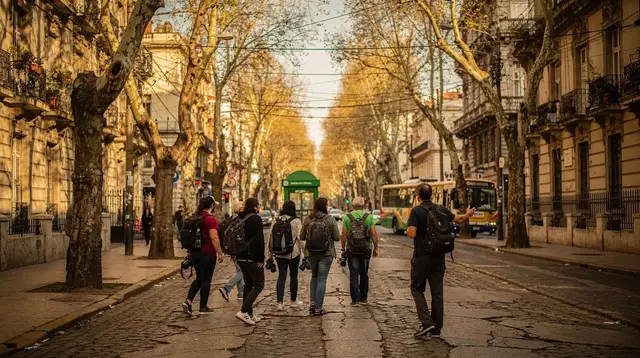
Start gently. If you land at Ezeiza, the transfer into the center takes 45 to 75 minutes depending on traffic; from Aeroparque, usually 15 to 30 minutes. Settle in, then spend the afternoon around Plaza de Mayo: the Casa Rosada, the Cabildo, and the surrounding streets of the Microcentro, Buenos Aires’ financial and administrative core since colonial times.
A walking tour of the Microcentro or a Plaza de Mayo walking tour is an easy way to get oriented without deciphering the grid alone. Close the day nearby with dinner — but not too early: locals rarely sit down before 21:00.
Day 2: San Telmo and La Boca
This is a longer day by design; San Telmo rewards slow wandering and La Boca is worth crossing the city for but doesn’t need all afternoon. Morning: San Telmo, the antique-market barrio, its cobbled streets, the Mercado de San Telmo, and — if your Day 2 happens to land on a Sunday — the Feria de San Telmo filling Defensa street and Plaza Dorrego. A guided walk such as Discover San Telmo: History, Bars and Tango works well here.
a San Telmo walk pairing the barrio’s history with its bars and tango cultureIn the afternoon, head to La Boca for Caminito, the short painted lane where tango dancers perform for tips. An hour or two here, in daylight, is the honest reading — it’s touristy but genuinely worth the walk. Stay on the Caminito/Vuelta de Rocha strip; the surrounding streets are residential and not for random wandering. Football fans can add a stop at La Bombonera, Boca Juniors’ stadium, via the museum and stadium tour — match tickets are a separate matter, covered below.
Day 3: Recoleta
A shorter day, deliberately. Recoleta is Buenos Aires at its most monumental: the walled Recoleta Cemetery, where Eva Perón is buried in the Duarte family vault (unmarked enough that staff usually point the way), and the surrounding barrio of grand apartment buildings and cafés. Entry to the cemetery is ticketed for non-residents, so check current hours before you go. Round out the morning with a guided overview.
a half-day tour through Recoleta’s cemetery and grand avenues, often billed as Buenos Aires’ “Little Paris”In the afternoon, walk or take a short Subte ride to El Ateneo Grand Splendid, the bookshop inside a converted 1919 theatre on Avenida Santa Fe — free to enter and a short visit, not an afternoon-filler on its own. If the Teatro Colón offers a daytime guided tour that day, this is a natural add-on; the tour and an evening performance are two separate visits at two separate prices.
Day 4: Tigre and the Paraná Delta
A full day, and the one fixed point in this itinerary that benefits from an early start. Take the Mitre line train from Retiro, or the more scenic Tren de la Costa, to Tigre, roughly an hour from the center. From there, the Paraná Delta of wooded islands and stilt houses is reached by boat — either the scheduled lancha colectiva water-bus or a fixed-loop tourist catamaran, which are genuinely different experiences at different prices.
an evening tango show back in the city to end the day, if you’re not too tired from the deltaBefore or after the boat, browse the Puerto de Frutos, once a fruit port and now a craft and basketry market. On the way back, consider a stop in San Isidro, the riverside town with a neo-Gothic cathedral. This is a full day out and back, so plan dinner in the city rather than in Tigre.
Day 5: Palermo
Palermo is the largest and most varied barrio on this itinerary, split into Palermo Soho’s boutiques and cafés, Palermo Hollywood’s restaurant scene, and the Bosques de Palermo parks. A guided introduction helps make sense of the sprawl.
a walking tour through Palermo Soho aimed at travellers who want the neighbourhood explained, not just photographedSpend the morning in the Bosques de Palermo and the afternoon in Soho or Hollywood, depending on whether you’re after shopping or dinner plans. This is a day that naturally runs late — Palermo’s restaurant and bar scene doesn’t really start until after 21:00, so keep the evening open.
Day 6: Puerto Madero, Costanera Sur and margin
A lighter day, built around flexibility. Walk Puerto Madero, the redeveloped dockland of glass towers and converted warehouses, then continue into the Costanera Sur Ecological Reserve, a large riverside wetland on reclaimed land — free to enter, with fixed hours and no shade or water sold inside on much of the circuit, so a morning or late-afternoon visit beats a midday one in summer.
a broader city tour linking several of these barrios in one guided circuit, useful as a wrap-up overviewThis is the day to use as your true margin: if a Feria de Mataderos weekend, a Boca Juniors or River Plate fixture, or simply an appealing milonga lines up on your dates, slot it in here rather than forcing it into an already full day elsewhere. Football tickets for home supporters generally require club membership, so buy through a recognised operator’s hospitality package — never a street reseller.
Day 7: Tango, last barrios, departure
Reserve the morning for whatever slipped off earlier days — a return visit to a barrio you rushed, the Teatro Colón if you haven’t yet, or simply a slow café morning, since porteño meals and evenings run later than most visitors expect. In the evening, close the week with tango — but decide which kind you want: a polished dinner-and-show house, a milonga where locals actually dance, or the street performances of San Telmo and Caminito you may have already seen in passing.
| Tango format | What it is | Best for |
|---|---|---|
| Dinner-and-show | Polished, staged, aimed at visitors | A guaranteed, comfortable first tango night |
| Milonga | Real social dance hall, often with a class first | Travellers who want to see locals actually dance |
| Street tango | Free performances for tips, San Telmo/Caminito | A quick taste while sightseeing |
If departing the next morning, confirm whether you’re flying from Ezeiza (intercontinental) or Aeroparque (domestic/regional) well ahead of time — connecting between the two crosses the entire city and can take several hours.
Practical notes for the week
Argentina runs on a single time zone year-round (UTC−3), so there’s no clock change to plan around. Sockets are Type C and Type I at 220V/50Hz — bring the right adapter. The peso (ARS) has moved through years of high inflation, so treat any price on this page as a dated snapshot, check a live rate before budgeting, and prefer cards or a mix of cash for flexibility. Tipping around 10% in restaurants is customary, not mandatory. Tap water in the city is treated and generally fine to drink. As for safety: this is a city of opportunistic theft rather than general danger — keep phones and valuables out of sight, particularly around Retiro and Constitución stations after dark.
FAQ: planning a full week in Buenos Aires
Is seven days too long for Buenos Aires alone?
Not if you want to see the barrios properly rather than rush them. A week covers the Microcentro, San Telmo, La Boca, Palermo and Recoleta at a comfortable pace, plus a full day at Tigre, with days left over for whatever the local calendar offers.
Do I need a car for this itinerary?
No. Every stop in this itinerary is reachable by Subte, colectivo bus, or on foot, with a SUBE card covering all of it. A car adds cost and complications without adding access.
Should every day follow the same schedule?
No — and this itinerary deliberately avoids that structure. San Telmo and Tigre are full days; Recoleta and the Puerto Madero/Costanera Sur day are lighter and built with margin for a feria, a match or a tango night depending on your dates.
What’s the best day to plan around San Telmo?
Sunday, if your schedule allows it, since the Feria de San Telmo fills Defensa street and Plaza Dorrego only that day. On other days, the permanent antique shops and the Mercado de San Telmo are still open.
Can I fit Iguazú Falls into this same week?
Not comfortably. Iguazú is roughly a two-hour flight away and is normally visited over two full days, one per side of the border. It works better as a separate trip extension than a squeeze into a Buenos Aires week — see the one-week Buenos Aires, Iguazú and Uruguay itinerary if you want to combine them.
How do I choose between a tango dinner show, a milonga and street tango?
They’re genuinely different experiences: a dinner-and-show is polished and reliable for a first night, a milonga is where locals actually dance (often with a beginner class first), and street tango in San Telmo or Caminito is a free, quick taste seen while sightseeing rather than a planned evening out.
Is it easy to see a Boca Juniors or River Plate match as a visitor?
Stadium tours and museums at La Bombonera and El Monumental are sold openly and easy to book. Actual match tickets for home supporters generally require club membership, so tourists go through a licensed hospitality operator — avoid street resellers and unusually cheap “guaranteed” tickets.
Which airport should I plan my departure from?
Check your outbound flight type: Ezeiza (EZE) handles nearly all intercontinental flights and sits 30–35 km from the center, while Aeroparque (AEP) handles domestic and regional routes and sits within the city itself. Confirm this early, since connecting between the two crosses Buenos Aires and can take several hours.
tours.7 days
Verified deep-linked GetYourGuide tours. Book through these links and we earn a small commission at no cost to you.
GetYourGuide does not provide a product photo for this activity — the image shows the meeting point, photographed by us.