Aeroparque (AEP) Airport Transfer Guide
How do I get from Aeroparque (AEP) into central Buenos Aires?
Aeroparque Jorge Newbery sits on the riverfront near Palermo, inside the city, so a taxi or remise into the centre usually takes 15–30 minutes depending on traffic. It handles domestic and most regional flights, not long-haul international arrivals, which land at Ezeiza (EZE) instead.
Which airport are you actually flying into?
Buenos Aires has two airports, and mixing them up is one of the most common planning mistakes visitors make. Aeroparque Jorge Newbery (AEP) sits inside the city, right on the riverfront near Palermo, and handles domestic flights within Argentina plus most regional routes to neighbouring countries. Ezeiza / Ministro Pistarini (EZE), by contrast, is the airport for nearly all long-haul intercontinental arrivals, and it sits roughly 30–35 km south-west of the centre.
If your itinerary has you flying in from Europe, North America, or almost anywhere outside South America, you will land at Ezeiza, not Aeroparque. This guide covers AEP specifically — where it is, how to get into town from it, and when you are likely to use it. If you are looking for the Ezeiza side of the picture, see the dedicated Ezeiza transfer guide and the EZE vs AEP comparison, which lays the two out side by side.
Where Aeroparque actually sits
Aeroparque is unusual among major-city airports in how close it is to the centre. It occupies a strip of reclaimed riverfront land facing the Río de la Plata, a short distance from the boundary between Palermo and Belgrano. There is no long highway run and no toll road out to the suburbs — it is, in effect, a city airport.
That proximity is the single biggest practical difference from Ezeiza. Where an Ezeiza transfer is a 45–75 minute road journey depending on traffic, an Aeroparque transfer into the Microcentro, Recoleta or Palermo itself is typically 15–30 minutes. On a quiet Sunday morning it can be closer to ten.
What actually flies into AEP
Aeroparque’s role is domestic and regional, not intercontinental. In practical terms, that means:
- Flights between Buenos Aires and other Argentine cities — Iguazú, Bariloche, Mendoza, Ushuaia, Córdoba and the rest of the domestic network — are almost entirely routed through Aeroparque rather than Ezeiza.
- A limited number of regional flights to neighbouring countries also use Aeroparque, though this varies by airline and by season, so it is worth checking your specific route rather than assuming.
- Long-haul flights from Europe, North America, Asia, Australia or Africa land at Ezeiza. If your booking confirmation shows a flight of ten hours or more arriving in Buenos Aires, it is going to EZE, not AEP.
This matters for two practical reasons. First, if you are booking a private transfer or telling a driver where to meet you, naming the wrong airport means the car waits at the wrong terminal while your flight lands somewhere else entirely. Second, if your trip includes a connection — say, a long-haul flight into Buenos Aires followed a day or two later by a domestic flight onward to Iguazú Falls — you may well touch down at Ezeiza and depart again from Aeroparque, which means a full crossing of the city between the two.
Getting from AEP into the city
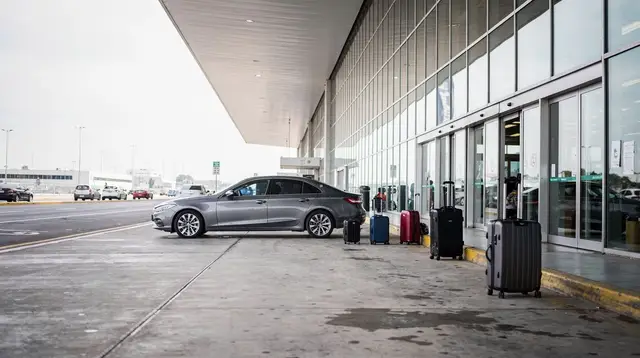
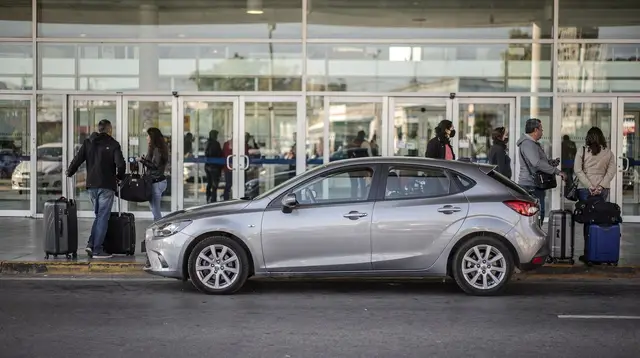
Because the distance is short, the options are simpler than at Ezeiza, and pre-booking is less essential — though still convenient if you are arriving late at night or would rather not negotiate at the kerb.
| Option | Typical time to centre | Notes |
|---|---|---|
| Official airport taxi | 15–30 min | Metered, rank just outside arrivals |
| Pre-booked remise | 15–30 min | Fixed price agreed in advance, driver meets you inside |
| Ride-hailing app | 15–30 min | Widely used; pickup point varies by terminal |
| City colectivo bus | 30–50 min | Requires a SUBE card; practical for light luggage, less so with large bags |
For most visitors arriving on a domestic or regional flight, a metered taxi from the official rank or a pre-booked remise is the straightforward choice. Both are normal and safe when taken from the designated ranks or via a recognised booking service rather than an unofficial tout inside the terminal. If you would rather have the transfer arranged in advance as part of a guided introduction to the city, a combined pickup-and-tour option is also worth considering — see below.
Booking a private transfer in advance
Because the run into town is so short, most visitors do not bother pre-booking an Aeroparque transfer the way they might for Ezeiza. But there are situations where it still makes sense: a very late arrival, a group with a lot of luggage, or simply a preference for having a named driver waiting with a sign rather than joining the taxi queue after a flight.
In those cases, a private AEP airport transfer or a private car from Aeroparque into the city removes the need to negotiate a fare or find the rank on arrival, at a fixed price agreed before you land. Neither is necessary the way it can be for the longer Ezeiza journey, but both are reasonable if you would simply rather not think about it after a flight.
If your Aeroparque arrival happens to fall around a long layover, it is also worth knowing that airport lounge access at AEP exists as an option for travellers with several hours to fill between a domestic connection and an onward flight, rather than waiting it out in the main terminal seating.
When a connection means crossing the city
If your trip involves flying into Ezeiza and then out again from Aeroparque (or the reverse — arriving domestically at AEP before a long-haul departure from EZE), you are not making a short airport-to-airport hop. The two airports are on opposite sides of Buenos Aires, and the transfer between them is a genuine cross-city road journey, not a shuttle bus within a single airport complex.
Some transfer operators sell a direct inter-airport connection covering exactly this route, which removes the guesswork of arranging two separate legs. Whichever way you arrange it, build in a generous buffer — several hours, not a tight one-hour connection — because traffic in Buenos Aires varies considerably through the day, and an inter-airport transfer that looks quick on a map can run long at rush hour.
a direct transfer service connecting Buenos Aires’ two airports is the simplest way to cover that cross-city leg without having to arrange two separate taxis or figure out the route yourself.
Arriving at AEP and heading straight into sightseeing
Because Aeroparque is so close to the city, some visitors on a short stopover — for instance between two domestic legs, or ahead of an evening flight home — use the gap to see a first slice of Buenos Aires rather than sitting in a terminal. A guided pickup that folds the transfer into a short city introduction can make sense here.
a guided city tour with transfer included combines the airport pickup with a first look at the Microcentro and Plaza de Mayo, useful if you land at AEP with a few free hours before check-in.
For a similar idea centred on the city’s landmark sights rather than a general orientation, a highlights tour bundled with transfer covers the same ground with a more curated stop list.
If you are actually flying long-haul: read the Ezeiza guide instead
It bears repeating, because the confusion is genuinely common when booking flights and ground transport separately: Aeroparque is not the airport for intercontinental arrivals. If your flight is coming from outside South America, you will land at Ezeiza, and the transfer logistics — distance, typical time, and the case for pre-booking — are meaningfully different. The Ezeiza (EZE) airport transfer guide covers that route in full, and a one-way or round-trip Ezeiza airport transfer is the equivalent booking for that longer run.
For a side-by-side comparison of the two airports — routes served, typical journey times, and which one your specific flight is likely to use — see the EZE vs AEP guide.
Paying for transport once you land
Argentina’s currency situation and payment habits catch some first-time visitors out, so it is worth setting expectations before you land. Metered taxis and remises at Aeroparque generally expect payment in Argentine pesos, whether in cash or, increasingly, by card or app depending on the operator — it is worth having some local currency on hand for the first ride regardless, since not every driver will have card facilities set up.
The SUBE card used for colectivo buses, the Subte and suburban trains is a separate system again: it is a rechargeable transport card, not a bank card, and it needs to be bought and loaded before you can board any of those services. None of this is specific to Aeroparque, but because it is often the first transport decision of the trip for travellers arriving on a domestic leg, it is worth having sorted out before you reach the terminal doors rather than working it out at the kerb.
Getting around after you land
Once you are in the city, the SUBE card guide explains how to buy and load the contactless card you will need for the Subte, colectivo buses and suburban trains — cash fares are not accepted on any of them. The taxis, remises and rideshare guide is worth a look too, since the same options that serve the Aeroparque run also apply to getting around once you have settled in.
If your first day in the city is short — a common situation for travellers passing through on a domestic connection via Aeroparque — the Buenos Aires in one day guide and the one-day historic centre walk are both built for exactly that kind of compressed visit, taking in Plaza de Mayo, the Casa Rosada and the surrounding Microcentro without requiring a full day’s commitment.
Aeroparque’s riverfront location also puts it closer than the Microcentro to Belgrano and the northern suburbs, so if your onward plans include a day out at Tigre and the Paraná Delta or the riverside town of San Isidro, the transfer in from AEP can sit naturally on the way rather than requiring a detour back out from the centre.
Aeroparque and onward travel within Argentina
Because Aeroparque is the hub for domestic flights, it is also the airport most visitors use when heading onward to Iguazú Falls, roughly a two-hour flight away and normally visited over two days rather than as a road trip. If Iguazú is on your itinerary, the Iguazú Falls from Buenos Aires guide walks through the logistics, and it is worth booking that domestic leg through Aeroparque specifically rather than assuming it departs from Ezeiza.
Domestic flights to other popular Argentine destinations — Bariloche, Mendoza, Ushuaia — follow the same pattern: departure from Aeroparque, not Ezeiza, so it is worth double-checking the airport code on every domestic boarding pass rather than assuming consistency across your trip.
A short, practical summary
Aeroparque is the airport you are most likely to use if your Buenos Aires trip includes a domestic or regional leg, and it rewards very little pre-planning precisely because it sits so close to the city. The transfer into the centre is short, taxis and remises are readily available at the terminal, and there is no need for the kind of advance booking that makes more sense for the longer Ezeiza run. The one thing worth getting right before you book anything is which airport your flight actually uses — Aeroparque for domestic and most regional routes, Ezeiza for everything long-haul — since that single detail determines which transfer, which timing, and potentially which guide on this site applies to your trip.
FAQ: Aeroparque (AEP) airport transfers
Does Aeroparque (AEP) handle international flights?
It handles regional and a small number of neighbouring-country flights, plus almost all domestic traffic, but it is not where long-haul intercontinental flights land. Those arrive at Ezeiza (EZE), roughly 30–35 km outside the city. Always check which airport your ticket names before booking a transfer.
How far is Aeroparque from downtown Buenos Aires?
Aeroparque sits inside the city limits on the riverfront near Palermo. A taxi, remise or rideshare into the Microcentro or Recoleta typically takes 15 to 30 minutes, depending on traffic, which is far shorter than the Ezeiza run.
What is the best way to get from AEP into the city?
A metered taxi from the official rank, a pre-booked remise, or a ride-hailing app are all normal and straightforward for the short hop into the city. There is no dedicated airport train line to Aeroparque, so road transport is the practical option.
Can I connect between Aeroparque and Ezeiza for a connecting flight?
Yes, but the two airports are on opposite sides of the city, so the transfer means a full road crossing of Buenos Aires. Booking agents and some transfer services offer a direct inter-airport connection; allow several hours between flights rather than a tight connection window.
Do I need to pre-book a transfer from AEP, or can I just find a taxi?
Official taxis and remises are readily available at the terminal, so pre-booking is a convenience rather than a necessity for this particular airport, unlike the longer Ezeiza run where pre-booking is more commonly recommended.
Is there public transport from Aeroparque into the city?
City colectivo bus routes serve Aeroparque and connect to the wider network, and the SUBE card is required to ride them, but for visitors with luggage arriving on a domestic flight a taxi or remise is the simpler default given how short the ride already is.
Why do people confuse AEP and EZE when booking?
Both use similar-looking Buenos Aires airport codes and both appear when searching flights to the city, but they serve different route networks and sit on opposite sides of town. Booking an airport transfer for the wrong one is a common and avoidable planning mistake.
Should I have Argentine pesos ready when I land at Aeroparque?
It is a good idea. Taxis and remises generally expect payment in pesos, whether cash or card depending on the operator, and having some local currency on hand for the first ride avoids relying on a driver’s card facilities working. The SUBE card needed for buses and the Subte is a separate, rechargeable transport card rather than a bank card, and it needs to be bought and loaded before boarding.
Getting Around Buenos Aires
Verified deep-linked GetYourGuide tours. Book through these links and we earn a small commission at no cost to you.
GetYourGuide does not provide a product photo for this activity — the image shows the meeting point, photographed by us.