Buenos Aires in One Day: A Realistic Itinerary
Can you see Buenos Aires in one day?
You can see a genuine cross-section — the historic centre, one or two signature barrios and a proper parrilla lunch — but not the whole city. Buenos Aires is large and its best neighbourhoods reward slow walking, so a single day means choosing between the centre-and-San Telmo axis or the Recoleta-and-Palermo axis, not both, and leaving Tigre and Iguazú for another trip entirely.
What one day in Buenos Aires can realistically cover
Buenos Aires is not a compact old town you can circle on foot in an afternoon. It’s a dense, flat, European-scaled capital where the neighbourhoods that make it worth visiting — the historic centre, San Telmo, La Boca, Recoleta, Palermo — are each a proper destination in their own right, spaced far enough apart that moving between all of them in a day eats the day itself. A visitor with one day has to make a real choice, not a wish list.
This page is a planning tool, not a sales pitch for a particular excursion. If you want a guided version of the route below, see the half-day or full-day city tours; if you’d rather move at your own pace, everything here works as a self-guided day too.
The first and most important decision is which of two axes to build the day around, because trying to do both is how one-day plans fail.
The two axes, and why you pick one
Axis one: history and the south — Plaza de Mayo, the Microcentro, San Telmo and La Boca. This axis gives you the Casa Rosada and the Cabildo, the city’s oldest streets, the antique trade of San Telmo, and the painted houses of Caminito. It’s compact, walkable, and reads as a coherent story of the city’s founding and its working-class port heritage.
Axis two: the elegant north — Recoleta and Palermo, with the Teatro Colón as a hinge between the two axes if you start early enough. This gives you the monumental cemetery, the parks of Palermo, and the city’s more manicured, residential face.
Both are excellent. Neither is “the real Buenos Aires” at the expense of the other — that’s a false framing tour marketing leans on. The honest constraint is geography and opening hours: San Telmo’s antique fair only runs on Sundays, Recoleta Cemetery and the Teatro Colón tours open mid-morning and keep set hours, and the distance between La Boca and Palermo is enough that visiting both properly, on foot, in one day, isn’t realistic without cutting each one short.
If you can only pick one, axis one (centre, San Telmo, La Boca) gives newcomers the stronger, more legible introduction to the city. Save Recoleta and Palermo for a return trip or a second day — see how many days you actually need if this is your first time weighing it up.
A one-day route through the historic centre, San Telmo and La Boca
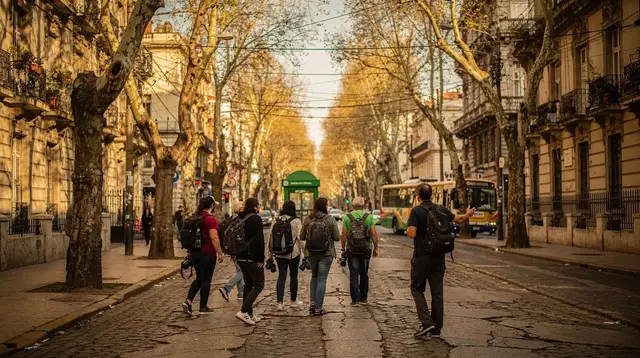
Morning (9:00–12:30): Plaza de Mayo and the Microcentro. Start at Plaza de Mayo — the Casa Rosada, the Cabildo, the Metropolitan Cathedral — then walk the pedestrian core of the Microcentro. If the Teatro Colón’s daytime guided tour fits your schedule, this is the slot for it; note that touring the building and attending an evening performance are two separate visits, not one.
Midday (12:30–14:30): San Telmo and lunch. Walk south into San Telmo. On a Sunday the Feria de San Telmo fills Defensa street and Plaza Dorrego with stalls; on any other day the permanent antique shops and the covered Mercado de San Telmo are still worth the detour. This is also the natural lunch stop — Argentine restaurants run later than many visitors expect, but a proper midday parrilla sitting works well here before the afternoon push south.
Afternoon (14:30–17:00): La Boca and Caminito. Continue to La Boca for Caminito, the short pedestrian lane of brightly painted corrugated-iron houses with street tango performed for tips. Be honest about the scale: Caminito itself is an hour or two, not a half-day, and it’s genuinely worth that hour.
Stay on the Caminito/Vuelta de Rocha tourist strip and visit in daylight — the surrounding residential streets aren’t part of the tourist circuit and aren’t a place to wander looking for photos. Football fans can add a look at La Bombonera, Boca Juniors’ stadium, from the outside, or book the stadium tour and museum if timing allows — matchday tickets are a separate undertaking entirely (see below).
Early evening (17:00 onward): back to the centre. Head back toward Puerto Madero or your accommodation to rest before dinner, which realistically won’t start before 20:00–21:00 in Argentina. This is also when to slot in a tango show if you want one — evening performances don’t compete with the daytime plan the way a milonga or a football match would.
If you’d rather have this route narrated and organised for you, an essential city tour covers a similar core in a guided half-day, which can free up your afternoon for La Boca or Palermo independently.
a half-day guided introduction to the historic centre is a practical way to cover Plaza de Mayo and the Microcentro efficiently if you’d rather not self-navigate the morning.
The alternative route: Recoleta and Palermo
If you’ve already seen the centre on a previous visit, or you specifically want the city’s northern, greener face, swap the afternoon plan:
Morning: Recoleta. Recoleta Cemetery is the centrepiece — a walled city of mausoleums, ticketed for non-residents, where Eva Perón is buried in the Duarte family vault (not in a monument of her own, and easy to walk past without a map or a staff pointer). Pair it with El Ateneo Grand Splendid, the bookshop inside a converted 1919 theatre nearby — a quick, striking stop rather than a long visit.
Afternoon: Palermo. Cross into Palermo for the Bosques de Palermo parks, and either Palermo Soho or Palermo Hollywood depending on whether you want boutiques or a slower café pace. A bike tour is a genuinely efficient way to cover Palermo’s scale, which is larger and more spread out than the centre or San Telmo.
a guided bike tour through Palermo and the riverside parks covers more ground in a morning than walking would, which matters given how much of Palermo there is.
This axis skips the colonial-era streets of San Telmo and La Boca entirely — accept that trade-off going in rather than trying to bolt them on at the end of the day.
What to leave off a one-day plan
Tigre and the Paraná Delta. Tigre is roughly an hour from Retiro by train each way, and the delta itself is only reached by boat once you’re there — a lancha ride, the Puerto de Frutos market, the stilt houses among the islands. That’s most of a day on its own; see the Tigre day trip guide for what it actually involves. Squeezing it into a city day means arriving too late to do either justice.
Iguazú Falls. This one isn’t a scheduling squeeze, it’s a different trip altogether. Iguazú sits roughly 1,300 km from Buenos Aires, reached by a flight of about two hours, and is normally visited over two full days — the Argentine side’s walkways and the Garganta del Diablo take a full day by themselves, and the Brazilian side, with its panoramic view, is a separate country and a separate day again. No honest one-day Buenos Aires itinerary includes it; see the Iguazú guide if it’s on a longer trip.
Colonia del Sacramento or Montevideo. Both are across the Río de la Plata in Uruguay, reached by ferry from Puerto Madero — about an hour to Colonia, over two hours direct to Montevideo — and both involve a passport, immigration formalities at the terminal, and a different currency on arrival. Worth a dedicated day (Colonia) or more (Montevideo), not a same-day add-on to a Buenos Aires walking route.
An estancia day in the pampas. San Antonio de Areco and the wider gaucho-country estancia visits — asado, horses, doma displays — run as fixed full-day programmes with a transfer each way. They’re worth the day precisely because they’re unhurried; compressing one into a city itinerary defeats the point.
A football match. Watching Boca Juniors at La Bombonera or River Plate at El Monumental is a full experience in itself, and match tickets for visitors go through licensed hospitality operators rather than casual same-day purchase — never buy from a street reseller. If a match is genuinely on your list, build the day around it rather than trying to fit it around the centre.
Where to eat on a tight schedule
| Slot | What fits | Where |
|---|---|---|
| Lunch (13:00–14:30) | A proper parrilla sitting, not a rushed sandwich | San Telmo or the Microcentro |
| Afternoon | Coffee and a medialuna, not a full meal | Café Tortoni or a San Telmo café |
| Dinner (20:30 onward) | Argentina’s main meal, eaten later than most visitors expect | Palermo or wherever you’re staying |
If cooking rather than eating out appeals, a hands-on class works well as an evening activity once the walking is done for the day.
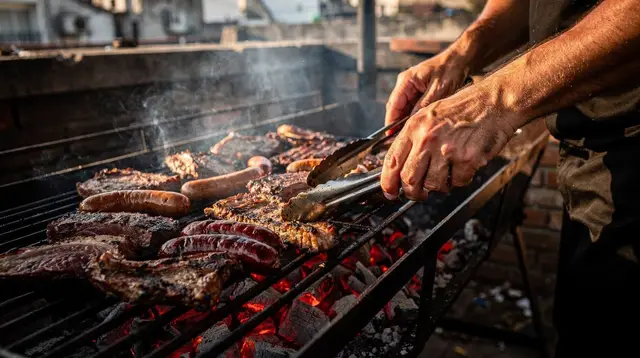
a hands-on barbecue class covering Argentina’s asado technique is a good way to close out the day once the sightseeing part is finished, without needing to plan a specific restaurant.
Getting around fast enough to make the day work
Buy a SUBE card on arrival — it’s required for the Subte, the city buses and the suburban trains, and drivers don’t accept cash fares. For a one-day plan moving between a handful of fixed points, taxis, remises or a ride-hailing app are often faster than working out bus routes on the fly, especially between La Boca and the centre, where Subte coverage is thin. Keep phones and bags zipped and out of sight on the street, particularly around Retiro and Constitución stations and after dark — Buenos Aires’s safety issue is opportunistic theft, not violent crime, and a little visible caution removes most of the risk.
For a visual sense of how these neighbourhoods relate to each other before you commit to a route, a street art walking tour or a graffiti tour of a specific barrio can double as an efficient orientation if you’re arriving with no prior mental map of the city.
a guided graffiti and street-art tour is a compact way to see a neighbourhood’s character in a couple of hours if your day is already tight.
Buenos Aires in one day: frequently asked questions
Can I fit Tigre or the Paraná Delta into a one-day Buenos Aires visit?
Not sensibly. Tigre is about an hour from the centre each way by train, and the delta itself is only reached by boat once you arrive, so a delta trip alone consumes the better part of a day. Bolting it onto a city day means rushing both and enjoying neither.
Is it possible to visit Iguazú Falls as a day trip from Buenos Aires?
No. Iguazú is roughly 1,300 km away and reached by a two-hour flight, and it is normally visited over two full days — one for the Argentine side, one for the Brazilian side. Treat it as a separate trip, not an add-on.
Should I prioritise the historic centre or Palermo and Recoleta on a one-day visit?
If it’s your only day in the city, the historic centre plus San Telmo and La Boca gives the strongest sense of Buenos Aires’s history and character in a compact, walkable area. Palermo and Recoleta are worth a full day of their own on a longer trip, but spread thin they add travel time without adding much depth.
How early should I start a one-day Buenos Aires itinerary?
Start by 9:00. Recoleta Cemetery and the Teatro Colón tours open mid-morning, lunch in Argentina runs later than in most countries, and losing the first two hours to a slow start is the single easiest way to blow the day’s plan.
Is one day enough to see the Teatro Colón and Recoleta Cemetery on the same day as San Telmo?
It’s tight but possible if you treat them as a fast morning loop through the centre before committing the afternoon to San Telmo and La Boca. Trying to add Palermo on top of all three is where one-day plans usually fall apart.
What’s the biggest mistake people make planning one day in Buenos Aires?
Building a list instead of a route. Buenos Aires’s best barrios sit far enough apart that hopping between four or five of them burns the day in transit. Pick one geographic axis and walk it properly rather than sampling the whole map.
Can I see a football match or a tango show as part of a one-day visit?
A tango show fits easily in the evening after a city day, since most start around 20:00–21:00 and don’t compete with daytime sightseeing. A football match is harder to slot in: fixtures aren’t daily, tickets for visitors go through licensed operators rather than being bought on the day, and a match effectively becomes the day’s plan rather than an add-on to it.
Buenos Aires and San Telmo City Tours
Verified deep-linked GetYourGuide tours. Book through these links and we earn a small commission at no cost to you.
GetYourGuide does not provide a product photo for this activity — the image shows the meeting point, photographed by us.