Buenos Aires’ oldest barrio, one street south of the centre
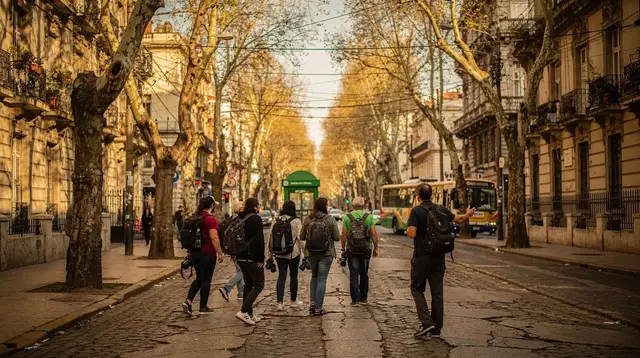
San Telmo sits just south of Plaza de Mayo and the Microcentro, and it looks the part of the city’s oldest residential neighbourhood: single- and two-storey colonial and early-republican houses, narrow cobbled streets, wrought-iron balconies, and a general patina that the newer barrios don’t have. It grew up as a mixed working port district in the eighteenth and nineteenth centuries, and much of that street grid and housing stock survived — which is exactly why it now runs one of the densest concentrations of antique shops in South America, along with galleries, small museums, and a steady undercurrent of tango, danced on the street for tips as much as in formal venues.
It is easy to lump San Telmo together with its southern neighbour La Boca and its painted lane Caminito, and the two do share a working-class, portside history and a tango association. But they are different neighbourhoods with different rhythms. San Telmo is more central — a walk from Plaza de Mayo, not a taxi ride — and its main streets stay busy well into the evening, with restaurants, bars and milongas operating normally after dark.
La Boca has one genuinely worth-seeing tourist strip around Caminito and very little else recommended for casual wandering, especially once the light fades. San Telmo is a place to spend an evening; La Boca, for most visitors, is a daylight visit of an hour or two. Confusing the two — thinking San Telmo’s edges are as contained as Caminito’s, or that La Boca’s back streets are as walkable as San Telmo’s — is a common and avoidable mistake.
An honest sense of scale
San Telmo rewards a half day on an ordinary weekday: a wander down Defensa street, a stop in the Mercado de San Telmo, a browse through a few antique shops, a coffee, maybe a small museum. It is compact enough to cover on foot without a fixed plan.
Sunday is a different neighbourhood entirely. The Feria de San Telmo turns Defensa street and Plaza Dorrego into a long, dense street market — antiques, crafts, food stalls, street performers and tango dancers working the crowds for tips — from around 10:00 to late afternoon. Streets that carry normal traffic the rest of the week are closed to cars and packed with people.
If the fair is the reason for the visit, budget a full day: the crowds thin the walking pace considerably, and the appeal is as much the atmosphere as any particular purchase. If it isn’t, and the aim is a quieter look at the barrio’s architecture and shops, a Sunday is the wrong day to come — Tuesday to Saturday, before the antique shops close in the evening, is calmer and easier to move through.
Getting there
San Telmo has no dedicated Subte station at its centre, which is part of why it feels more low-rise and less vertical than the Microcentro. The closest Subte stops are Line C’s Independencia and San Juan stations, both a short walk from Defensa street; Line E’s stations along Av. Independencia also work. Loaded with a SUBE card, the trip from most central hotels is a 10–20 minute ride plus a short walk.
Many visitors simply walk down from Plaza de Mayo or Puerto Madero — it’s a flat, unremarkable 10–20 minutes depending on the starting point. Colectivos and taxis or ride-hailing apps cover it easily too; on Sunday mornings, expect diversions around the fair’s closed streets.
What to do beyond the antique shops
Defensa street is the spine of the barrio, running roughly from Plaza de Mayo’s edge down past Plaza Dorrego and on toward the Parque Lezama end. Outside fair hours it’s lined with permanent antique dealers, design shops and cafés; on Sundays the stalls take over the roadway itself.
Plaza Dorrego is the small square at the heart of the fair, ringed by cafés with outdoor tables — a good spot to sit with a coffee and watch impromptu tango. On weekday evenings it is quieter, sometimes hosting a smaller, more local milonga feel around the edges.
The Mercado de San Telmo, a covered iron-frame market hall from 1897, mixes working butcher and produce stalls with antique dealers and small eateries — worth a slow pass even without buying anything.
Street tango is a fixture of San Telmo, performed for tips by pairs of dancers on Defensa street and around Plaza Dorrego, especially on Sundays. It’s a different thing from a tango dinner show, a polished, ticketed evening aimed at visitors, and different again from a milonga, a real social dance hall where locals come to dance, usually preceded by a class. San Telmo has examples of all three within a few blocks of each other — worth knowing which one is being booked.
Small museums and galleries cluster in the barrio too, including contemporary art spaces in converted historic buildings, alongside antique galleries that function as informal museums of their own.
Shopping for antiques without overpaying
The antique trade is San Telmo’s real specialty, and it rewards a little groundwork. Prices in the permanent shops along Defensa street are generally higher and more fixed than at the Sunday fair, where many stallholders expect some gentle negotiation, especially for smaller items or on a slow afternoon. Silverware, mate gourds and yerba sets, vintage soda siphons, old café signage and film-era cameras are the recurring categories worth scanning for; furniture is beautiful but awkward for most visitors to actually get home.
A useful habit is to do a first pass without buying — Defensa street runs long, and the same style of item often turns up in three or four shops at different prices — then circle back to the stall or shop that offered the best combination of price and condition. Shops that look purely decorative sometimes double as small museums in their own right, worth a slow browse even with no intention to buy, and a handful of galleries scattered through the barrio show contemporary work alongside the antiques trade: a short outing built around San Telmo’s art galleries is a good way to see that side of the neighbourhood without competing with the Sunday crowds.
Tango, beyond the street performers
For visitors who want to go past watching tango and actually try it, or get a proper photograph of the barrio’s tango culture, San Telmo has options at every level of involvement. Dedicated dance studios in and around the barrio run beginner-friendly sessions that break the walk, the embrace and a handful of basic steps down for people with zero experience: an authentic tango experience in a Buenos Aires studio is built for exactly that first attempt.
On the photography side, a vintage-styled photo shoot with the spirit of tango uses the barrio’s cobbled streets and period architecture as a backdrop, pairing a model dancer with a photographer for a set of portraits rather than a lesson. And for a slower, narrative introduction to the barrio that folds in its tango and bar history along the way, a San Telmo historical guided tour with street food and drinks covers the same streets as a self-guided walk would, but with tastings and context added in.
Dinner-and-show formats sit a notch above the casual dinner show mentioned earlier, aimed at an evening built entirely around the performance rather than around dinner with a show attached. the Homero Manzi dinner and tango show, staged in a barrio café associated with the tango composer of the same name, is one of the better-known versions of this in the San Telmo area, and it’s worth booking ahead — tables for the show sell out well before the night itself on weekends.
Practical notes for a first visit
Cash still matters more in San Telmo than in Palermo or Puerto Madero: smaller antique dealers and market stalls often prefer it, and card machines can be temperamental on a crowded Sunday. Comfortable shoes are worth the trade-off against style — the cobbles are uneven and the fair involves a lot of standing and slow shuffling through crowds. Shops along Defensa keep irregular hours outside the fair, with some closing for a long midday break and others shut entirely on Mondays, so a specific shop is worth checking rather than assuming it will be open. None of this requires much planning; San Telmo is forgiving for a first-time visitor who simply starts walking down Defensa street and follows whatever catches the eye.
Where San Telmo meets safety, honestly
San Telmo is one of the more walkable central barrios after dark, with restaurants and bars keeping Defensa street and the streets around Plaza Dorrego busy into the evening — this is a real difference from La Boca, where the tourist strip effectively closes down once the light goes. That said, “walkable” is not the same as “risk-free everywhere at every hour.” San Telmo mixes gentrified blocks with quieter, less-trafficked ones, and the fringes toward Parque Lezama and some side streets off the main tourist path are noticeably less busy at night than Defensa street itself.
Opportunistic theft — a phone lifted from a café table, a bag left open on a crowded street — is the realistic risk here, not violent crime, and it rises with crowd density: the Sunday fair itself, precisely because it’s packed and distracting, is a prime spot for pickpocketing. Keep valuables zipped away and phones out of your hand near the street, stick to the lit and populated blocks after dark, and treat quiet side streets the way you would in any large city — with a bit more attention, not with alarm.
Eating and drinking in the barrio
San Telmo runs on late Argentine hours: dinner rarely starts before 21:00, and many restaurants only open their kitchens for dinner from 20:00. It has a strong concentration of traditional parrillas and bars alongside newer wine bars and cafés, and it’s a reasonable base for sampling classic Argentine food without leaving the neighbourhood. A tip of roughly 10% is the usual gesture where service isn’t already included, appreciated in cash.
A short itinerary for a non-Sunday half day
| Time | Activity |
|---|---|
| Morning | Walk down Defensa street from Plaza de Mayo, browsing antique shops |
| Midday | Lunch at or near the Mercado de San Telmo |
| Early afternoon | Plaza Dorrego coffee stop, watch street performers |
| Late afternoon | Small museum or gallery, or continue toward Parque Lezama |
| Evening | Dinner in the barrio, or a milonga if the timing fits |
For a Sunday visit, the San Telmo Sunday market guide lays out the fair’s layout and timing in more detail, and the San Telmo walking tour guide covers a self-guided route past the barrio’s landmark buildings.
A short guided outing is a good way to get oriented quickly, especially on a first visit: a San Telmo history, bars and tango walk covers the barrio’s key streets and its tango culture with a local guide. For an evening that combines dinner with a show, a tango dinner show at a San Telmo venue is the polished, aimed-at-visitors version of tango described above — distinct from the street performances and from a milonga.
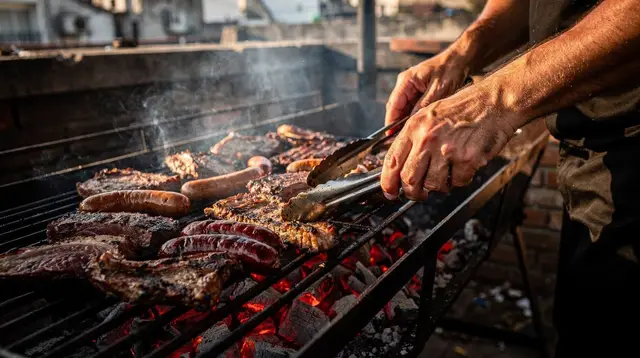
Visitors combining San Telmo with a wider first look at the city sometimes book a multi-day Buenos Aires discovery package that threads the historic centre and San Telmo together with other highlights. Those wanting a complete change of pace after the city streets can pair a San Telmo morning with a gaucho day experience with an asado barbecue out on the pampas.
Nearby and related
San Telmo connects easily on foot to Plaza de Mayo and the Microcentro to the north, and to Puerto Madero via the Costanera Sur reserve to the east. La Boca and Caminito lie further south and are usually treated as a separate, shorter visit.
For a broader first day in the city, see the historic centre walking itinerary or the combined San Telmo and La Boca day plan; for the Sunday fair specifically, the San Telmo Sunday fair itinerary is built around it.
San Telmo: frequently asked questions
Is San Telmo the same as La Boca?
No. They’re neighbouring barrios with a shared working-class, portside history and a tango association, but San Telmo is more central, calmer at the edges, and stays walkable into the evening, while La Boca’s appeal is essentially the Caminito tourist strip, best visited in daylight, with the surrounding streets not recommended for casual wandering.
How long do I need in San Telmo?
A half day covers the antique shops, main streets and a coffee stop on a normal weekday. If visiting for the Sunday fair, budget a full day, since the crowds and the market’s spread genuinely change the pace of a visit.
What is the Feria de San Telmo and when does it run?
It’s the Sunday street market along Defensa street and Plaza Dorrego, running roughly from mid-morning to late afternoon, with antiques, crafts, food stalls and street tango. It doesn’t run on other days; the permanent antique shops and the Mercado de San Telmo are open through the week instead.
Is San Telmo safe at night?
It’s one of the more walkable central barrios after dark, with busy restaurants and bars along the main streets. Opportunistic theft, not violent crime, is the realistic risk, and it rises in crowded spots like the Sunday fair. Stick to the lit, populated streets and keep valuables out of easy reach, especially toward the quieter fringes near Parque Lezama.
What’s the difference between street tango, a milonga and a tango dinner show in San Telmo?
Street tango is performed for tips on Defensa street and around Plaza Dorrego. A milonga is a real social dance hall where locals go to dance, usually with a class beforehand. A tango dinner show is a polished, ticketed evening aimed at visitors. San Telmo has examples of all three within a few blocks.
How do I get to San Telmo from the centre?
It’s a flat 10–20 minute walk from Plaza de Mayo, or a short ride on Subte Line C (Independencia or San Juan stations) or Line E, loaded with a SUBE card. Colectivos, taxis and ride-hailing apps all cover it easily, though Sunday mornings bring street closures around the fair.
Should I visit on a Sunday or another day?
Depends on the goal. For the fair’s atmosphere, crafts and street tango, Sunday is the day, but expect crowds and a slower pace. For a quieter look at the architecture and antique shops without the crowds, any other day works better, with shops generally open through the week.