Mercado de San Telmo: The Historic Covered Market's Food Guide
What is the Mercado de San Telmo and how is it different from the Feria de San Telmo?
The Mercado de San Telmo is a permanent, covered 19th-century market hall open through the week, built around food stalls, butchers, produce and small eateries. The Feria de San Telmo is a separate, outdoor street fair held only on Sundays along Defensa street and Plaza Dorrego, focused mainly on antiques and crafts. They share a neighbourhood but not a building, a calendar or a purpose.
The market people mix up with the Sunday fair
Ask a first-time visitor to Buenos Aires what happens in San Telmo on a Sunday and they’ll usually say “the antiques market.” That’s the Feria de San Telmo, the street fair that fills Defensa street and Plaza Dorrego with stalls of vintage objects, leather goods, tango memorabilia and street performers, once a week. Ask the same visitor about the Mercado de San Telmo and you’ll often get a blank look, or the same answer — as if the two were one and the same thing. They aren’t.
The Mercado de San Telmo is a permanent, covered market building, a wrought-iron and glass hall dating to the late 19th century, tucked a couple of blocks from Plaza Dorrego. It runs on the rhythm of an ordinary neighbourhood market: butchers, greengrocers, dry-goods stalls, and — increasingly — a layer of food counters, small eateries and specialty vendors that have moved in around the traditional trade over the past couple of decades. It’s open through the working week, not just on Sundays, and it exists to feed the barrio, not primarily to sell antiques to tourists.
This guide is about that market and its food. If you’re after the Sunday antiques fair, that’s a different page and a different day — see the San Telmo Sunday market guide instead. What follows below sticks to the Mercado: what it looks like inside, what you can actually eat there, and how to fold a visit into a wider San Telmo day without wasting an afternoon on a mix-up.
Mercado vs. Feria: the difference that actually matters
The confusion is understandable. Both share the same barrio, both carry “San Telmo” in their name, and both show up in the same paragraph of most guidebooks. But they differ on every axis that matters for planning a visit.
| Mercado de San Telmo | Feria de San Telmo | |
|---|---|---|
| What it is | Permanent covered market hall | Outdoor street fair |
| Where | Fixed building, a couple of blocks from Plaza Dorrego | Defensa street and Plaza Dorrego |
| When | Open through the week (stall hours vary) | Sundays only |
| What’s sold | Food — produce, butchers, prepared food stalls, small eateries | Mostly antiques, bric-a-brac, crafts, some food carts |
| Atmosphere | Working market with a growing food-stall layer | Street festival, tango dancers, dense crowds |
| Who it’s for | Neighbourhood shoppers and food visitors | Antique hunters, souvenir shoppers, casual browsers |
The building itself is worth a look independent of what’s inside it: iron columns, a barrel-vaulted roof, and the general texture of a 19th-century market hall that has kept working rather than being converted into something else. It sits alongside other reasons to slow down in this barrio — the antique shops on Defensa that stay open all week (separate again from the Sunday fair), and the general low-rise, cobbled character that makes San Telmo one of the most walkable parts of the city.
What you’ll actually find inside
Inside, the Mercado reads less like a single restaurant and more like a cluster of counters, each specialising in one or two things. The traditional trade is still there — butchers with sides of beef hanging in the cold cases, greengrocers stacking seasonal produce, dry-goods stalls selling yerba mate, dulce de leche and spices by weight. Layered on top of that, especially since the 2000s, is a food-stall scene aimed as much at a lunching local or a curious visitor as at someone doing the weekly shop.
Typical categories you’ll come across:
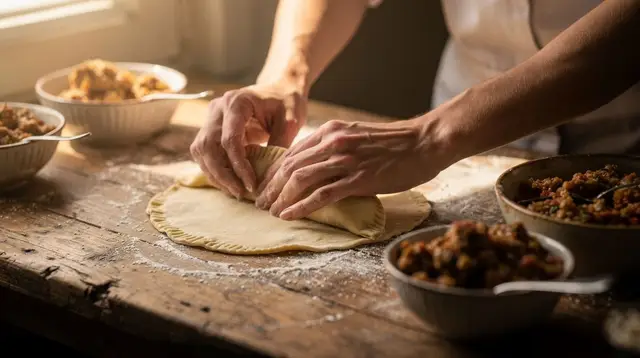
- Empanada counters — the reliable, cheap, stand-up option, usually a handful of fillings (beef, ham and cheese, chicken, spinach) sold individually or by the half-dozen.
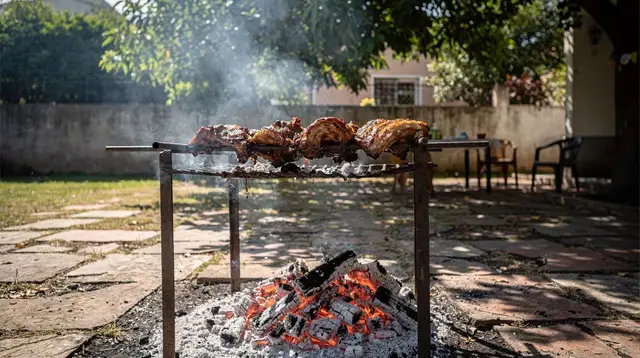
- Choripán and grilled sandwich stalls — a smoking grill, a queue at lunchtime, and a sandwich eaten standing at a shared counter.
- Fresh pasta and gnocchi vendors — a reminder of Buenos Aires’ Italian immigrant layer, sold fresh or ready to cook.
- Cured meats, cheese and specialty grocery stalls — good for putting together a picnic to take to Parque Lezama rather than for eating on the spot.
- Coffee counters — for a break between stalls, not a full café sit-down.
- A wine or vermouth stand or two — increasingly common as the market has leaned into a more social, grazing crowd.
None of this is a sit-down restaurant experience. You order at a counter, you eat standing, at a shared bench, or you carry it out and keep walking. That’s part of the appeal: it’s closer to grazing your way through a handful of small, specific things than committing to one long meal.
a guided San Telmo food walk built around tastings at stalls like these is the easiest way to get oriented on a first visit, since someone who knows the current stall line-up can steer you straight to what’s good that week rather than you working it out stall by stall.
Why this guide won’t give you stall opening times
It would be easy — and misleading — to print a tidy table of “Stall X, open Tuesday to Saturday, 10am to 6pm.” It would also be wrong within a few months. Individual stalls inside the Mercado are small, independently run operations, and their days and hours shift with the season, the owner’s other commitments, and simple turnover — a stall that was there last year may have moved on, and a new one may have taken its place. Printing a fixed schedule here would go stale faster than it would stay useful, and a confidently wrong opening time is worse than no opening time at all.
The practical fix: treat any specific stall as a “check before you go” rather than a certainty. If there’s one vendor you’ve read about and want to track down, look up their current hours on their own social media or ask at the market entrance rather than relying on a guide — this one included — to have the latest word. What doesn’t change is the broader pattern: the Mercado runs through the working week (not just Sundays), with the fullest, liveliest stretch typically around midday into early afternoon, when both the neighbourhood shoppers and the lunch crowd overlap.
A realistic visit: how long, and when
Most visitors give the Mercado somewhere between thirty minutes and an hour and a half, depending on whether it’s a quick browse-and-snack or a proper grazing lunch across several counters. It rewards going hungry rather than going full — the point is to sample two or three things, not to eat one large meal in one place.
Late morning into early afternoon is the most reliable window: enough stalls are open and trading, the neighbourhood energy is at its liveliest, and you’re not fighting the after-work rush. Arriving very early, the market can feel half-asleep; arriving too late in the afternoon, some food stalls may have already sold out or begun closing up, especially on quieter weekdays.
If you’re building a full day around it, a natural order is: start at the Mercado for a late-morning graze, walk the antique shops on Defensa street (open all week, not just Sunday), and finish toward Plaza Dorrego or Parque Lezama depending on the light. For a fuller sense of the barrio’s food scene beyond this one building — parrillas, wine bars, cafés — the San Telmo food tour guide and best parrillas in San Telmo pages go further than a single market visit can.
Pairing the Mercado with the rest of San Telmo
The Mercado works best as one stop in a longer San Telmo walk, not as a stand-alone destination that justifies the trip on its own. San Telmo rewards slow wandering — cobbled streets, low colonial-era buildings, antique shopfronts that stay open through the week even when the Sunday fair isn’t running, and a genuinely lived-in feel that’s harder to find in glossier barrios like Puerto Madero or Recoleta.
A simple half-day sequence: begin near Plaza Dorrego, take in the surrounding antique shops, walk the few blocks to the Mercado for lunch-by-grazing, then continue south toward Parque Lezama or loop back toward San Telmo’s tango scene for the evening — the barrio has one of the city’s more concentrated clusters of milongas and street-tango performances, a separate thread from the market itself but part of what makes San Telmo worth a full day rather than a quick pass-through.
If you’d rather have a local walk you through both the food and the history side by side, a historical walking tour of San Telmo paired with street-food stops covers the barrio’s colonial backstory alongside the market’s food scene in one outing. For something with a slower, seated finish, a San Telmo walking tour that ends in a wine tasting is a good way to close out an afternoon that started at the market stalls.
Beyond San Telmo: how this fits the wider food picture
San Telmo’s food identity — European-immigrant butchers and grocers layered with a newer wave of specialty stalls — sits alongside Buenos Aires’ bigger food stories: the asado and parrilla tradition that runs through the whole city, the empanada scene that the Mercado’s counters are a small, honest slice of, and the broader wine culture covered in the Buenos Aires wine tasting guide.
If San Telmo’s mix of old-market grocers and new food stalls appeals, a combined San Telmo and La Boca food and walking tour extends the same idea into the neighbouring barrio, pairing the market’s grazing style with La Boca’s own food stops and street life.
However you build the day, keep the two San Telmo institutions straight in your head: the Mercado for food, any day of the week; the Feria for antiques and crafts, Sundays only. Confuse them and you’ll either show up at the covered market on a Sunday expecting antique stalls that aren’t there, or turn up on a Tuesday hoping for the street fair’s crowds and find a quieter, food-focused market instead — good either way, just not the same thing.
FAQ: Mercado de San Telmo food guide
Is the Mercado de San Telmo the same as the Sunday antiques fair?
No. The Mercado is a permanent covered market building open on ordinary weekdays for groceries and food stalls. The Feria de San Telmo is the outdoor Sunday fair along Defensa street and Plaza Dorrego, dedicated mostly to antiques, bric-a-brac and crafts. Locals and even some guidebooks blur the two, but they are physically and functionally different.
Is the Mercado de San Telmo open every day?
It generally operates through the week as a working market, unlike the Feria, which is a Sunday-only street event. Individual stalls inside the Mercado set their own days and hours, and these change often enough that this guide does not print stall-level timetables — check on arrival or the stall’s own social media before making a special trip for one specific vendor.
What can I actually eat at the Mercado de San Telmo?
Expect small counters and stand-up stalls rather than full sit-down restaurants: empanadas, choripán and other grilled sandwiches, artisanal pasta, cured meats and cheese, fresh produce, spice and dried-goods stalls, a coffee counter or two, and sometimes a wine or vermouth bar tucked between the grocery stands.
Do I need a reservation to eat at the market?
No. This is a casual, walk-in, stall-by-stall market, not a restaurant with table service. You buy from one or several counters and eat standing or at shared benches, the way you would at any produce market.
Is the Mercado de San Telmo touristy?
Less than the Sunday Feria, though tourism has grown around it in recent years. It still functions as a genuine neighbourhood market for locals doing their weekly shopping, alongside the newer stalls aimed at visitors, so the mix of clientele is more balanced than on Defensa street on a Sunday.
What’s the best way to combine the Mercado with the rest of San Telmo?
Treat it as one stop on a longer San Telmo walk rather than a destination on its own — pair it with the antique shops on Defensa street (open through the week, separate from the Sunday fair), Plaza Dorrego, and a wander toward the Parque Lezama end of the barrio.
Can I find souvenirs or antiques at the Mercado de San Telmo?
A little, at the edges, but that is not its purpose. The building does host some non-food stalls, but for antiques, vintage objects and craft souvenirs the Sunday Feria and the permanent antique shops along Defensa street are the better bet.
Food Tours and Argentine Wine Tastings
Verified deep-linked GetYourGuide tours. Book through these links and we earn a small commission at no cost to you.
GetYourGuide does not provide a product photo for this activity — the image shows the meeting point, photographed by us.