Asado and Parrilla in Buenos Aires: A Complete Guide
What is the difference between asado and parrilla in Buenos Aires?
Asado is the event — a slow wood or charcoal grilling ritual, usually shared with family or friends. A parrilla is the restaurant, or the grill itself, where similar cuts are served à la carte or on a shared board. You can eat parrilla food alone at a table; asado is something people do together.
Asado Is an Event, Parrilla Is a Place
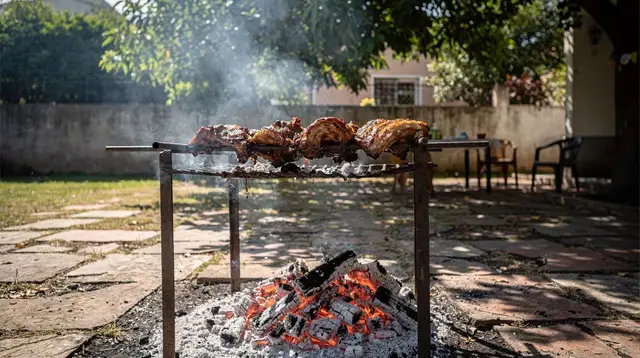
Two words get tangled constantly, and getting them straight changes how you plan meals in Buenos Aires. Asado is the ritual: meat grilled slowly over wood embers or charcoal, almost always for a group, almost always stretched across a whole afternoon or evening. It is a verb as much as a noun — porteños say “vamos a hacer un asado” the way English speakers say “let’s have a barbecue,” except the Argentine version is less about a quick grill and more about a long, unhurried gathering where the fire is tended for hours before the first cut even touches a plate.
A parrilla, on the other hand, is a place — the restaurant, or literally the grill itself sitting in the kitchen or dining room. When you book a table at a parrilla in Palermo or San Telmo, you are eating asado-style cuts prepared by a cook, not attending a private asado. You can walk into a parrilla alone on a Tuesday and order a single cut; you cannot really have a solo asado, because the point of the ritual is the company around the fire as much as the food on it.
This distinction matters for visitors because most of what you will actually eat in Buenos Aires is parrilla food — excellent, often superb, but a commercial version of a home tradition. A genuine private asado, hosted by a family in their backyard or a countryside estancia, is a different register of experience, and one that visitors typically access only through a hosted format such as a gaucho day tour with an asado lunch rather than an invitation to someone’s home.
The Ritual: How an Asado Actually Unfolds
A proper asado is built around timing, not speed. The asador — the person running the fire, often a specific role within a family — lights charcoal or wood well before guests arrive, letting it burn down to a bed of glowing embers rather than open flame. Meat goes on slowly, over indirect heat, often for two or three hours rather than the fast high-heat searing familiar from a North American or European grill.
The meal itself has a rough sequence, though it is loose rather than fixed. Achuras — the grilled offal and secondary cuts, including chorizo, morcilla (blood sausage) and sometimes mollejas (sweetbreads) or chinchulines (chitterlines) — typically come first, alongside bread and a glass of Malbec, while the main cuts continue cooking. The larger cuts of beef follow once the asador judges them ready, and the whole event can run three or four hours from the first chorizo to the last coffee. Nobody is in a hurry, and the fire itself is part of the entertainment — people stand around it, talk, and check on progress the way others might tend a bonfire.
For visitors curious about this side of the culture without an invitation to a private home, the closest equivalent is a hosted asado experience, where a local cook or family runs the same slow ritual for a small paying group. An asado experience hosted by a local family or a session that walks through the techniques behind a proper asado and dinner gets closer to the real ritual than a restaurant table, because the fire and the pacing are the point, not just the meat.
The Cuts: What You’re Actually Ordering
Argentine butchery divides beef differently from most other traditions, and parrilla menus assume you already know the vocabulary. Here is the shortlist that covers most of what visitors order.
| Cut | What it is | Best for |
|---|---|---|
| Asado de tira | Short ribs, cut crosswise across the bone in Argentine style | Sharing, classic asado flavour |
| Bife de chorizo | Sirloin steak, thick-cut | A reliable, familiar cut for a first parrilla meal |
| Ojo de bife | Ribeye | Richer, more marbled than bife de chorizo |
| Vacío | Flank, a leaner cut with a distinct texture | Those who want something less fatty |
| Entraña | Skirt steak | Fans of a more intensely grilled, slightly chewy cut |
| Matambre | A thin cut from the flank, often rolled and stuffed | Usually served as a starter, arrollado style |
| Chorizo | Grilled pork sausage | The classic first bite, often as a choripán |
| Morcilla | Blood sausage | Traditional achura, polarising but authentic |
| Mollejas | Sweetbreads | For adventurous eaters, a parrilla specialty |
None of these need to be ordered together — a parrilla meal is usually a shared table of two or three cuts plus a side of achuras, rather than one plate per person. If you are new to the vocabulary, bife de chorizo or ojo de bife are the safest starting points; asado de tira is the cut that most defines the tradition itself.
Restaurant Parrilla vs Private Asado: What Actually Differs
| Restaurant parrilla | Private asado | |
|---|---|---|
| Setting | Restaurant dining room, professional grill | Backyard, terrace, or countryside estancia |
| Who cooks | A trained parrillero on staff | A family member or friend acting as asador |
| Pace | Ordered à la carte, served within the hour | Slow, unhurried, can run three to four hours |
| Group size | Any, including solo diners | Almost always a group, rarely solo |
| How visitors access it | Walk in or book a table | Usually only via a hosted experience or estancia day |
| Price transparency | Menu prices, though meat is sometimes priced by weight | Not applicable — it is a social occasion, not a transaction |
This guide deliberately does not rank restaurants against each other. Any claim that one spot is “the best parrilla in Argentina” is not something an outside guide can verify — taste is subjective, quality shifts with the kitchen’s night, and Buenos Aires alone has hundreds of serious contenders. For actual shortlists organised by barrio, see the neighbourhood-specific guides to parrillas in Palermo and parrillas in San Telmo, which cover specific addresses and price points without repeating them here.
A Fuller Experience: Wine, Cuts, and a Local Host
Beyond the basic restaurant meal, several formats combine the asado ritual with wine pairing and a more personal setting. A tasting that pairs grilled asado cuts with Argentine wines guided by a local host is a middle ground between a restaurant table and a private gathering — smaller groups, more explanation of the cuts as they arrive, and Malbec chosen specifically to match the smokiness of the grill.
For those with more time, a full day out at a working ranch folds the asado into a broader gaucho experience. A guided day tour to a ranch with a gaucho asado lunch pairs the meal with horseback riding and folk displays, echoing the format covered in more depth on the estancia day trip guide and the dedicated San Antonio de Areco day trip page, where the asado is one part of a longer pampas itinerary rather than the whole visit.
Where to Eat It
Buenos Aires does not have one asado district — parrillas are everywhere, from tourist-facing spots near Puerto Madero to neighbourhood institutions with no sign in Belgrano. Two barrios come up most often in visitor planning:
- Palermo mixes modern parrillas with wine bars and a livelier night-out feel, useful if you want to combine dinner with Palermo nightlife afterward.
- San Telmo leans more traditional, with older parrillas near the antique market streets, and pairs naturally with a San Telmo walking tour earlier in the day.
Both neighbourhood guides linked above go deeper on specific addresses, opening hours, and price brackets without this page trying to duplicate that list.
Practical Notes for Ordering
Meat at many parrillas is priced by weight rather than by the plate, so the number on the menu can be a per-kilogram figure rather than the price you will actually pay — ask the waiter to confirm before ordering if the pricing format is unclear. As with everything priced in pesos, treat any figure quoted here or elsewhere as a dated snapshot: Argentina’s inflation moves menu prices within weeks, and this guide does not print fixed numbers for that reason.
Dinner runs late by most visitors’ standards — many parrillas do not open for dinner service before 20:00, and locals routinely sit down closer to 21:00 or later. Lunch, by contrast, is the quieter, earlier meal and a good time to try a parrilla without a wait. Tipping around 10% is the customary gesture in restaurants, including parrillas, where service is not already included, and is generally appreciated in cash.
If you want to understand the cuts and the fire before ordering rather than after, an asado cooking class or a broader Argentine cooking class in Palermo walks through the technique hands-on, which is the closest most visitors get to standing at the grill themselves.
Beyond the Grill
Asado sits inside a wider food culture worth exploring alongside it. A visit built around it pairs naturally with an empanadas tasting tour, a Malbec wine tasting, or the broader steak house guide to Buenos Aires for a wider menu of dining formats beyond the classic parrilla. For a single afternoon that samples several parrillas and stalls at once, a food tour through Palermo or a food tour through San Telmo covers more ground than one sit-down meal can.
Set Menus and Chef-Led Formats
Beyond the à la carte parrilla table, a handful of formats package the whole asado experience into a single fixed menu, which removes the guesswork of ordering cuts one by one. An asado experience at Parrilla Don Julio, one of the neighbourhood’s best-known grill addresses, puts a set sequence of cuts and achuras in front of you rather than leaving you to build the meal yourself — useful on a first visit, when the vocabulary in the cuts table above is still new.
For a longer, more structured version of the same idea, a 15-course Argentine asado and wine experience walks through the achuras-then-cuts sequence described earlier in this guide over many small plates instead of two or three shared ones, each paired with a different wine.
A related but distinct format combines the parrilla meal with a broader look at the city’s food scene: a Buenos Aires parrilla and asado food tour with an optional Michelin-level experience pairs grilled cuts with stops at other kitchens, which suits visitors who want asado as one course in a wider tasting itinerary rather than the entire meal. Any of these set-menu formats work well as an alternative to picking a restaurant blind off the Palermo or San Telmo shortlists, since the sequence and pacing are handled for you.
Cooking It Yourself: Hands-On Masterclasses
For visitors who want to understand the fire itself rather than just eat what comes off it, a dedicated masterclass goes further than the general cooking classes mentioned above. An Argentine asado masterclass in Palermo puts you at the grill with an instructor, working through fire management, the timing between achuras and main cuts, and the seasoning approach that Argentine cooks use — closer to an apprenticeship than a demonstration.
It is a natural add-on to a Palermo day that also includes the Palermo Soho and Hollywood guide or a stop at one of the barrio’s wine bars afterward to taste Malbec against what you have just grilled.
Visitors staying near the water sometimes combine the meal with a different setting altogether: a private yacht charter on the Río de la Plata with an optional asado on board moves the whole ritual onto a 42-foot boat, trading the backyard or restaurant dining room for open water — an unusual but genuine variation on the same slow-grilling format described throughout this guide.
Pairing the Meal With the Rest of the Day
Because a proper asado runs long, it tends to anchor whichever part of the day it falls in rather than fitting around other plans. A lunchtime parrilla near the Microcentro works well before an afternoon of sightseeing, while a dinner reservation in Palermo or San Telmo is better scheduled as the evening’s main event rather than squeezed in before a show, given how late and how slowly the meal is meant to unfold.
Visitors building a longer stay around food and wine can see how asado fits into a broader trip on the three-day first-timer itinerary or the one-week complete itinerary, both of which schedule at least one parrilla meal alongside the city’s other neighbourhoods.
Frequently Asked Questions About Asado and Parrilla
Is asado the same thing as a parrilla?
No. Asado is the meal and the social occasion built around slow grilling; parrilla is the restaurant or the physical grill. A parrilla serves asado-style cuts, but a solo weekday lunch at a parrilla is not really an asado in the fuller sense of the word.
What cuts should I order at a parrilla in Buenos Aires?
Start with asado de tira (short ribs cut across the bone), bife de chorizo (sirloin) or ojo de bife (ribeye) for the main cut, and add a few achuras — chorizo, morcilla or mollejas — if you want the fuller experience.
Can I qualify a restaurant as the best parrilla in Argentina?
No single parrilla can honestly claim that title — taste, cut, and value vary by neighbourhood and night. This guide points to neighbourhood shortlists in Palermo and San Telmo instead of naming one winner.
How much does a parrilla meal cost in Buenos Aires?
Expect a wide range depending on the cut and the barrio, and treat any peso figure as a dated snapshot given Argentina’s inflation. Ask for the current price of the cut when ordering, since parrillas often price meat by weight.
Is tap water safe and do I need to tip at a parrilla?
Tap water in the city is treated and generally considered drinkable. Tipping around 10% is customary in restaurants, including parrillas, where service is not already included.
What are achuras and should I try them?
Achuras are the grilled offal and secondary cuts — chorizo, morcilla (blood sausage), mollejas (sweetbreads), chinchulines (chitterlines) — traditionally served before the main cuts. They are optional but central to a full asado experience.
Can visitors join a private asado, or only eat at a parrilla?
Most visitors experience asado culture through a parrilla restaurant or a hosted asado experience with a local host, since a private asado among friends is a home occasion rather than a commercial one.
Food Tours and Argentine Wine Tastings
Verified deep-linked GetYourGuide tours. Book through these links and we earn a small commission at no cost to you.
GetYourGuide does not provide a product photo for this activity — the image shows the meeting point, photographed by us.