Asado Cooking Class in Buenos Aires: Fire, Not Just Meat
What does an asado cooking class in Buenos Aires actually teach?
A real asado class centers on managing wood or charcoal heat over two to three hours, not just seasoning meat: building and controlling the fire, choosing and timing different cuts, and reading doneness without a thermometer. Most sessions run three to four hours including a shared meal, and end with everyone eating what they cooked.
There’s a persistent myth about asado, and it goes something like this: buy expensive beef, throw it on a grill, and dinner cooks itself. Argentines who actually run a parrilla for a living would laugh at that. The meat matters, but what separates a good asado from a mediocre one is almost entirely the fire — how it’s built, how long it burns before anything touches it, and how the cook moves cuts around the heat as it changes over two or three hours. An asado cooking class in Buenos Aires exists to teach that skill, not to hand you a recipe.
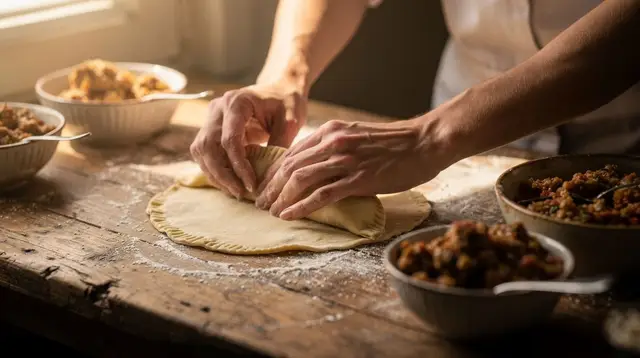
This is a different kind of course from the city’s popular empanadas cooking class, which is smaller-scale, faster, and works well solo or as a light afternoon activity. Asado classes lean into a more technical, traditionally male-coded craft tradition — the domain of the parrillero, the person who tends the grill at a family gathering and rarely lets anyone else touch it. That doesn’t mean the classes exclude anyone; it means the subject matter itself, historically, sits inside that role.
What “learning the fire” actually means
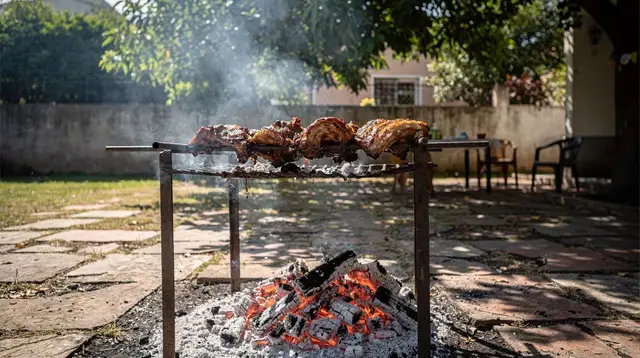
Every asado class worth its price starts with the fire, not the meat. In a traditional Argentine parrilla, wood or charcoal burns down in a separate area — sometimes a side firebox, sometimes just a corner of the grill — until it collapses into glowing embers with no visible flame. Only then does it get raked under the grate. Cooking directly over an open flame is a beginner’s mistake: it chars the outside before the inside is anywhere near ready, and it’s the single most common reason a home asado disappoints.
Expect your instructor to spend real time on this before any meat appears:
- Building the fire: stacking wood or charcoal so it burns evenly and predictably, not in one hot flare that dies fast.
- Judging embers: recognizing when coals have gone from flame to a steady, ash-grey glow — usually somewhere around 45 minutes to an hour after lighting, though it depends entirely on fuel and wind.
- Zone control: raking more or fewer coals under different parts of the grill to create hotter and cooler areas, since different cuts need different intensities and you rarely cook just one thing.
- Reheating mid-service: adding fresh embers partway through a long asado so the fire doesn’t fade before the last cuts are done.
None of this is exotic technique — it’s closer to the patient, low-tech logic of a campfire than to anything you’d see on a gas grill with dials. That’s the whole point: the skill lives in reading the fire by eye, not in a temperature setting.
The cuts, and why they don’t all cook the same way
A second myth worth correcting: asado is not one technique applied to one kind of meat. A typical class works through several cuts, each demanding a different relationship with the fire.
| Cut | Character | Typical fire treatment |
|---|---|---|
| Chorizo / morcilla (sausage) | Fast-cooking, often served first | Moderate heat, turned often, ready in minutes |
| Entraña (skirt steak) | Thin, prized, easy to overcook | High heat, short time, watched closely |
| Vacío (flank) | Thicker, more fat, forgiving | Moderate heat, longer and slower |
| Asado de tira (short ribs) | Bone-in, dense | Lower heat, longest cooking time, needs patience |
A class typically has you cook several of these in sequence or in parallel, which is exactly where the fire-management lesson pays off: the sausage that goes on first needs different heat than the ribs that go on alongside it and stay on much longer. Getting all of it to land on the table at roughly the same time — rather than sausage that’s cold by the time the ribs are ready — is the actual test of the day.
Salt is usually the only seasoning, added coarse and generally only on one side before cooking. Part of the lesson is resisting the urge to do more: no marinades, no sauces layered on early, no constant flipping. Good asado technique is mostly restraint punctuated by a few decisive moves — checking doneness by touch and by the way juices bead on the surface, not by cutting into the meat to look, which lets the juice run out.
What a real session looks like, hour by hour
Sessions vary by operator, but the shape is fairly consistent. Most run three to four hours in total, usually in Palermo, which has the city’s highest concentration of courtyard and rooftop spaces built around a proper parrilla grill.
- Introduction and fire-building (first 30–45 minutes): the instructor explains the logic of Argentine grilling, then the group builds and lights the fire together.
- The wait (roughly 45 minutes to an hour): while the fire burns down to embers, this is often when cuts of meat are introduced, seasoned, and prepped — and, at many venues, when a first round of wine is poured.
- Cooking in stages (an hour or more): sausages first, then faster cuts, then slower ones, with the group taking turns tending the grill under supervision.
- The meal: everyone sits down together to eat what was cooked, usually with Argentine wine — commonly Malbec — though this detail varies by operator, so check the specific listing.
Because the fire needs real time to prepare, don’t expect to walk in and eat within the first hour. That waiting period is not dead time in a well-run class — it’s where most of the actual teaching happens, since the fire itself is the subject.
What these classes don’t promise, and shouldn’t
Be wary of any listing that implies you’ll walk out grilling like a professional parrillero. You won’t, and a three-hour class was never going to deliver that. A parrillero at a well-regarded Palermo or San Telmo restaurant has usually spent years reading the exact behavior of one grill, one fuel source, and hundreds of repetitions of the same cuts. That kind of instinct doesn’t transfer in an afternoon.
What a class can honestly deliver is the underlying logic: why the fire needs to be embers and not flame, why different cuts need different zones and timing, and why salt and patience matter more than any sauce. Applied at home with attention, that’s enough to produce a genuinely good asado — just not a guaranteed match for the best parrillas in Palermo or their counterparts in San Telmo, which are working with equipment, sourcing and repetition a home cook doesn’t have.
If you’d rather watch and eat than cook, a dedicated asado and parrilla guide covers where to get a top-tier version of the meal without doing the work yourself, and the wider asado cooking class or dining experience format lets you choose between the hands-on class and a more passive dinner setting depending on which you’d rather book.
Choosing between an asado class and other cooking courses
Buenos Aires offers several distinct cooking-course formats, and it’s worth being clear about which one you’re booking:
- An Argentinian cooking class that covers a broader menu beyond just the grill, useful if you want more variety than fire technique alone.
- A more concentrated asado experience in Buenos Aires built specifically around the grill session and the shared meal that follows.
- A guided asado BBQ and dinner experience that pairs the technique lesson with a full sit-down meal afterward.
None of these overlaps with the empanadas cooking class, which is a different, faster-paced craft built around pastry and filling technique rather than fire. If you’re choosing between the two and only have time for one, the honest distinction is that empanadas teach precision and repetition in a kitchen, while asado teaches patience and judgment outdoors around a fire that won’t be rushed.
Other asado formats worth comparing
Not every asado-style booking is the same three-to-four-hour hands-on class described above. A few variations show up regularly on local listings, and it’s worth knowing what you’re choosing between before you commit:
- A longer, more elaborate 15-course Argentine asado and wine experience, which stretches the format into a tasting-menu-style progression through multiple cuts paired with different wines, rather than a single shared spread at the end.
- An 8-course Argentine BBQ at Fogón Asado, a fixed-venue version of the multi-course approach for travelers who’d rather sit at a table than tend the grill themselves.
- A private Argentine cooking class, useful for families or small groups who want their own instructor and schedule instead of joining a mixed group session.
- A premium, women-run asado experience aimed at travelers who want a smaller, more curated version of the same fire-and-cuts format.
None of these change the underlying craft — fire first, meat second — but they change the pace, the group size, and how much of the actual grilling you do yourself. If the point of the trip is to leave knowing how to build and read a fire, the standard hands-on class is the right choice; if the point is simply eating very well, one of the multi-course formats above delivers more food with less physical involvement.
Pairing an asado class with the rest of a Buenos Aires food trip
Argentine food culture doesn’t stop at the grill, and a single asado class rarely needs to be the only cooking-focused activity on a trip. Travelers building a longer stay around food often combine it with an empanadas tasting tour or a dulce de leche and chocolate tour earlier in the visit, saving the asado class itself for an evening slot since the fire-building stretch works better without a tight schedule pressing on it afterward.
For wine drinkers, it’s also worth knowing that most asado classes pour Malbec as a matter of course rather than as a special add-on, so a separate Malbec wine tasting in Buenos Aires is a complement rather than a repeat of the same experience — the tasting goes deeper into the wine itself, while the asado class treats wine as an accompaniment to the meal. Travelers who want the fire-and-meat lesson but skip the sausage-forward menu can also look at a Argentine cooking class designed by a Michelin chef, which applies more refined technique to similar ingredients.
If the trip includes an evening out afterward, Palermo’s rooftop bars and wine bars sit within easy reach of most class venues, so there’s no need to travel across the city once the meal winds down — though after a three-to-four-hour meal built around a shared table and multiple courses of grilled meat, many travelers are content to call it a night instead.
Practical notes before booking
Classes are typically held in Palermo, often within walking distance of Palermo Soho and Palermo Hollywood, so it pairs easily with an evening out in the neighborhood afterward. Expect the outdoor or semi-outdoor cooking area to be genuinely warm from the fire even in Buenos Aires’s cooler months — June through August rarely dips near freezing here, since the seasons run inverted to the northern hemisphere.
Come with an appetite and low expectations about pace: the fire sets the schedule, not the clock. Groups that try to rush the embers usually end up with meat that’s charred outside and raw near the bone, which is precisely the outcome the whole class exists to prevent. If you want a broader introduction to the city’s food scene before or after, a food tour of Palermo or San Telmo rounds out the picture with markets, bakeries and bars rather than a single hands-on session.
For travelers building out a longer stay, an asado class fits naturally alongside a day exploring San Telmo or a half-day city tour, and slots well into most three-day or longer itineraries as a single evening commitment rather than a full day given over to it.
Frequently asked questions about the asado cooking class
Is an asado cooking class the same as a parrilla dinner?
No. A parrilla dinner is a restaurant meal where someone else grills for you. An asado cooking class is hands-on: you help build the fire, place and turn cuts, and manage timing, usually finishing with a shared meal at a long table.
Do I need any cooking experience?
No. Classes are built for complete beginners and explain fire management, cuts and timing from the start. The physical parts — feeding a fire, turning meat with tongs — need no prior skill, just attention.
Will my asado taste as good as one at a top parrilla in Palermo?
Not reliably, and no honest class promises that. A professional parrillero has years of daily repetition reading one specific grill’s heat. A three-hour class teaches the principles, not that muscle memory, so treat the result as a genuinely good home-level asado, not a restaurant replica.
How long does a class take, and when do I eat?
Most run three to four hours. The fire needs roughly 45 minutes to an hour to burn down to cooking embers before meat goes on, then cuts cook in stages over another hour or more, so the meal itself typically starts partway through the second half of the session.
What cuts of meat are used?
Courses typically work through several cuts with different cooking logic — often a chorizo or morcilla sausage to start, a fast cut like entraña (skirt steak), and a slower cut such as asado de tira (short ribs) or vacío (flank), which needs longer, gentler heat than a thin steak.
Is there a version for vegetarians or people who don’t eat red meat?
Some operators offer vegetable-forward grilling sessions or can adapt a menu with notice, but the classic asado class is built around beef and other meats as its teaching material. Ask before booking if this matters to you, and see the dedicated vegan cooking class below for an alternative built around plant-based food from the start.
Where in the city do these classes run?
Most take place in Palermo, often in a courtyard or rooftop space with a built-in parrilla grill, since that barrio has the highest concentration of cooking-class venues in the city.
Is wine included?
Most asado classes pair the meal with Argentine wine, typically Malbec, though this varies by operator — check the specific listing rather than assuming.
Food Tours and Argentine Wine Tastings
Verified deep-linked GetYourGuide tours. Book through these links and we earn a small commission at no cost to you.
GetYourGuide does not provide a product photo for this activity — the image shows the meeting point, photographed by us.