Best Time to Visit Buenos Aires: A Season-by-Season Guide
When is the best time to visit Buenos Aires?
Spring (September to November) and autumn (March to May) are the most comfortable seasons, with mild days and the jacaranda trees flowering purple in late October and November. Summer (December to February) is hot and humid; winter (June to August) is cool and damp but rarely cold by European standards, and it is winter, not summer, despite the month names.
Reading the Buenos Aires calendar the right way round
Every year, travellers arrive at Buenos Aires expecting a July heatwave and instead find themselves reaching for a scarf. The confusion is understandable and entirely avoidable once one fact is fixed in mind: Buenos Aires sits in the southern hemisphere, so its seasons run opposite to those in Europe, North America or most of Asia. December, January and February are the hot months. June, July and August are the cool ones. There is no ambiguity here, no local quirk, no exception for a warm spell — July is deep winter on the Río de la Plata, in the same way January is deep winter in Paris or New York.
This matters for more than small talk. It shapes what to pack, which festivals fall when, how crowded the streets and restaurants will be, and how the city’s famous outdoor life — café terraces, riverside walks, the Sunday fair in San Telmo — actually plays out. A trip planned around northern-hemisphere instincts risks the wrong wardrobe, the wrong expectations for daylight and crowds, and a missed jacaranda season that many visitors travel specifically to see.
Argentina also runs on a single time zone year-round, UTC−3, with no daylight saving and no clock change, so at least the clocks stay simple even as the seasons flip. What follows is a season-by-season walk through the year, with the honest trade-offs for each.
Summer: December to February, hot and humid
Austral summer runs from December through February, and it is the hottest, most humid stretch of the Buenos Aires year. Daytime temperatures commonly reach the low-to-mid 30s Celsius, with humidity off the Río de la Plata making the air feel heavier than the number alone suggests. Afternoon thunderstorms are common and can be intense, if usually short.
Locally, summer has a particular rhythm. January is the quiet month: a large share of porteños close up the apartment and head to the Atlantic coast or elsewhere for their own holidays, and the city can feel noticeably emptier, with some smaller restaurants and shops closing for a week or two. February picks back up as people return and the school year approaches. December carries its own energy, dominated by the lead-up to the holidays and a warm, late-sunset atmosphere in parks like the Bosques de Palermo.
Practically, summer favours mornings and evenings for walking tours — the Recoleta Cemetery or a Palermo street art walking tour are far more pleasant before 11am or after 5pm than at midday — and it rewards anywhere with shade or water.
The Costanera Sur Ecological Reserve, a large riverside wetland beside Puerto Madero, has almost no shade and nowhere to buy water on much of its circuit, so a summer visit there works far better in the early morning or late afternoon than at noon. Evening life, on the other hand, comes into its own: dinner in Buenos Aires rarely starts before 21:00 in any season, but in summer the warm nights make that late rhythm feel natural rather than forced, and rooftop bars and outdoor tables fill long after dark.
For a full seasonal breakdown, see the summer guide to Buenos Aires and the month-by-month notes for January if travel dates fall in that quieter window.
Winter: June to August, cool and damp — and definitely not summer
This is the season most likely to surprise a first-time visitor, which is exactly why it deserves the clearest possible statement: winter in Buenos Aires runs June to August, and July sits at its centre. Anyone arriving expecting a European or North American July — long days, heat, shorts weather — will be caught out.
That said, Buenos Aires winter is mild by the standards of much of Europe or North America. Daytime temperatures typically sit in the low teens Celsius, occasionally dipping close to single digits, and snow is essentially unknown in the city — a genuine rarity rather than a once-a-decade event. What winter does bring is dampness: grey skies, a raw edge to the wind off the river, and indoor heating that varies a great deal from one building to the next, so evenings can feel colder than the daytime number suggests. Layers — a warm jacket, a scarf, closed shoes — cover it comfortably; a heavy northern-hemisphere winter coat is usually overkill.
Winter has real upsides for a visit. Hotel rates and tour availability often ease outside the July school-holiday fortnight, when Argentine families travel domestically and some sites get busier with local visitors rather than international ones. Museums, the Teatro Colón’s guided tours, and indoor food and wine experiences suit the shorter, cooler days well, and the city’s grand 19th- and early-20th-century architecture along the Microcentro and Avenida de Mayo often photographs beautifully under flat winter light. For travellers weighing this trade-off directly, the month-by-month page for July lays out exactly what to expect and what to pack.
Spring: September to November, and the jacaranda season
Spring, September through November, is one of the two most comfortable stretches of the Buenos Aires year, with days warming steadily from cool starts in September to genuinely warm, settled weather by November. Rain is possible but rarely disruptive, and the long transition from winter chill to summer heat gives spring the widest range of pleasant days for walking the city.
The season’s signature event is the jacaranda bloom. From late October into November, jacaranda trees across Palermo, Recoleta, Belgrano and many residential streets flower in a striking purple that carpets both branches and pavements. It is one of the most photographed natural sights in the city, and it is genuinely worth timing a trip around if it matters to a visitor’s itinerary — though, like any flowering season, the exact peak shifts a little from year to year depending on the preceding weather, so travellers chasing the bloom precisely should build in a few days of flexibility rather than betting everything on a single date. A dedicated season breakdown lives on the jacaranda season page.
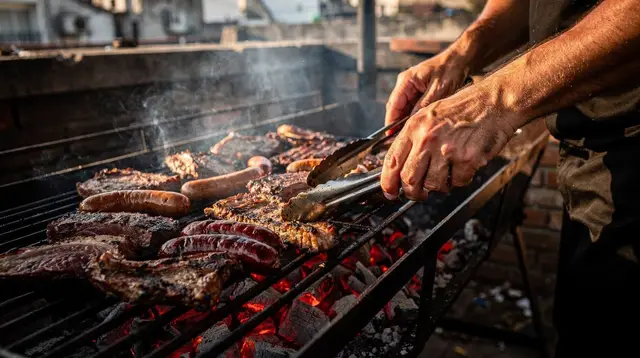
Spring is also a strong season for the areas just outside the city. A day trip to Tigre and the Paraná Delta, reached by train from Retiro in about an hour, suits the milder temperatures well, and the pampas towns — San Antonio de Areco among them — are at their most comfortable for a full day outdoors, including an estancia day trip with an asado lunch and horses.
Autumn: March to May, mild and increasingly quiet
Autumn, March to May, is the other genuinely comfortable season, and it is often underrated next to spring’s jacaranda spectacle. Early March still carries some late-summer warmth, temperatures ease through April, and by May the city has settled into cooler, clearer days with noticeably thinner crowds than the peak summer or spring months. Light in autumn tends to be soft and low, flattering for photography in barrios like La Boca and along Puerto Madero.
Because it falls between the two headline seasons, autumn is also often the best value window: airfares and accommodation frequently ease once the southern-hemisphere summer crowd has gone home and before the winter-holiday dip, without sacrificing much in comfort. It suits walking-heavy days in the centre and in Recoleta, and it is a reliable season for outdoor dining, since the heaviest summer humidity has passed but evenings are not yet winter-cold.
Buenos Aires by season, at a glance
| Season | Months | Typical days | Character | Best for |
|---|---|---|---|---|
| Summer | December–February | Hot, humid, low-to-mid 30s°C | Lively evenings, quiet January, storms possible | Riverside evenings, nightlife, festivals |
| Autumn | March–May | Mild, cooling, clear light | Thinner crowds, good value | Walking tours, photography, value trips |
| Winter | June–August | Cool, damp, low teens°C | Grey skies, no snow, July school-holiday bump | Museums, indoor food and wine, lower rates |
| Spring | September–November | Mild, warming | Jacaranda bloom late Oct–Nov | Day trips, outdoor sightseeing, photography |
Matching the season to the trip
For a first visit built around the classic sights — Plaza de Mayo, San Telmo, Recoleta Cemetery, and an evening of tango — spring and autumn are the safest bets, since they avoid both summer’s midday heat and winter’s dampness while keeping every outdoor itinerary comfortable. A three-day first-timer itinerary works well in either season, adjusted only for how early or late the light suggests starting the day.
Families travelling with children often do best avoiding the harshest summer heat in favour of spring or autumn, when parks, the Bosques de Palermo and outdoor activities stay comfortable through the middle of the day rather than only at the edges; the dedicated guide for visiting with kids covers this in more detail. Travellers whose main goal is value and quieter streets, and who are comfortable packing layers rather than summer clothes, should look seriously at winter outside the July school-holiday fortnight — it is the cheapest, calmest version of the city, snow-free and mild by broader international standards even if it is genuinely winter.
Whatever the season, a few practicalities stay constant. Currency is the Argentine peso, and given Argentina’s history of high inflation, any peso figure — including prices quoted elsewhere on this site — should be treated as a dated snapshot rather than a fixed number; see the budget and currency guide for how to plan around that. Getting around uses the SUBE card across the Subte, buses and suburban trains regardless of season, covered in the guide to getting around Buenos Aires. And however many days are available, the how-many-days guide helps translate a chosen season into a realistic itinerary length.
Putting a season into an itinerary
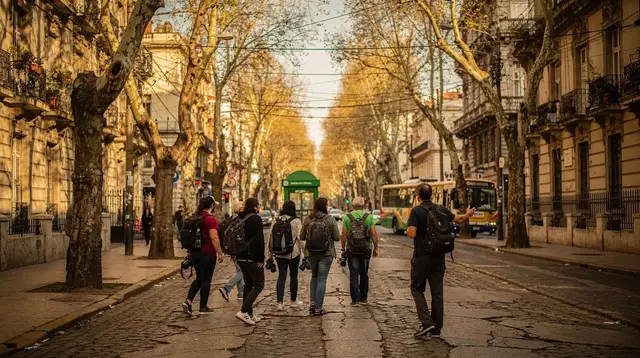
Choosing a season is only the first decision; the second is what to actually do with the days once there. A private walk through the historic centre works in any season and adapts naturally to the weather of the day it falls on — a private guided walk through the city’s landmark barrios with a local host can be timed for a cool spring morning or a mild autumn afternoon alike.
Evenings, meanwhile, are one part of the Buenos Aires year that barely changes with season, since dinner starts late and tango houses run every night of the year — a full tango dinner show with live orchestra and dancers is as suited to a winter night as a summer one, arguably more so, since it moves the evening indoors.
Photography-focused visits benefit from thinking seasonally too: spring’s jacaranda light and autumn’s soft afternoon sun both flatter the city’s grand architecture and colourful barrios, and a guided photo session at the city’s most photogenic spots makes the most of whichever season’s light a trip lands in.
For visitors who want summer’s energy alongside a taste of the pampas without adding extra travel days, a combined city tour, ranch visit and tango show package packs a full cross-section of the region into a single long day, which suits the longer daylight of spring and summer especially well.
Frequently asked questions about the best time to visit Buenos Aires
Is July summer in Buenos Aires?
No. Buenos Aires is in the southern hemisphere, so its seasons are inverted from the northern hemisphere. July sits in the middle of the austral winter, June to August, with cool, damp days and occasional cold snaps rather than heat.
What is the best month to see the jacaranda trees in bloom?
Late October into November is the classic window, when jacarandas across Palermo, Recoleta and Belgrano flower purple, though the exact timing shifts a little each year with the weather.
Is Buenos Aires very hot in summer?
Yes, December to February brings hot, humid days, frequently into the low-to-mid 30s Celsius, with January especially quiet as many porteños leave the city for the coast.
Does it snow in Buenos Aires in winter?
Essentially never. Winter, June to August, is cool and often damp, with typical daytime temperatures in the low teens Celsius, but snow is a historic rarity rather than a normal event.
Is spring or autumn better for a first visit to Buenos Aires?
Both are excellent and mild; spring adds the jacaranda bloom from late October, while autumn brings clearer light and thinner crowds, so the choice often comes down to whether the purple-flowering trees matter to your trip.
When is Buenos Aires the quietest for tourists?
January is quiet locally, as many residents leave for summer holidays, but it is also peak heat and can feel sleepy for restaurants and cultural venues; winter weekdays outside July school holidays are the quietest for genuine low-season pricing.
What should I pack for a Buenos Aires winter trip?
Layers rather than a heavy coat: a warm jacket, a scarf, and closed shoes are usually enough, since temperatures rarely drop below freezing, but indoor heating varies and evenings can feel raw and damp.
Trip Planning
Verified deep-linked GetYourGuide tours. Book through these links and we earn a small commission at no cost to you.
GetYourGuide does not provide a product photo for this activity — the image shows the meeting point, photographed by us.