Getting Around Buenos Aires: Subte, Buses and Rides
How do you get around Buenos Aires?
Mostly on the Subte (six lines, A to E plus H) and the colectivo bus network, both paid with a SUBE contactless card rather than cash. Taxis, remises and ride-hailing apps fill in for late nights, luggage and trips the Subte doesn't reach.
My first mistake, and the one everyone makes
I landed thinking I’d just hop on a bus with pesos in my pocket. I stood at the door of a colectivo in Retiro fumbling with coins while the driver looked at me like I’d asked to pay in seashells. You cannot pay cash on public transport in Buenos Aires. Not on the Subte, not on the bus, not on the suburban trains out to Tigre or San Isidro. Everything runs on a single contactless card called SUBE, and until you have one, you’re walking or paying for a car every single time.
That one fact reorganizes how you should think about the city. So before anything else: go get a SUBE card. I’ve written the buying and topping-up logistics up separately in the SUBE card guide — where to buy it, how to load it, what to do if a kiosk is out of stock — because it deserves its own space and this page is about the bigger picture of moving around.
The Subte: six lines, and one surprising fact
The Subte is the city’s underground, and it’s the backbone of how I get across town quickly. Six lines: A, B, C, D, E, and H. Line A is the one I find myself thinking about every time I ride it, because it opened in 1913 and was the first underground railway in the whole southern hemisphere and in Latin America. Riding a line that old, with its original tiled stations still visible in places, is one of those small things that makes the city feel layered in a way I didn’t expect from a “young” capital.
The lines fan out from the Microcentro toward the edges of the city, and they’re genuinely fast when your route lines up with one of them. My honest experience: Subte trips are excellent between neighborhoods that a line actually connects, and useless the moment you need to go diagonally across two lines that don’t quite meet — that’s when a fifteen-minute idea becomes forty-five minutes underground.
One thing worth correcting up front, because I assumed it before I arrived: Buenos Aires has no tram network. There is a light rail line in the northern suburbs, the Tren de la Costa, which runs a scenic route toward Tigre, but that’s a suburban leisure line, not a city tram you’d use to get from San Telmo to Palermo on a Tuesday morning. If you’re picturing European-style trams rattling down the avenues, drop that picture.
Colectivos: the network that actually covers the city
The buses — colectivos — are where the real coverage is. The Subte lines are few and mostly radial; the colectivos fill in everything the Subte doesn’t reach, and a lot of routes keep running through the night, which the Subte does not. I lean on colectivos more than I expected to, especially getting from Palermo or Belgrano somewhere that isn’t a straight shot on a Subte line.
The catch is that the route network is dense and not always intuitive to a visitor — hundreds of numbered lines, each with its own path through the city. I use a transit app for this rather than trying to memorize anything, and I’d recommend the same: look up the specific colectivo number for your route rather than guessing at a stop. The SUBE card taps on both entry and, for some routes, exit, same as the Subte, so keep it topped up rather than running it to zero mid-trip.
When I just give up and take a car
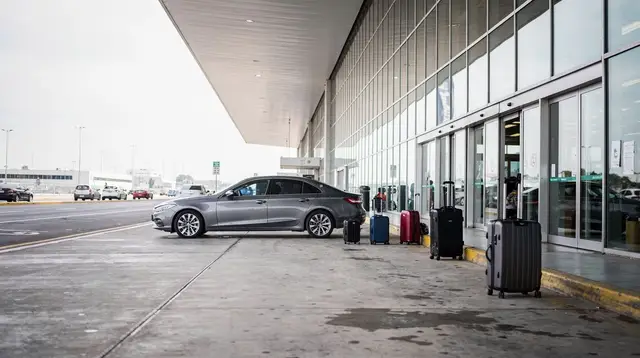
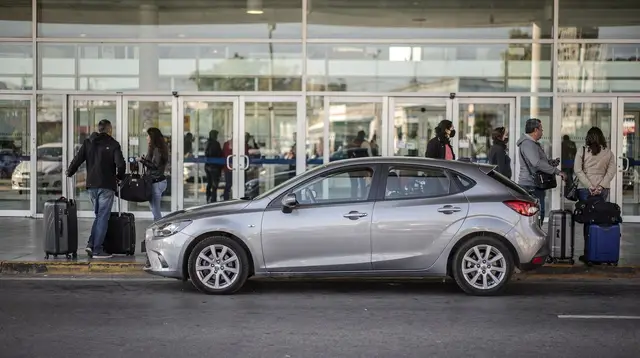
Some trips aren’t worth the transfer. Late at night, with luggage, heading to Ezeiza airport for an early flight, or crossing between neighborhoods that Subte and colectivo both handle badly — that’s when I call a remise, take a taxi, or open a ride-hailing app. All three are normal, established options here, not a workaround. Remises are pre-booked cars arranged by phone or through a local office, which I find calmer than flagging something down on a busy avenue like along Puerto Madero at rush hour. Taxis are plentiful and metered. Ride-hailing apps work the way they do everywhere else.
I don’t use cars as my default in the city — traffic in the Microcentro and around Plaza de Mayo at peak hours can eat any time you saved versus the Subte — but I stop pretending public transport is always the efficient choice. It usually is. Not always.
A rough mental map for choosing
| Situation | What I actually take |
|---|---|
| Point-to-point on a Subte line, daytime | Subte |
| Anywhere the Subte doesn’t reach directly | Colectivo |
| Late night, after Subte service ends | Colectivo (if the route runs) or taxi/rideshare |
| Airport transfer, luggage | Remise or taxi |
| Day trip toward Tigre or San Isidro | Suburban train (Mitre line) or Tren de la Costa |
| Crossing the river to Uruguay | Ferry, not a road option at all |
For fares on any of these — Subte, colectivo, suburban trains — I’d rather not print a number here. Argentina has been through years of high inflation and repeated changes to how fares and top-ups work, and any peso figure I wrote today would likely be stale within weeks. Check the current fares through the official SUBE site or your transit app before you travel, and load more onto the card than you think you’ll need.
Where this fits into the rest of your trip
Once you’ve got the SUBE sorted and a rough sense of Subte versus colectivo, the transport question mostly disappears into the background, which is exactly where I want it. It frees you up for the actual planning — deciding between Palermo and Recoleta as a base, working out how Tigre or Colonia del Sacramento fit into your days, and figuring out how you’ll get to and from whichever airport you land at, which I cover separately since EZE and Aeroparque work completely differently from the city’s local transport.
If you want a full day out that removes the transport question entirely, a guided option like the gaucho day trip to the pampas with an asado lunch or the guided brunch and boat visit through the Tigre delta handles the transfers for you, which is a relief on the days you don’t want to think about SUBE balances at all.
For crossing into Uruguay, the day trip to Montevideo with ferry and lunch included does the same for the border crossing and ferry logistics. And if you’re spread across several of these areas over your stay, a structured option like the 4-day Discovering Buenos Aires itinerary bundles a lot of the moving-around decisions into one booking.
Getting around Buenos Aires: your questions
Can I pay for the Subte or colectivo with cash?
No. Both require a SUBE contactless card; drivers on colectivos do not accept cash fares, and Subte turnstiles read SUBE only. See the SUBE card guide for where to buy and top it up.
Does Buenos Aires have trams?
No, the city has no tram network. The Tren de la Costa in the northern suburbs, used on the way to Tigre, is a light rail line, not a city tram.
How many Subte lines are there?
Six: A, B, C, D, E, and H. Line A, opened in 1913, was the first underground railway in the southern hemisphere and in Latin America.
Is the bus network worth learning, or should I just stick to the Subte?
Worth learning, at least loosely. Colectivos cover the city far more finely than the Subte’s six lines and many routes run through the night, when the Subte doesn’t. I use a transit app to find the right line rather than memorizing routes.
What’s the difference between a remise and a taxi?
A remise is a car booked in advance by phone or office rather than hailed on the street; a taxi is metered and can be flagged down. Both are normal, established options alongside ride-hailing apps.
How much does a Subte or colectivo ticket cost?
I’m deliberately not printing a figure here — Argentina’s fares and payment rules have changed repeatedly amid high inflation, so any number would likely be outdated quickly. Check the official SUBE site or a transit app for current fares before your trip.
Do I need SUBE for the suburban trains to Tigre or San Isidro?
Yes, the same SUBE card covers the suburban rail network, including the Mitre line toward Tigre and San Isidro, alongside the Subte and colectivos.
Is traffic bad enough that I should avoid cars in the city?
At peak hours around the Microcentro and Plaza de Mayo, yes, it can erase any time advantage over the Subte. I still use cars for late nights, luggage, and airport transfers, just not as a daytime default.
Getting Around Buenos Aires
Verified deep-linked GetYourGuide tours. Book through these links and we earn a small commission at no cost to you.
GetYourGuide does not provide a product photo for this activity — the image shows the meeting point, photographed by us.