A cathedral town on the way to Tigre
San Isidro sits on the northern shore of the Río de la Plata, roughly 25 to 30 minutes by train from Buenos Aires, on the same Mitre-line corridor that continues on to Tigre. It is one of the wealthier, greener suburbs of Greater Buenos Aires: wide leafy streets, low-rise houses from the late 19th and early 20th centuries, private rowing clubs along the riverbank, and a compact pedestrian centre built around a neo-Gothic cathedral that gives the town its skyline.
Set expectations correctly before going: San Isidro is a short, pleasant stop, not a full day out, and it is not where the Paraná Delta begins. That role belongs entirely to Tigre, a little further up the line, where wooden launches actually enter the delta’s channels. San Isidro is worth two to four hours on foot around its historic core; almost every visitor either arrives from Tigre or continues on to it the same day, making the pairing the sensible way to plan the outing rather than treating either town in isolation.
The historic centre and the cathedral
The Catedral de San Isidro is the town’s landmark: a neo-Gothic building in red brick and stone, with a tall single spire visible from several streets away, standing over the leafy Plaza Mitre. It was built in the second half of the 19th century, replacing an earlier colonial-era chapel on the same site, and its scale is out of proportion to the small town around it — a reminder that San Isidro was, and largely still is, a residential retreat for Buenos Aires’ wealthier families rather than a commercial centre.
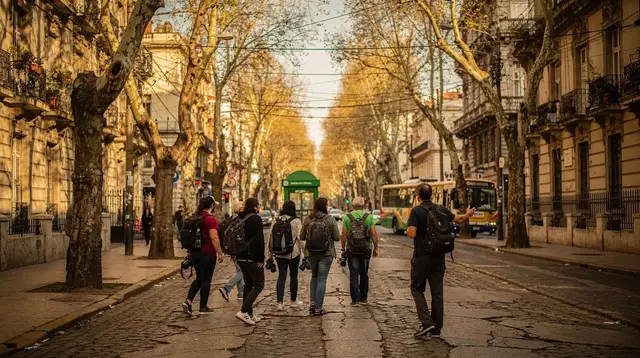
Around the plaza, a handful of pedestrianised streets carry cafés, small shops and, on weekends, a modest crafts and antiques fair that draws a local rather than a touristy crowd. It is unhurried by comparison with San Telmo or Recoleta: fewer stalls, fewer languages overheard, more of a Sunday-stroll feel for residents of the northern suburbs. A short walk downhill from the plaza leads toward the riverbank, past the rowing clubs (Club de Regatas, among others) that have used this stretch of the Río de la Plata for over a century, and past streets of villas that give a sense of what riverside Buenos Aires looked like before the city’s density spread this far north.
None of this takes long. A visitor who arrives by the late-morning train, walks the plaza and cathedral, has a coffee, and wanders the surrounding blocks for half an hour has seen San Isidro properly by early afternoon — which is exactly why it works best as one half of a day, with the other half spent in Tigre.
Getting there, and why the train matters
The Mitre line leaves Retiro station regularly throughout the day and reaches San Isidro in roughly 25 to 30 minutes, continuing on to Tigre in another 15 to 20. This is a suburban commuter train, requires a SUBE card like the rest of the city’s public transport, and is the route most visitors use precisely because it also serves Tigre — meaning there is rarely a reason to backtrack into the city between the two stops. See the general SUBE card guide and the wider subte and transport guide for how the card works across the network.
An alternative is the Tren de la Costa, a separate, more scenic light-rail line that also runs through this stretch of the northern suburbs and stops closer to some of San Isidro’s riverside points, though it involves a change and runs less frequently than the Mitre line. Driving is possible and takes a similar 25-40 minutes outside rush hour, but adds parking to think about for what is fundamentally a walking visit.
For visitors without a car, the train is simpler in every respect, and it is the transport choice that makes combining San Isidro with Tigre effortless rather than a planning exercise. See the getting around Buenos Aires overview for the wider transport picture, and the EZE vs Aeroparque airport guide if San Isidro is on the itinerary near arrival or departure.
San Isidro and Tigre: two stops, one outing
It is worth being direct about the relationship between these two towns, because itineraries sometimes blur it. Tigre, not San Isidro, is the gateway to the Paraná Delta: it is where the wooden lancha launches depart, where the Puerto de Frutos craft market operates, and where the delta’s stilt houses and wooded channels actually begin. San Isidro has a riverbank and rowing clubs, but no delta access of its own, and treating it as an alternative entry point to the delta sets up a disappointing morning.
What San Isidro offers instead is a short, elegant architectural stop that sits conveniently on the way. The standard, and most efficient, pattern looks like this:
| Plan | Rough timing | What it covers |
|---|---|---|
| San Isidro first, then Tigre | Morning in San Isidro, afternoon in Tigre | Cathedral and historic centre, then delta boat trip and Puerto de Frutos market |
| Tigre first, then San Isidro | Morning boat trip in Tigre, late afternoon in San Isidro | Delta channels early while cooler, cathedral as a wind-down stop before returning |
| San Isidro only | 2-4 hours | Cathedral, plaza, riverside walk — a lighter half-day for a slower schedule |
For most visitors with a single day free north of the city, the first two rows are the better use of time; San Isidro alone, while pleasant, leaves the day’s main draw — the delta itself — untouched. The Tigre day trip guide and the dedicated San Isidro day trip guide both work through this pairing in more detail, and the one-day Tigre and delta itinerary or the longer three-day Tigre, San Isidro and Belgrano itinerary build it into a fuller northern-suburbs plan.
Delta boats, birdwatching and a grill in the islands
Once the destination for the delta portion of the day is correctly set as Tigre rather than San Isidro, the choice of how to see the delta itself is worth making deliberately. Scheduled lancha colectiva water-buses serve the islands as public transport, stopping at private jetties along the way, while fixed-route tourist catamarans run shorter sightseeing loops — different pace, different price, covered in the delta boat trips guide, the lancha tour guide and the catamaran versus lancha comparison.
For a slower, more immersive version of the same water, a grill lunch on one of the delta islands, reached by boat through the hidden waterways gives a proper stop among the stilt houses rather than a pass-through view from the deck.
Visitors more interested in the delta’s wildlife than its food culture can instead book a guided birdwatching trip through the delta channels, with lunch included, which moves more slowly and stops where the birdlife is, rather than following a fixed sightseeing loop. Either works well as the “Tigre half” of a day that starts or ends with San Isidro’s cathedral. The Puerto de Frutos craft market guide and the Río de la Plata sunset cruise guide cover the other classic Tigre add-ons for the same afternoon.
Travellers assembling a longer first visit to the city, rather than a single northern-suburbs day, sometimes fold San Isidro and Tigre into a broader multi-day plan; a four-day guided introduction to Buenos Aires and its surroundings is one way to see San Isidro’s cathedral alongside the city’s main sights without piecing together the logistics stop by stop. The three-day first-time Buenos Aires itinerary is a self-planned equivalent covering similar ground.
Practical notes for the day
San Isidro is straightforward logistically, but a few points are worth knowing before setting out. The town is entirely walkable from the station to the cathedral and the riverside, so there is no need for taxis or rideshares once there, though both are available if needed. Cafés around Plaza Mitre cover a coffee stop or a light lunch; for a fuller meal, most visitors either eat in San Isidro’s centre before continuing to Tigre, or wait for Tigre’s riverside restaurants, which have more choice.
As with peso prices anywhere in Argentina, the day-budget figure above is a dated snapshot from September 2026, not a fixed number — Argentina’s exchange rate and payment rules have shifted repeatedly in recent years, so check a live conversion and the current rules for foreign cards before budgeting, and prefer carrying some cash for small vendors. The weekend crafts fair on Plaza Mitre runs on Saturdays and Sundays and is a minor bonus rather than a reason to time the whole trip around it; on weekdays the plaza and cathedral are just as visitable, only quieter.
Weather-wise, San Isidro follows the same seasonal pattern as the rest of Buenos Aires: spring (September to November) brings mild temperatures and, from late October, the purple bloom of jacaranda trees along the residential streets, while autumn (March to May) offers similarly comfortable conditions with fewer crowds than summer. Summer (December to February) is hot and humid and best visited earlier in the day; winter (June to August) is cool and damp but rarely uncomfortable for a few hours of walking. For the delta half of the day in Tigre, mornings tend to be calmer on the water and cooler for boat trips in the warmer months.
Where San Isidro fits in a wider trip
For a visitor building out the things to do near Tigre or comparing day trips from Buenos Aires more broadly, San Isidro is best understood as a short, worthwhile add-on to the Tigre excursion rather than a separate line item.
It does not compete with La Plata or San Antonio de Areco as a full day trip in its own right, and it does not substitute for Tigre as the delta’s gateway. What it offers — a neo-Gothic cathedral, a walkable historic centre, and a quiet riverside quarter of rowing clubs and old villas — is real, but it is a two-to-four-hour real, comfortably absorbed into a longer northward day rather than requiring one of its own.
Frequently asked questions about visiting San Isidro
Is San Isidro worth visiting from Buenos Aires?
Yes, but as a short stop rather than a full day: San Isidro’s cathedral and historic centre take a couple of hours, and it sits on the same Mitre-line route as Tigre, so most visitors combine the two in a single northbound outing rather than treating San Isidro as a destination in its own right.
Can I visit the Paraná Delta from San Isidro?
Not directly. San Isidro sits on the riverbank but the wooden lanchas and delta channels are boarded from Tigre, a further 15-20 minutes north by train. San Isidro is a stop on the way, not a delta gateway itself.
How do I get from Buenos Aires to San Isidro?
The Mitre line from Retiro runs directly to San Isidro station in roughly 25-30 minutes, using a SUBE card. Driving takes about the same time outside rush hour, longer during it. Some visitors instead take the slower, scenic Tren de la Costa, which also serves San Isidro.
Is San Isidro safe to walk around?
San Isidro is one of the more affluent, low-key suburbs of Greater Buenos Aires, and the historic centre around the cathedral is generally comfortable to walk in daylight. Ordinary city-travel caution still applies, as anywhere in the metropolitan area.
How much time do I need in San Isidro?
Two to four hours covers the cathedral, the Plaza Mitre area and a short walk through the historic streets. Most itineraries pair this with several more hours in Tigre the same day, since both sit on the same rail line.
What is there to see besides the cathedral?
The pedestrianised historic core around the Catedral de San Isidro, a small weekend crafts fair on the plaza, riverside rowing clubs along the Río de la Plata, and residential streets with 19th- and early 20th-century houses. It is a walking and architecture stop, not a museum-heavy one.
Should I visit San Isidro on its own or combine it with something else?
Combine it. San Isidro is deliberately short, and it sits directly between Buenos Aires and Tigre on the same line, so the standard pattern is a morning in San Isidro followed by an afternoon in Tigre and the delta, or the reverse.