Why most visitors pass through Retiro rather than stop there
Retiro sits at a junction, not a destination. On one side is the wide green edge of Recoleta; on the other, the towers of Puerto Madero and the reclaimed riverfront. In between is a working transport complex: the Retiro railway terminal (the Mitre, Belgrano and San Martín suburban lines), the Terminal de Ómnibus de Retiro for long-distance buses, and a Subte station on Line C that connects both to the Microcentro. If you’ve come to this page, you’re almost certainly here because a schedule brought you, not a sightseeing plan — and that’s the right way to think about Retiro.
This page is deliberately short. It won’t pad out a checklist of attractions Retiro doesn’t really have, and it won’t suggest wandering its streets after dark the way a guide might for Recoleta or Palermo. What follows is practical: how the terminals fit together, how to get through them without losing time or valuables, and where Retiro actually leads.
What Retiro is, in three parts
The railway terminal (Estación Retiro). Three separate stations share the same site, each run by a different suburban line: the Mitre line (the one that matters most for visitors, since it runs to Tigre), the Belgrano line, and the San Martín line. They’re physically adjacent but operate as distinct stations with their own platforms and ticket areas, so double-check which building you need before you queue.
The bus terminal (Terminal de Ómnibus de Retiro). One of the largest intercity bus terminals in South America, with dozens of companies running services across Argentina and into neighbouring countries. It’s a short walk from the railway terminal, connected by an elevated walkway, and it’s busiest early morning and in the evening when long-haul overnight buses depart.
The Subte connection. Retiro station on Line C links the terminals to the Microcentro and, via interchange, to the rest of the Subte network. It’s the fastest way in and out for anyone not taking a taxi.
None of the three is a place to linger. Ticket halls, platforms and the walkway between them are functional spaces, and Retiro’s genuine appeal — such as it is — lies in what the trains and buses connect to, not in the terminal itself.
Getting to Retiro
From the Microcentro or Plaza de Mayo, Retiro is a few stops on Subte Line C, or a 10–15 minute walk if you’d rather see the streets in between. From Puerto Madero it’s a 15–20 minute walk along the docks and up through the edge of Retiro’s office district. From Recoleta, it’s a short taxi ride or a 20-minute walk downhill — the two areas border each other but feel distinct, more on that below.
Taxis and ride-hailing apps both serve Retiro reliably; if you’re arriving with luggage for a long-distance bus, a taxi to the terminal door is worth the small fare over walking with bags through a busy interchange. For getting around the city day to day, see our Subte guide and SUBE card guide — a SUBE card is required for the Subte and for suburban trains, and it isn’t optional the way a paper ticket sometimes is elsewhere.
If you’re arriving from or heading to the airports, note that Retiro isn’t an airport itself: Ezeiza (EZE) handles intercontinental flights from well outside the city, while Aeroparque (AEP) is the closer, in-city airport near Palermo. Confusing the two costs hours, not minutes — our EZE vs AEP guide lays out the difference plainly. Neither airport connects directly through Retiro’s terminals; you’ll transfer by taxi, remise or app.
Catching the train to Tigre
For most visitors, Retiro’s real function is as the starting point for a trip north. The Mitre line runs from Retiro to Tigre in roughly an hour, a cheap and straightforward ride once you have a topped-up SUBE card. It’s also the line for San Isidro, a riverside town with a neo-Gothic cathedral about halfway to Tigre, worth a stop if you have the time.
An alternative for the last stretch is the Tren de la Costa, a separate light-rail line along the northern suburbs that connects to the Mitre line partway up and finishes nearer Tigre’s town centre — more scenic, slightly slower, and it is a light rail line, not a tram; Buenos Aires has no tram network of its own. Either way, once you’re in Tigre you’re at the edge of the Paraná Delta, reached from there by boat rather than by road.
a small-group asado experience on one of the delta’s islands, reached from Tigre, or if birdwatching is more your pace, a guided birdwatching trip through the delta’s channels with lunch included — both depart from Tigre, which Retiro’s trains reach directly. For the full route and timing, see our Tigre day-trip guide.
The long-distance bus terminal
If your trip includes onward travel within Argentina — to Mendoza, the north-west, Patagonia or elsewhere — the Retiro bus terminal is very likely where you’ll start. It’s organised by floor and by company, with dozens of ticket windows; arrive earlier than you think you need to if you don’t already have a ticket booked online, since queues at the more popular counters can be long, especially on Friday evenings and before public holidays.
Overnight buses (“coche cama” services with reclining seats) are common for longer routes and depart mostly in the evening, which means the terminal and the walkway leading to it get genuinely crowded and a little chaotic around dusk — plan your arrival with a buffer, and keep bags close and zipped rather than slung over one shoulder.
Retiro and Recoleta: neighbours, not the same place
Retiro borders Recoleta to the south, and it’s easy to assume the two blend into one upscale district. They don’t, and treating them as interchangeable will send you to the wrong streets looking for the wrong things. Recoleta is a residential and cultural barrio — wide avenues, the cemetery, cafés, embassies — built for walking and lingering. Retiro, immediately next to it, is functional infrastructure: a rail yard, a bus terminal, office blocks, and a patchwork of streets that thin out and feel considerably less cared-for the closer you get to the terminals themselves.
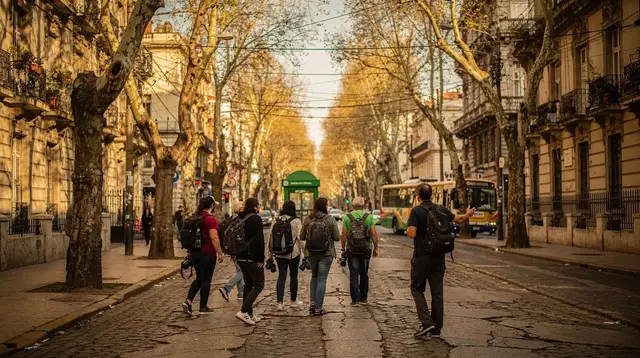
The walking distance between the two is short, and a guided walk is one of the few ways Retiro genuinely earns a visitor’s time on foot: a tip-based walking tour that covers both Recoleta’s grand streets and the edge of Retiro together, with a local guide setting the context. Outside a guided walk in daylight, though, this guide doesn’t recommend exploring Retiro’s back streets on foot for their own sake — there isn’t the density of shops, cafés or landmarks that makes wandering worthwhile, and see the note on safety below before you try.
For sightseeing proper — Recoleta Cemetery, the cultural centre, the cafés — use our Recoleta neighbourhood guide rather than this page; Retiro isn’t a substitute for it, and this page won’t repeat that content.
Safety around the terminals
This is the part of Retiro that most deserves attention, and it’s worth being direct about it. The immediate area around the railway and bus terminals — and the streets leading toward Villa 31, the informal settlement that borders Retiro to the north — sees more opportunistic theft than the touristed barrios further south. Phone snatching, bag-slashing and distraction theft around ticket queues are the recurring pattern, not violent crime, but they’re common enough that locals treat the terminal approaches with visible caution.
Practical points:
- Keep phones and wallets out of sight while queuing for tickets or waiting on platforms, not just walking the street.
- Go straight from taxi to terminal door, or from terminal door to taxi rank, rather than lingering on the surrounding pavements with luggage.
- After dark, treat Retiro as a transit stop, not a place to explore. Arrive, do what you came to do, and move on — this guide won’t suggest an evening stroll here the way it would for Palermo or Puerto Madero, because that isn’t a sound recommendation for this particular area.
- Daytime transfers are routine and safe for the large majority of travellers; the caution above is about avoiding easy opportunistic theft, not a warning against using the terminals at all — hundreds of thousands of people pass through them without incident.
For the general picture across the city, our safety overview puts Retiro’s terminal approaches in context alongside Constitución and the other areas that call for similar street sense.
A short itinerary, if you have an hour to spare
If a connection leaves you with time to kill, don’t try to turn it into sightseeing — walk south toward Recoleta’s edge for a coffee rather than staying near the terminal, and come back with margin before your train or bus. If your stopover is longer, a guided walk (see the tour link above) is a better use of the time than exploring alone, since it moves through Recoleta’s core rather than lingering in Retiro’s functional streets.
Where Retiro connects to next
Trains from Retiro’s Mitre line lead to Tigre and San Isidro; the Terminal de Ómnibus leads to the rest of Argentina, including multi-day routes covered in our broader 4-day Buenos Aires itinerary tour planning.
If your trip extends further afield, a four-day guided introduction to Buenos Aires is a reasonable way to structure a first visit around the terminals you’ll actually use, and if Uruguay is on your list, a day trip to Montevideo with lunch and the return ferry included departs from Puerto Madero, a short taxi ride from Retiro rather than from the terminal itself.
For the ferry crossings generally, see our guides to getting around Buenos Aires and to taxis, remises and ride-hailing, both useful for the last leg between Retiro and wherever you’re actually staying.
Retiro, Buenos Aires: frequently asked questions
Is Retiro a good place to stay in Buenos Aires?
Most visitors are better placed in Recoleta, Palermo or the Microcentro, all a short taxi or Subte ride from Retiro’s terminals. Retiro itself has limited tourist infrastructure — it’s built around transit, not accommodation or dining — so treat it as a connection point rather than a base.
Is it safe to walk around Retiro station?
Daytime transfers through the terminals are routine, but the streets immediately around the railway and bus stations, and toward Villa 31 to the north, see more opportunistic theft than touristed barrios further south. Keep valuables out of sight, move directly between taxi and terminal, and avoid exploring the area on foot after dark.
How do I get from Retiro to Tigre?
Take the Mitre line suburban train from Retiro’s railway terminal, a ride of roughly an hour with a topped-up SUBE card. The scenic Tren de la Costa light-rail line covers the final stretch into Tigre as an alternative to the last part of the Mitre line.
Is Retiro the same as Recoleta?
No. They’re adjacent but distinct: Recoleta is a residential and cultural barrio worth exploring on foot, while Retiro next door is a functional transit hub — a rail terminal, a long-distance bus terminal and office streets — with little to see for its own sake.
Where does the Retiro bus terminal go?
The Terminal de Ómnibus de Retiro serves long-distance routes across Argentina and into neighbouring countries, organised by floor and by bus company. Book ahead online where possible, and arrive with extra time before evening departures, when the terminal is busiest.
Can I walk from Retiro to Puerto Madero?
Yes — it’s about a 15–20 minute walk along the docks and through Retiro’s office district, a reasonable option in daylight with light luggage, though a taxi is easier with heavier bags.
Do I need a SUBE card to use the Retiro train station?
Yes. SUBE is required on the Subte, city buses and suburban trains, including the Mitre line from Retiro — drivers and gate readers don’t accept cash fares. Buy or top up a card at the station before travelling.