Is Buenos Aires Safe? What I Tell Friends Before They Go
Is Buenos Aires safe for visitors?
Buenos Aires is generally safe for tourists in central, well-frequented areas by day, with opportunistic theft (phone snatching, bag-slitting) the main risk rather than violent crime. Vigilance rises after dark and in specific pockets of San Telmo, La Boca and around Retiro/Constitución stations, so the honest answer is neighbourhood- and time-dependent, not a flat yes or no.
People ask me this before almost every trip, usually in the same slightly worried tone: “is Buenos Aires actually safe?” And I understand why — it’s a huge Latin American capital, and a lot of guidebooks either wave the question away with a breezy “sure, just use common sense” or lean the other way and list every possible danger until the city sounds unlivable. Neither is honest. After enough time walking these streets, at different hours, in different barrios, my real answer is: it depends where you are and what time it is, exactly the way safety works in most big cities I’ve lived in or visited.
The short version, without the drama
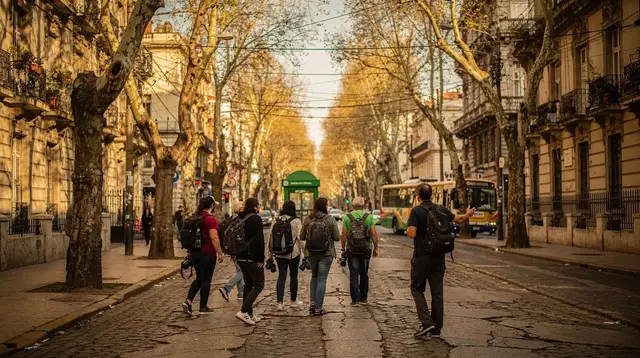
Buenos Aires is not a uniformly dangerous city, and it’s not a uniformly safe one either — it’s a city of very different micro-environments packed close together. The dominant risk for a visitor isn’t violence; it’s opportunistic theft. A phone grabbed off a table, a bag left open on a crowded colectivo, a wallet that goes missing in a jostling crowd. These are crimes of opportunity, which means the single best thing you can do is simply not present the opportunity. That’s not me minimising the issue — it’s the honest shape of it.
I try to give people a mental map rather than a verdict, because a flat “yes it’s safe” or “no it isn’t” throws away the information that actually matters.
Where I relax
Recoleta, Palermo and Puerto Madero are the barrios where I stop thinking about it. Recoleta is wealthy, well-lit and full of restaurants and the cemetery crowds during the day; Palermo, especially Soho and Hollywood, is dense with cafés, bars and people at almost any hour, which is exactly the kind of busy, self-policing street life that discourages opportunistic crime. Puerto Madero, the redeveloped dock district, is modern, wide open and heavily used by joggers and families even in the evening. None of these are risk-free — nowhere is — but they’re the closest Buenos Aires gets to “walk around without a second thought.”
Microcentro and Plaza de Mayo, the historic government and business core around the Casa Rosada, are similar during the day: full of office workers, tourists and police presence. They empty out at night, though, the way financial districts everywhere do, so I’m a bit more alert there after dark simply because the street traffic that makes daytime feel safe disappears.
Where I pay closer attention
San Telmo is the one that surprises people, because its Sunday fair and cobbled antique-shop streets feel so charming and touristy. They are, on the main drag. But San Telmo is a large, mixed barrio, and a few blocks off Defensa street or Plaza Dorrego, it turns quieter, darker and considerably less predictable. My rule there is simple: stay where the shops and restaurants are lit and open, and once dinner’s done, get a car rather than walking back to wherever I’m staying.
La Boca is the other one, and it’s worth being precise about, because the guidebook photo of the colourful Caminito houses gives a misleading impression of the whole neighbourhood. The Caminito lane and the Vuelta de Rocha waterfront around it are a genuinely safe, well-populated tourist strip in daylight — tango dancers, restaurant touts, souvenir stalls, plenty of people.
Wander two or three streets beyond that boundary, though, into the residential blocks, and it’s a different, much poorer neighbourhood that isn’t set up for visitors and isn’t somewhere I’d explore casually, day or night. My rule for La Boca: see Caminito, enjoy it, have lunch nearby, then leave the way I came rather than treating it as a neighbourhood to wander.
Retiro and Constitución, the big train and bus terminals, deserve a mention purely because major transport hubs attract petty theft in almost every city on earth, and Buenos Aires is no exception. I hold my bag in front of me there and don’t get distracted digging through it.
The precautions that actually matter
None of this requires paranoia, just a few habits I keep without really thinking about them anymore:
- Keep valuables out of sight, not just out of reach. A phone face-up on a café table or in a back pocket on a bus is an invitation; in a zipped front pocket or bag, it basically isn’t.
- Be more deliberate near Retiro and Constitución, and generally after dark anywhere that isn’t Palermo or Puerto Madero.
- Take a taxi, remise, or ride-hailing app after dinner rather than walking home late — meals here run late, so “after dinner” often means 11pm or midnight, exactly when a quiet street is quietest.
- In La Boca, stay on the Caminito/Vuelta de Rocha strip and don’t wander the surrounding blocks looking for a quieter photo.
- Don’t flash cash or a fancy camera in a crowd or on public transport; it’s less about the neighbourhood and more about not standing out as an easy target.
What I won’t tell you
I’m deliberately not going to hand you a crime statistic or a ranked “safest neighbourhoods” list with numbers attached, because those figures change constantly, get reported inconsistently, and give a false sense of precision about something that’s really about street-level judgement, not a spreadsheet.
What I can offer instead is what years of actually being here tell me: this is a big, varied, mostly welcoming capital where the sensible traveller habits you’d use in Madrid, Rome or Chicago — watch your bag, don’t wander unfamiliar dark streets alone, take transport at night — cover the overwhelming majority of the risk. Buenos Aires rewards curiosity in its barrios like Palermo, Recoleta and San Telmo; it just asks that you read the room as you go, the way you would anywhere else.
If it helps to ground this in a plan rather than a worry, I’d start with a walk through Plaza de Mayo and the Microcentro by day, an evening in Puerto Madero or Palermo, and a daytime visit to Caminito in La Boca rather than an evening one.
A good San Telmo walking tour with a local guide is also a genuinely useful way to learn the boundaries of the barrio firsthand, and the same goes for a guided La Boca and Caminito walking tour if you’d rather have local eyes with you the first time. For getting around after dark, I’d read up on the SUBE card and Subte system and on taxis, remises and ride-hailing before you land, so you’re not figuring it out tired at midnight.
For evenings out, I’d also point first-timers toward a proper Rojo Tango dinner show or the more intimate Aljibe tango show, both of which include transfers, which quietly solves the “how do I get back late at night” question without you having to think about it.
Daytime, out-of-town excursions carry a different, much gentler safety profile: a day out at a countryside estancia with an asado lunch or a boat trip through the Tigre Delta both take you well outside the city’s petty-theft zones entirely.
Related reading
You’ll find more on the city’s different characters in my comparison of Palermo, Recoleta and San Telmo, practical money matters in the budget and currency guide, and neighbourhood-by-neighbourhood detail on Recoleta, Belgrano and Retiro if you’re deciding where to stay.
For day trips that sidestep city concerns altogether, Tigre and the Paraná Delta, San Antonio de Areco and even a border-crossing afternoon in Colonia del Sacramento are calmer, small-town alternatives to a day in the capital.
Safety in Buenos Aires: your questions answered
Is Buenos Aires dangerous for tourists?
Not in the way the word “dangerous” usually implies. Violent crime against tourists is rare in the areas visitors actually spend time in. The realistic risk is opportunistic theft — a phone lifted off a café table, a bag slit on a crowded bus — which is a nuisance to guard against, not a reason to stay in.
Which Buenos Aires neighbourhoods are safest?
Recoleta, Palermo and Puerto Madero are the most consistently comfortable by day and evening, with steady foot traffic and good lighting. Microcentro and Plaza de Mayo are fine by day and quieter, so more alert, after dark.
Is San Telmo safe at night?
The main squares and restaurant streets are lively and fine with normal caution, but San Telmo’s side streets a few blocks off the core can turn quiet and poorly lit fast. I stick to where there are people and take a car after dinner rather than walking back.
Is La Boca safe to visit?
The Caminito and Vuelta de Rocha tourist strip is safe and busy in daylight. The residential streets just beyond it are a different story and not somewhere to wander casually, even by day. Go, enjoy it, then move on rather than exploring further on foot.
What should I watch out for around Retiro station?
Retiro and Constitución are major transport hubs with the pickpocketing and bag-snatching risk you’d expect of any big-city station. Keep bags zipped and in front of you, and be more purposeful there than you’d be in, say, Recoleta.
Is it safe to use my phone on the street in Buenos Aires?
Snatch-and-run phone theft is the single most common complaint I hear from visitors, usually near traffic lights or at outdoor café tables. I keep my phone in a zipped pocket on the street and only bring it out with my back to a wall.
Should I take taxis instead of walking at night?
For anything after dinner, yes — a licensed taxi, a remise, or a ride-hailing app is cheap here relative to what it buys in peace of mind, and it removes the one variable (a dark, half-empty street) that causes most of the trouble.
Is the water and food safe in Buenos Aires?
Tap water in the city is treated and generally fine to drink, and street food and parrillas are as safe as anywhere with reasonable hygiene standards. Food safety isn’t really part of the Buenos Aires safety conversation the way street theft is.
tours.Practical
Verified deep-linked GetYourGuide tours. Book through these links and we earn a small commission at no cost to you.
GetYourGuide does not provide a product photo for this activity — the image shows the meeting point, photographed by us.