A residential barrio, not a headline stop
Belgrano sits north of Palermo, further from the centre than most first-time visitors bother to go, and it doesn’t try very hard to be a tourist attraction. It’s a wealthy, leafy, largely residential district of low apartment blocks, private schools and quiet streets, built around a handful of practical landmarks rather than a single showpiece.
If you’re staying in Palermo or Recoleta for a standard few days in Buenos Aires, there’s no real reason to make a special trip out here. If you’re staying in Belgrano itself, or you’ve already worked through the city’s main sights and want somewhere calmer for an afternoon, it’s a reasonable, low-key option — nothing more, nothing less.
This page treats Belgrano as what it is: a pleasant secondary neighbourhood, useful in specific circumstances, not a barrio that belongs on anyone’s must-see list for a first visit.
Getting there
Belgrano is reached easily enough from the centre. Subte Line D runs through the barrio with several stops (Juramento and José Hernández are the most useful for the areas described below), taking roughly 20–30 minutes from Microcentro stations depending on where you start. A taxi or ride-hailing app from Palermo or Recoleta runs about 15–25 minutes outside rush hour, longer during it. Buses (colectivos) also serve the area but are a slower, less direct option for a first visit.
There’s no need to plan a dedicated transfer or half-day tour purely to reach Belgrano — it’s a normal Subte ride, not an excursion.
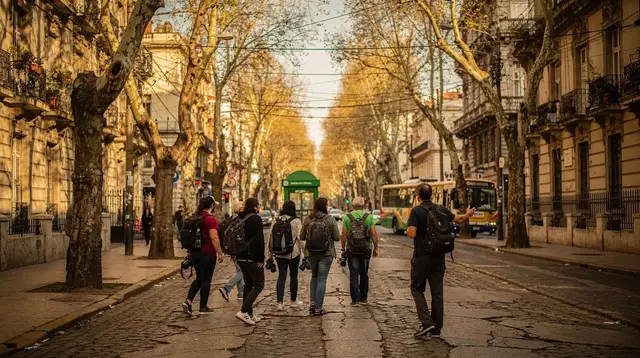
Once you’re there, Belgrano is a genuinely walkable barrio: the main points of interest — Barrio Chino, the Barrancas park, and the older residential streets — sit within about 15–20 minutes of each other on foot, flat ground the whole way, with wide leafy pavements that make it a comfortable stroll rather than a hike. There’s little reason to hail a taxi between stops once you’ve arrived; walking is both the cheapest option and the best way to notice the texture of the neighbourhood, which is really the point of coming here in the first place.
Barrio Chino: a small Chinatown, honestly sized
Belgrano’s best-known feature for visitors is its Barrio Chino, a compact cluster of a few blocks around Arribeños and Juramento streets. It’s Buenos Aires’s Chinatown, and it’s worth being upfront about scale: this is a handful of streets, not a district-sized affair like Chinatowns in larger global cities. What’s there is a concentrated run of Chinese and other East Asian restaurants, supermarkets stocked with imported ingredients hard to find elsewhere in the city, small shops selling tea, homewares and decorations, and — around Lunar New Year — street stalls and lion-dance performances that draw a genuinely large local crowd.
On an ordinary weekend, expect a lively but modest stretch of shopfronts, decent Chinese and pan-Asian food (a change of pace from steak and pizza), and a supermarket or two worth browsing if you’re curious about ingredients you won’t see in a typical Buenos Aires almacén. On a weekday, it can feel considerably quieter, with some restaurants closed between lunch and dinner service. Weekends, particularly Sunday afternoons, are the most rewarding time to come.
A guided half-day tour through Chinatown and Belgrano’s older residential streets is a reasonable way to get context on both areas in one outing if you’d rather not piece it together yourself.
The “British” side of Belgrano
Away from Barrio Chino, Belgrano has a quieter identity shaped by 19th- and early 20th-century immigration, particularly British and other European communities who built churches, schools and clubs in the area — hence the older name “Belgrano R” for its most residential pocket. Street names, some Tudor-style houses, and a scattering of private English-language schools are the visible traces today. There’s no single monument to point a camera at; it’s more a texture you notice while walking than a sight to tick off.
A general neighbourhood walking overview covers this side of the barrio if you want more background before setting out, and a local walking tour through Belgrano’s streets is the simplest way to get oriented without research beforehand.
What else is around
Belgrano has a couple of practical anchors beyond Chinatown:
- Barrancas de Belgrano, a small sloped park that’s pleasant for a short sit-down or a look at the barrio’s Sunday craft market, when one is running.
- Belgrano C railway station and a cluster of ordinary shopping streets, useful mainly if you’re staying nearby and need everyday services rather than sights.
- A short walk or quick taxi ride toward the river brings you near Vicente López, an adjoining municipality with its own riverside walkway — again, a low-key option, not a headline destination.
None of this amounts to a packed itinerary, and that’s the honest point of Belgrano: it’s a place to live in or pass through, not one built around back-to-back attractions.
Belgrano and local football: Platense
Belgrano’s neighbouring district is home to Club Atlético Platense, one of Buenos Aires’s smaller professional clubs — a different proposition from the Boca–River rivalry, but a genuine option if you want to see a match with a smaller, more local crowd than La Bombonera or El Monumental offer. It’s a low-key alternative for a traveller who’s more curious about everyday Argentine football culture than the two giant clubs’ full spectacle.
A guided visit to a Platense match, watching alongside local fans is a straightforward way to do this without navigating ticketing or matchday logistics alone — useful if you’re already staying in or near Belgrano and want an evening plan that doesn’t require crossing the city.
A simple half-day plan
If you’re giving Belgrano a half-day rather than folding it into a longer stay, a workable order is: start at Barrancas de Belgrano in the late morning, when the park is at its most pleasant and any weekend craft stalls are already set up; walk the older residential streets of “Belgrano R” for twenty minutes or so, taking in the Tudor-style houses and church architecture; then finish in Barrio Chino for lunch, timed for early afternoon so kitchens are fully open rather than caught in the post-lunch lull. This sequence keeps the walking short, ends on the barrio’s single strongest draw, and avoids the mid-afternoon quiet spell that can make Chinatown feel underwhelming if you arrive at the wrong hour.
Travellers who’d rather not plan the order themselves can join the combined Chinatown and British-neighbourhood tour mentioned above, which covers broadly the same ground with a guide setting the pace.
Where Belgrano fits against other barrios
| Barrio | Character | Time needed for a first visit |
|---|---|---|
| Palermo | Nightlife, restaurants, parks, shopping | A full day or more |
| Recoleta | Cemetery, museums, elegant streets | Half a day |
| San Telmo | Antiques, Sunday fair, tango | Half a day to a full day |
| Belgrano | Residential, Chinatown, quiet streets | Half a day, optional |
This isn’t a ranking of quality — it’s a rough guide to how much of a first-timer’s limited days each barrio reasonably claims. Belgrano sits at the bottom of that list by design, not by accident.
Eating in Belgrano
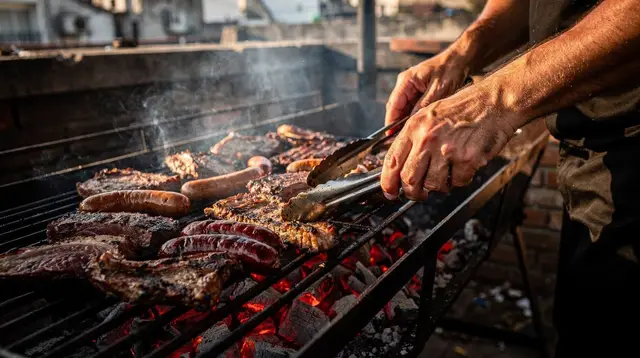
Barrio Chino is the obvious draw for food: dumplings, hot pot, Cantonese and Sichuan restaurants, and bubble tea shops that are genuinely harder to find elsewhere in the city. Outside Chinatown, Belgrano has its share of good, ordinary neighbourhood parrillas and cafés serving the same fare you’ll find across residential Buenos Aires — solid, unremarkable, aimed at locals rather than visitors. If you’re looking for a standout food experience in the city, Palermo or San Telmo will serve you better; Belgrano’s food scene is convenience-driven rather than a destination in itself, Chinatown aside.
Who Belgrano actually suits
Be realistic about who benefits from a Belgrano stop:
- People staying in the neighbourhood — for accommodation reasons, a longer stay, or proximity to a specific school, clinic or office — who want to know their own area rather than commute elsewhere for everything.
- Repeat visitors to Buenos Aires who’ve already done Palermo, Recoleta and San Telmo and want somewhere quieter and less touristy for a change of pace.
- Anyone specifically curious about the city’s Chinese community, for food, ingredients or the Lunar New Year celebrations.
- Travellers wanting a genuinely residential evening walk, away from restaurant touts and tour groups.
First-time visitors with three or four days in the city and a standard checklist of sights are generally better served elsewhere. There’s nothing wrong with skipping Belgrano entirely on a first trip.
Practical notes
Belgrano is safe by ordinary Buenos Aires standards — it’s an affluent residential area with the usual big-city common sense applying (keep valuables out of sight, be aware of your surroundings on quieter streets after dark), rather than anywhere flagged for particular caution. The SUBE card required across the city’s transport network works the same way here as everywhere else; see the SUBE and Subte guide if you haven’t picked one up yet.
Prices for a casual meal or a shopping stop in Barrio Chino follow the same general ranges as the rest of the city — expect the ARS figures above to move with Argentina’s ongoing inflation, so treat them as a dated snapshot rather than a fixed number, and check a live exchange rate before budgeting.
Belgrano is well served by everyday amenities — pharmacies, supermarkets, ATMs and ordinary shopping streets — which is one reason it suits longer-stay visitors better than short-trip tourists. If you’re weighing where to base yourself for a stay of a week or more rather than a few nights, a quieter, more residential option like Belgrano is worth comparing against the livelier but noisier choices closer to the centre; the general neighbourhood breakdown in where to stay in Buenos Aires by neighbourhood covers that trade-off in more detail.
If you’re building a longer stay around the neighbourhood, the 4-day city tour covering Buenos Aires’s main barrios includes some of the ground north of Palermo and can be a useful way to see how Belgrano fits alongside the more central sights, without needing to plan the logistics yourself.
Frequently asked questions about visiting Belgrano
Is Belgrano worth visiting on a first trip to Buenos Aires?
Not especially. It’s a pleasant, quiet residential barrio, but a first-time visitor with limited days is better served prioritising Palermo, Recoleta, San Telmo and La Boca, which offer far more to see in the same amount of time.
What is Barrio Chino and where is it?
Barrio Chino is Buenos Aires’s small Chinatown, a few blocks around Arribeños and Juramento streets in Belgrano, with Chinese and pan-Asian restaurants, imported-ingredient supermarkets and shops. It’s compact — a handful of streets, not a large district.
How do I get to Belgrano from central Buenos Aires?
Subte Line D runs directly through Belgrano, taking roughly 20–30 minutes from central stations; a taxi or ride-hailing app takes about 15–25 minutes outside rush hour. No dedicated transfer or tour is needed.
How much time should I spend in Belgrano?
Half a day covers Barrio Chino and a walk through the residential streets comfortably. There’s no need to block out a full day unless you’re staying in the area.
Is Belgrano safe for visitors?
Yes, by the same standards as the rest of central Buenos Aires — it’s an affluent residential area. Ordinary precautions (keep valuables out of sight, some awareness on quieter streets at night) apply as they would anywhere in the city.
When is the best time to visit Barrio Chino?
Weekends, especially Sunday afternoons, are liveliest, with more shops and restaurants open. Lunar New Year (dates vary, typically late January or February) brings street stalls and lion-dance performances and draws large crowds.
Does Belgrano have its own hotels worth booking?
Belgrano has hotel and apartment options aimed more at longer-stay visitors, business travellers and those with local ties (schools, clinics, offices) than at short-stay tourists. For a typical first visit, Palermo or Recoleta put you closer to the main sights.
Can I combine Belgrano with other northern neighbourhoods in one outing?
Yes — it sits close to Vicente López and isn’t far from a Tigre day trip’s starting point if you’re already heading north, though Belgrano itself is a stop for a walk, not a full day’s plan. San Isidro, with its riverside walkway and neo-Gothic cathedral, sits a little further north again and pairs naturally with the same northbound morning, so a visitor with a full day to spend could reasonably string Belgrano, Vicente López and San Isidro together before continuing on to Tigre, rather than treating each as a separate outing.
Is Belgrano a good base for a longer stay?
For a stay of a week or more, especially with local ties to the area or a preference for a quieter, more residential feel over nightlife and restaurants on the doorstep, Belgrano is a reasonable base with good everyday amenities and an easy Subte connection to the centre. For a short first trip focused on sightseeing, Palermo or Recoleta put you closer to the main attractions and save on daily commuting time.