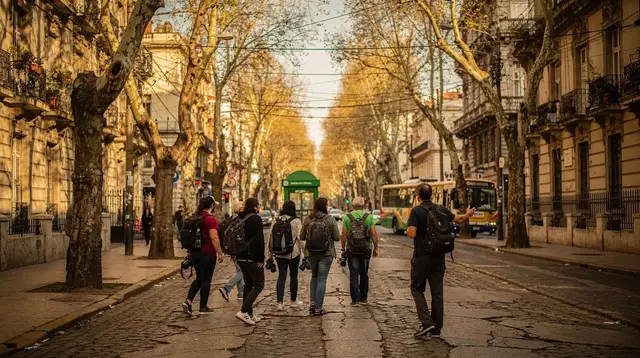
Where to Stay in Buenos Aires, by Neighbourhood
Which Buenos Aires neighbourhood should I stay in?
Palermo, Recoleta and San Telmo cover most tastes and are compared in detail on our neighbourhood guide, but they're not the only sensible options. Puerto Madero suits travellers who want modern, secure and quiet at the cost of feeling cut off from the historic centre; Microcentro suits short, transit-focused stays; Belgrano suits people who want a real residential feel a metro ride from the action.
My honest answer to “where should I stay?”
Every time a friend messages me before a Buenos Aires trip, the question is the same: Palermo, Recoleta or San Telmo? It’s a fair question — those three neighbourhoods carry most of the city’s charm, and I’ve written a full side-by-side comparison of them because the differences genuinely matter. But after staying in six different barrios over the years, I’ve stopped believing any single one is the right call for everyone. Three other options come up far less in guidebooks, and I think that’s a mistake, because for certain trips they’re actually the better fit.
This isn’t a ranking. It’s what I noticed living in each of them for a few nights, told the way I’d tell a friend over a coffee in Palermo rather than the way a spreadsheet would.
Puerto Madero: the safest bet you’ll pay more for
The first time I stayed in Puerto Madero, I remember being almost suspicious of how easy it felt. Wide glass towers, a redeveloped dock, joggers at 7am, and none of the slightly frayed edges you get two kilometres away in San Telmo. It’s the newest part of the city by a wide margin, built on old port land, and it reads that way — clean lines, good lighting at night, very little of the improvised feel of the older barrios.
The trade-off is distance and atmosphere. Puerto Madero sits apart from the historic core, and evenings there are quiet in a corporate way rather than a lively one — you’re not stumbling onto a milonga or a street musician on your walk back. It’s also perceived as pricier across the board, from food to taxis, simply because everything is newer and aimed at business travellers. I’d pick it for a trip where I wanted to decompress, not one where I wanted to be pulled into the city’s noise. The Costanera Sur reserve right next door is a genuine bonus if you like an early walk before the heat sets in.
Microcentro: convenient, a little empty after dark
Microcentro is the other neighbourhood I think gets overlooked for the wrong reasons. It’s not charming in the way Palermo or San Telmo are — it’s office blocks, banks, the pedestrian stretch of Florida street, and the grandeur of Plaza de Mayo nearby. But it is extremely practical. It’s close to Retiro’s train and bus terminals, which matters if your trip includes a day trip to Tigre or an early bus out to the pampas, and it puts you within walking distance of the Teatro Colón and the government district.
Where it falls down is precisely what makes it convenient by day: once offices empty out, a lot of Microcentro empties out too. I wouldn’t want to be searching for a place to eat there on a Sunday night. I’ve used it as a one- or two-night base at the start or end of a trip, sandwiched between excursions, and it did exactly what I needed — I just wouldn’t build a whole week around it.
Belgrano: the one that feels like actually living there
Belgrano surprised me the most. It’s residential, leafier than most of the city centre, and it has its own rhythm — a Chinatown pocket (Barrio Chino), good neighbourhood restaurants, families out walking dogs in the late afternoon. Staying in Belgrano felt less like visiting a tourist zone and more like being a temporary porteño, which some travellers will love and others will find too quiet.
The catch is that it’s genuinely further out — you’re relying on the Subte or a colectivo to reach Palermo, Recoleta or the centre, and while that’s not a hardship in a city with good public transport, it does mean less spontaneity in the evenings. I’d suggest it for a second stay in the city, once you already know the highlights and want to feel the place differently, rather than for a first three-day visit.
So who should stay where?
Here’s roughly how I’d sort travellers now, beyond the standard trio:
| Neighbourhood | Best for | Trade-off |
|---|---|---|
| Puerto Madero | Comfort, security, a quieter modern base | Feels cut off from the historic centre and nightlife |
| Microcentro | Transit connections, short stays, day-trip logistics | Limited evening atmosphere, less residential feel |
| Belgrano | A calmer, more residential experience | Furthest from the main sights, more reliant on transport |
| Palermo / Recoleta / San Telmo | Most travellers, most first visits | Covered in our full comparison |
None of this is a demotion of the classic three. If it’s your first trip and you want to walk out the door into restaurants, tango shows and nightlife without a taxi, Palermo still makes the most sense to me, and I’d point you straight to that comparison. But I’ve learned not to repeat “Palermo, Recoleta, San Telmo” on autopilot when someone’s actual trip looks different — a work trip with day excursions, a return visit, a preference for quiet over buzz. That’s when Puerto Madero, Microcentro or Belgrano earns its place.
If your evenings are the priority, it’s worth booking something like the Rojo Tango dinner show ahead of time regardless of where you sleep, since the best-located neighbourhoods for nightlife (Palermo, San Telmo) still win on walk-back convenience. And if you’re weighing a quieter base against day trips, I’d pair it with something like the Tigre Delta brunch excursion — Microcentro’s proximity to Retiro genuinely pays off on mornings like that.
FAQ: Choosing a Neighbourhood in Buenos Aires
Is Puerto Madero too far from everything?
It’s not far in kilometres — a walk to San Telmo or the Microcentro takes fifteen to twenty minutes — but it feels separate because it was built as its own enclave, with little of the older city’s street life bleeding into it.
Is Microcentro safe to stay in?
Yes, it’s generally safe, though like Retiro nearby it’s worth being deliberate about belongings around the transit terminals, especially after dark, as noted in most safety guidance for the city.
Is Belgrano too far from the main sights?
It’s the furthest of the six neighbourhoods discussed here from Palermo and the centre, typically twenty to thirty minutes by Subte or bus, which is easy but does reduce spontaneous evening trips.
Should I split my stay between two neighbourhoods?
I often do — a few nights somewhere lively like Palermo or San Telmo, then a couple of quieter nights in Puerto Madero or Belgrano, especially on longer trips.
Does Microcentro make sense for a short layover-style stay?
Yes, it’s one of the better choices for one or two nights bracketing a day trip, given how close it sits to the Retiro terminals.
Is Puerto Madero worth it if I don’t need luxury?
Not necessarily — its appeal is security and polish rather than price, so if budget matters more than that particular comfort, Palermo or San Telmo usually stretch further.
Which neighbourhood is best for nightlife specifically?
Palermo, by a clear margin, followed by San Telmo; Puerto Madero, Microcentro and Belgrano are all quieter after dark by design.
Can I rely on public transport from Belgrano at night?
The Subte and colectivos run into the evening on the main lines, but I’d still plan an earlier return or a taxi back from a late night out, as I would from any outer barrio.
Trip Planning
Verified deep-linked GetYourGuide tours. Book through these links and we earn a small commission at no cost to you.
GetYourGuide does not provide a product photo for this activity — the image shows the meeting point, photographed by us.