San Telmo Neighborhood Guide: Life Beyond the Sunday Fair
What is San Telmo like when the Sunday antiques fair isn't running?
San Telmo is Buenos Aires' oldest surviving colonial-era barrio: cobbled streets, low 19th-century houses, antique shops, art galleries, and tango bars that operate all week, not just on Sunday. On weekdays it is quieter and more residential, with the Mercado de San Telmo and permanent antique dealers open as usual, while the market stalls along Defensa street and the crowds only appear on Sunday.
San Telmo Is Not Just a Sunday Market
Most visitors first hear about San Telmo through a single image: the Feria de San Telmo, the antiques market that spills down Defensa street and fills Plaza Dorrego with stalls, tango dancers, and crowds every Sunday. That market is genuinely worth seeing, and it is covered on its own elsewhere on this site. This guide is about the other six days of the week — the barrio that porteños actually live in, work in, and walk through when there is no fair to draw the crowds.
San Telmo is the oldest surviving colonial-era neighborhood in Buenos Aires, just south of the Microcentro and Plaza de Mayo. It grew up in the 1600s and 1700s as a port-adjacent district of merchants and dockworkers, was fashionable with the city’s elite through the early 1800s, and then, after a yellow fever epidemic pushed wealthy families north toward what became Recoleta, settled into a long period as a working-class immigrant quarter.
Many of its grand old townhouses were subdivided into conventillos, crowded tenement housing for Italian and Spanish immigrant families. That layered history is why the streets still look the way they do: low, dense, 19th-century facades, cobblestones on several blocks, wrought-iron balconies, and doorways that open straight onto the pavement rather than being set behind gardens.
What San Telmo Feels Like on a Weekday
Arrive on a Tuesday or a Wednesday morning and the difference from Sunday is immediate. Defensa street, which becomes a wall-to-wall market on Sunday, is simply a narrow one-way street again, with cars, delivery trucks, and locals walking dogs. The permanent antique shops that line it — and there are dozens, distinct from the folding-table stalls of the Sunday fair — are open at their normal hours, generally from late morning into the evening, and browsing them without a crowd is a much better experience than trying to see anything on a packed Sunday afternoon.
Plaza Dorrego itself, the barrio’s central square, is ringed by cafés with outdoor tables, and on weekdays these are used by locals reading newspapers or meeting for coffee rather than by tour groups. The square’s most famous café, dating to the early 20th century, keeps its tables out all week. A weekday visit is the version of Plaza Dorrego where you can actually get a table without waiting.
San Telmo is also simply residential in a way that’s easy to miss on a Sunday. Streets a block or two off Defensa are quiet, lined with apartment buildings, small grocery stores, laundromats, and the kind of neighborhood hardware shops and locksmiths that exist for residents, not visitors. This is worth remembering if you’re deciding when to come: San Telmo is a place people live, and the fair is an event that happens inside it, not the neighborhood’s entire identity.
Architecture and Streets Worth Slowing Down For
San Telmo’s architectural interest sits at street level rather than in grand monuments. Walking the barrio without a fixed itinerary, a few things reward attention:
- Cobbled sections of Defensa and the surrounding grid — some blocks still carry their original stone paving, uneven underfoot but part of what gives the barrio its texture.
- Casa Mínima, on a narrow alley off Defensa, said to be the narrowest house in the city, sometimes linked to a freed-slave origin story that’s more folklore than documented fact, but a genuine curiosity worth a five-minute stop.
- Passages and internal courtyards — several old conventillos have been converted into small design shops, artisan workshops, or galleries, and their entrances open onto shared courtyards that are easy to walk past without noticing.
- Parque Lezama, a leafy square on the barrio’s southern edge, traditionally associated (without firm archaeological proof) with the original founding site of the city, and a good place to sit if the walking has been a lot.
None of this needs a guide to appreciate, but a walk that connects the dots — Casa Mínima, a courtyard passage or two, Plaza Dorrego, and Parque Lezama — is exactly what a short guided outing adds, and it’s a reasonable way to spend an hour if it’s your first time in the barrio. A small-group walking tour through San Telmo’s streets covers this ground with local context that’s easy to miss walking alone, and a dedicated guided visit to Casa Mínima goes deeper into the house’s own story.
Antiques, Design, and Art Beyond the Stalls
The Sunday fair is only the loudest version of something San Telmo does all week: sell old things and new art. Along and around Defensa, permanent dealers specialize in furniture, silverware, vintage clothing, vinyl records, and bric-a-brac, and the Mercado de San Telmo, a covered iron-and-glass market hall built in the 1890s, mixes fresh produce stalls with antique dealers and small eateries under one roof — open through the week, with a different, calmer atmosphere than its Sunday version.
San Telmo has also become one of the city’s denser pockets of contemporary art, with independent galleries occupying converted warehouses and old houses, several within a few blocks of each other. This side of the barrio rarely makes it into quick guidebook write-ups of the Sunday market, but it’s a real reason to plan a weekday visit specifically, when galleries keep normal opening hours rather than being lost in fair crowds. An organized visit that takes in several spaces at once, such as a tour of San Telmo’s art galleries, is a practical way to see a cross-section of the scene without researching addresses one by one.
Food and Drink Through the Week
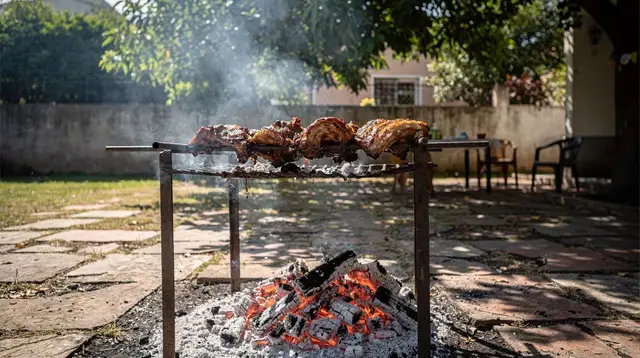
San Telmo’s food scene doesn’t depend on the fair either. Small parrillas, pizzerías, and neighborhood bars operate on their own schedules, and a growing number of specialty cafés and wine bars have opened in recent years, drawing both residents and visitors. Because the barrio sits between the Microcentro and La Boca, it’s an easy place to build a half-day around eating and wandering rather than shopping.
A guided outing that pairs the neighborhood’s streets with tastings is a good way to combine both interests in one go — a historical walking tour of San Telmo with street food and drinks is built around exactly that combination, working through the barrio’s history while stopping for bites along the way.
Tango in San Telmo, Any Day of the Week
San Telmo is one of Buenos Aires’ most established tango neighborhoods, and its tango life runs on its own calendar, unconnected to the Sunday fair. Street dancers perform for tips near Plaza Dorrego on weekend evenings and during the fair itself, but the barrio’s milongas — social dance halls where locals come to dance, often preceded by a beginner class — operate on weekly schedules that include weeknights. A few of San Telmo’s tango venues occupy handsome old townhouses and lean into the neighborhood’s early-20th-century atmosphere for a more staged, historical-feeling show rather than a purely social milonga.
If tango is the main draw, it’s worth being clear with yourself about which version you want: a polished show, a social milonga where you might dance yourself, or simply watching street performers for a few minutes on a walk. San Telmo offers all three, and none of them require a Sunday.
San Telmo’s Football Side
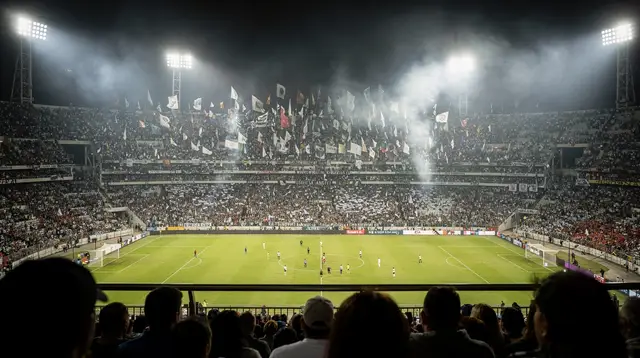
Away from antiques and tango, San Telmo also sits close to Buenos Aires’ football culture, with La Bombonera a short trip away in neighboring La Boca. For visitors who want a more local, off-the-radar football experience than the big Boca or River fixtures, a guided outing to a Platense match as a local supporter is a different way to see how football fits into daily life in the southern barrios, rather than only the marquee derby.
Combining San Telmo With the Rest of the City
San Telmo’s location makes it a natural hinge point for a day of walking. Heading north from Plaza Dorrego leads toward Plaza de Mayo and the Microcentro in about 15 to 20 minutes on foot; heading south leads to La Boca and Caminito in a similar time.
Several operators combine the two barrios into a single guided outing, which makes sense given how close they sit — a guided tour of San Telmo and its market in English is one option for those who want the barrio explained rather than self-navigated, while walkers who prefer to link both neighborhoods themselves can treat this as one continuous afternoon rather than two separate trips.
For a longer stay, San Telmo also pairs naturally with a broader look at the city center: it’s covered in the one-day historic center walk and the combined San Telmo–La Boca day itinerary, both of which treat the barrio as a stop within a wider route rather than an isolated destination.
Practical Notes for a Weekday Visit
| Aspect | Sunday (fair day) | Weekday |
|---|---|---|
| Defensa street | Closed to traffic, packed with market stalls | Normal street, light foot traffic |
| Plaza Dorrego cafés | Full, often a wait for a table | Quiet, easy to sit |
| Permanent antique shops | Open, but often overshadowed by street stalls | Open, easier to browse without crowds |
| Mercado de San Telmo | Open, busier | Open, calmer |
| Art galleries | Some open, easily missed amid the fair | Normal opening hours, easier to plan around |
| Street tango performers | Frequent, tied to fair crowds | Occasional, mainly weekend evenings |
| Atmosphere | Festive, crowded, tourist-heavy | Residential, unhurried, more locals than visitors |
A reasonable approach for a first trip to Buenos Aires is to see San Telmo twice: once on a Sunday for the fair itself, and once on a quieter day to actually look at the buildings, browse a gallery or two, and sit in Plaza Dorrego without a crowd. If only one visit is possible, a weekday gives a truer sense of how the barrio actually works day to day.
San Telmo Neighborhood FAQ
Is San Telmo worth visiting on a day other than Sunday?
Yes, and for many visitors it is the better day. Without the Feria de San Telmo stalls filling Defensa street, the cobbled lanes, permanent antique shops, art galleries, and Plaza Dorrego cafés are easier to see, and the barrio’s everyday, residential character is more visible.
What is the difference between the Feria de San Telmo and the neighborhood itself?
The Feria de San Telmo is the Sunday street market that fills Defensa street and Plaza Dorrego with antiques, crafts, and street performers. San Telmo the barrio is the surrounding grid of colonial and 19th-century streets, which functions as an ordinary, if bohemian, residential and commercial neighborhood the rest of the week.
Is San Telmo safe to walk around?
San Telmo is generally safe for a central Buenos Aires barrio during the day, with the usual big-city caution around phone and bag snatching in crowded spots. Stick to well-used streets like Defensa, Bolívar, and Chile after dark, since some side streets are quieter and less lit at night.
How long should I spend in San Telmo?
A first visit works well as a half-day walk of two to three hours covering Plaza Dorrego, Defensa street, and a few galleries or antique shops, with an extra hour or two if joining a guided walking tour or a food and market tour.
Where does San Telmo’s tango scene fit into a visit?
San Telmo has some of the city’s most established tango venues, from street dancers performing for tips near Plaza Dorrego to milongas and historical shows in old townhouses, and these run on their own weekly schedules independent of the Sunday fair.
Is San Telmo close to La Boca and the rest of central Buenos Aires?
San Telmo sits just south of the Microcentro and Plaza de Mayo and links on foot to La Boca and Caminito, roughly a 20 to 30 minute walk further south, making it easy to combine both barrios in one outing.
What is the Mercado de San Telmo?
The Mercado de San Telmo is a covered market hall on Bolívar street, built in the 1890s with cast-iron structure, that mixes fresh produce stalls, antique dealers, and small eateries, and it is open through the week, not only on Sunday.
Buenos Aires by Neighborhood
Verified deep-linked GetYourGuide tours. Book through these links and we earn a small commission at no cost to you.
GetYourGuide does not provide a product photo for this activity — the image shows the meeting point, photographed by us.