La Boca Neighborhood Guide: Beyond Caminito
Is La Boca safe to visit, and is there more to it than Caminito?
Caminito and the Vuelta de Rocha waterfront are safe and touristy in daylight, and the barrio also holds the Museo Quinquela Martín, the Fundación Proa and La Bombonera stadium. The surrounding residential streets are genuinely poorer and riskier, especially after dark, so most visitors stick to the marked tourist core rather than wandering freely.
A working port barrio, not a theme park
Most visitors arrive in La Boca knowing exactly one thing about it: a short lane of corrugated-iron houses painted in bright reds, blues and yellows, with tango dancers posing for tips and a mural or two. That lane is Caminito, and it is genuinely worth the visit — but it is also a single pedestrian street, a few hundred metres long, inside a much larger barrio that most guidebooks and tour operators quietly skip over. This page is about the rest of La Boca: what else is there, how it came to look and feel the way it does, and — the part that promotional sites tend to leave out — where the safe, photogenic tourist core actually ends.
La Boca sits at the mouth of the Riachuelo, the small, heavily industrial river that once made this the working port of Buenos Aires. It was settled from the mid-19th century onward by immigrants, overwhelmingly from Genoa and other parts of Italy, who worked the docks, the shipyards and the meat-packing plants along the water. Housing was cheap and built fast, often from corrugated iron sheeting salvaged from the port itself, and legend has it that the bright, mismatched paint colours came from leftover ship paint, applied a can at a time as it became available.
Whether or not that origin story is literally true, the visual result — a barrio of small, brightly coloured tin houses along a bend in a working river — became one of the most photographed corners of the city, largely through the paintings of the barrio’s own most famous resident, Benito Quinquela Martín, who spent his career depicting the port, the dockworkers and the tugboats of his own street.
That history matters for understanding the barrio today, because La Boca never fully transitioned away from being a working-class port district. It is one of the poorer parts of the Ciudad Autónoma de Buenos Aires, and unlike Palermo or Recoleta, it has not been gentrified into cafés and boutique hotels beyond its tourist strip. That contrast — a few blocks curated for visitors, surrounded by a genuinely lower-income residential barrio — is the single most important thing to understand before you go, and it is the part that a glossy destination page focused only on Caminito’s colours tends not to mention.
What is actually in the tourist core
The safe, well-trodden part of La Boca is small and walkable in an afternoon.
Caminito itself is the anchor: a pedestrianised lane of painted houses, open-air art stalls, and restaurant terraces where street performers dance tango for tips. It is touristy by design — genuinely enjoyable for an hour or two, not a place to expect an “undiscovered” experience.
The Vuelta de Rocha is the bend in the Riachuelo right next to Caminito, with a small triangular plaza, the old swing bridge (Puente Transbordador Nicolás Avellaneda) visible along the water, and views of the port that inspired Quinquela Martín’s paintings. It is a pleasant, short waterfront walk and sits within the same patrolled tourist zone as Caminito.
The Museo Benito Quinquela Martín occupies the artist’s former home and studio overlooking the water, with a strong collection of his port scenes and other Argentine art — a worthwhile, low-key stop that most Caminito day-trippers skip entirely.
Fundación Proa is a contemporary art foundation in a restored 19th-century building right on the Vuelta de Rocha, mounting serious international exhibitions and offering one of the few reasons to linger in La Boca beyond the postcard shots.
La Bombonera, Boca Juniors’ stadium, is a short walk from Caminito and is the barrio’s other major draw. Its steep, tightly packed stands are a landmark in their own right, and the stadium runs a museum and tours even on non-match days — see the separate La Bombonera stadium tour and museum guides for how that actually works, since walk-up match tickets for visitors are a different, more complicated story covered in the football match safety guide and the Boca Juniors match tickets guide.
A focused loop through these five points — Caminito, Vuelta de Rocha, the Quinquela Martín museum, Proa and La Bombonera — is a comfortable half-day and covers what La Boca is genuinely known for.
The honest safety picture
This is the part that most sites built to sell tours would rather soften, and it deserves to be said plainly: La Boca’s tourist core is safe, and the residential streets around it are not treated the same way by locals, by tour operators, or by the city itself.
Within roughly two or three blocks of Caminito and the Vuelta de Rocha, during daylight hours, there is a visible police and tourist-police presence, steady foot traffic, and an economy built entirely around visitors — this is the barrio’s shop window, and it is kept that way deliberately. Step a few streets further out, though, and you are in an ordinary, low-income residential neighbourhood with real poverty, patchy street lighting and a long-standing reputation for opportunistic theft and occasional worse.
Locals from other parts of the city are generally candid about this, and it is standard, repeated advice — not scaremongering — to stay within the marked tourist zone in daylight and to avoid La Boca’s back streets altogether after dark, when even the Caminito area itself thins out and loses its safety-in-numbers effect.
Concretely, that means: keep to Caminito, the Vuelta de Rocha and the direct, short route to La Bombonera; do not wander down side streets “to see the real neighbourhood” out of curiosity, especially away from the water; keep phones and cameras put away between shots rather than carried openly; and plan to be back on a main avenue, in a taxi, or on a guided route before evening.
It is not that every street a block back is dangerous every day — it is that there is no reliable way for a visitor to tell which one is, and neither residents nor the police treat those streets as part of the safe circuit. A guided walking tour, such as the La Boca neighborhood guided walking tour below, solves this cleanly by keeping a local guide’s judgment between you and that ambiguity, and it is a reasonable option for visitors who would rather not make that call street by street on their own.
This honesty cuts the other way too: within the tourist core, La Boca is not more dangerous than any other crowded, camera-heavy tourist spot in a big city, and the usual advice for Buenos Aires as a whole — watch bags and phones in cafés, be alert near transit hubs — covers it. The barrio does not need to be avoided; it needs to be visited with a clear sense of its actual boundaries.
Getting there and getting around
La Boca sits south of San Telmo and Puerto Madero, but it is not on the Subte network, which is itself a small, practical signal about how the city treats the barrio. Most visitors arrive by taxi, rideshare app or organised tour bus directly to Caminito, rather than by public transport connections through the surrounding streets. Colectivo bus routes do reach the area, but stitching one together as a first-time visitor adds complexity for very little saving, and taxis from central Buenos Aires are inexpensive by international standards.
Walking from San Telmo is physically possible — it is roughly 2 km — but the direct route runs through exactly the kind of residential blocks described above, and it is not a walk locals recommend doing solo, especially with visible luggage, cameras or jewellery. The practical options are a short taxi or rideshare ride, or a guided walking tour that links the two barrios by a known, supervised route; see one day in San Telmo and La Boca for how that combination typically works, and consider the guided walk that covers both San Telmo and La Boca together if you would rather not manage the transition yourself.
For a wider view of the barrio’s history and streets beyond the standard photo stops, a dedicated local guided walk through La Boca’s neighborhood covers Caminito, the Vuelta de Rocha and the immigrant history of the port in a couple of hours, with a guide making the calls on where to go. Visitors who have already done Caminito and want something further off the standard circuit, still inside the barrio’s safer margins and led by someone who knows it, can look at the off-the-beaten-track La Boca tour instead.
La Bombonera and match days
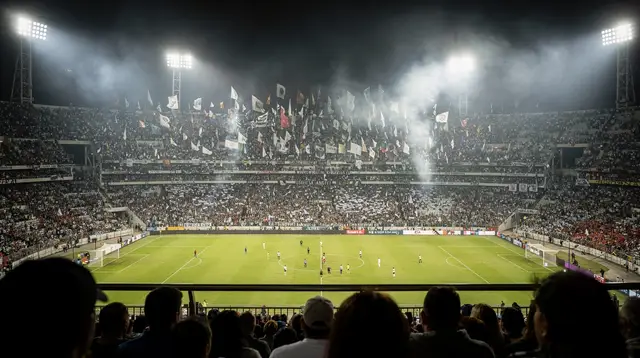
Even without a match, La Bombonera is worth the short detour from Caminito for the stadium itself — steep, close-packed stands painted in Boca Juniors’ blue and gold, wedged into an ordinary street grid in a way few modern stadiums are. The combined La Bombonera stadium tour with a La Boca neighborhood audio guide is a practical way to see both the ground and the surrounding tourist streets in one organised visit, with the added benefit of a fixed, known route rather than freelancing between the two.
On match days, the area around the stadium gets considerably busier and, by most accounts, considerably more chaotic — heavy police presence, street closures, and crowds that are part of the spectacle but also part of the reason visitors are steered toward organised hospitality packages rather than showing up and buying a ticket at the gate. The football match safety guide and Boca Juniors match tickets pages cover that in detail; the short version is that this is one more reason a first visit to this specific corner of La Boca benefits from going in with a plan rather than wandering toward the noise.
Food, art and what to skip
Caminito’s restaurant terraces are aimed squarely at visitors — reasonable for a coffee, an empanada or a plate of milanesas while watching the tango dancers, but not the barrio’s best food by any independent measure; save a proper parrilla meal for San Telmo or Palermo rather than eating a full dinner here. The Museo Quinquela Martín and Fundación Proa are the two stops worth genuinely slowing down for; both sit right on the safe waterfront stretch and reward twenty or thirty minutes each, which most Caminito visitors skip in favour of photos alone.
What is worth skipping, honestly: treating La Boca as a half-day wandering destination the way you might Palermo Soho or San Telmo’s antique streets. Those barrios reward aimless walking; La Boca, outside its curated core, does not, and pretending otherwise for the sake of an “authentic” photo is exactly the kind of advice that gets visitors into trouble here.
Combining La Boca with the rest of the city
Because the safe part of La Boca is compact, it slots easily into a broader south-of-the-centre day alongside San Telmo and even Puerto Madero on the way back toward the centre. A private option worth considering for a tighter schedule, or for anyone who would rather not navigate the safety judgment calls solo, is the private guided walking tour of La Boca and Caminito, which keeps the whole visit — route, pacing and timing — in a guide’s hands.
For a broader sense of how La Boca fits into a first visit to the city, see the things to do in La Boca category page, the wider neighborhoods overview, or the general free walking tour option if you want a low-cost introduction to the barrio’s history before deciding how much further to explore on your own.
FAQ: visiting La Boca beyond Caminito
Is La Boca dangerous?
The tourist core around Caminito and Vuelta de Rocha is well patrolled and safe in daylight. The residential streets beyond it are among the poorer parts of the city and have a real reputation for opportunistic crime, so visitors are usually advised to stay within the marked tourist area rather than explore freely, and to avoid the barrio after dark.
How much time do I need in La Boca?
Two to three hours covers Caminito, the Vuelta de Rocha and the Museo Quinquela Martín at an easy pace. Add La Bombonera’s stadium tour and museum and it becomes a half day.
Can I walk from La Boca to San Telmo?
It is about 2 km and technically walkable, but the streets in between are not part of the tourist circuit. Most visitors take a taxi, rideshare or an organised walking tour that links the two barrios safely rather than walking it alone.
Is Caminito the same as La Boca?
No. Caminito is one short pedestrian lane within La Boca. La Boca is the wider barrio around it, including residential streets, the port area and La Bombonera stadium, and most of that wider barrio is not set up for casual tourist wandering.
What is there to see in La Boca besides Caminito?
The Museo Benito Quinquela Martín, the contemporary art space Fundación Proa, the Vuelta de Rocha bend of the Riachuelo, and La Bombonera stadium with its museum and tours are all within the same safe tourist core.
Should I visit La Boca on my own or with a tour?
Independent visits work well for Caminito and the Vuelta de Rocha in daylight. A guided walking tour is worth it for anyone who wants context on the barrio’s immigrant history and dockworker past, and for visitors who would rather not judge street by street which block is fine.
Is La Boca worth visiting if I only have a few days in Buenos Aires?
Yes, but budget it as a short, focused visit rather than a leisurely wander — a couple of hours for Caminito and the museums, done in daylight, delivers the barrio’s character without testing its edges.
Buenos Aires by Neighborhood
Verified deep-linked GetYourGuide tours. Book through these links and we earn a small commission at no cost to you.
GetYourGuide does not provide a product photo for this activity — the image shows the meeting point, photographed by us.