Food Tour San Telmo: Walking, Wine and Small Bites
What is a San Telmo food tour, exactly?
It is a guided walking route through San Telmo with a handful of stops for empanadas, cured meats, cheese, wine and other small bites, usually lasting three to four hours. It is not a single restaurant meal, and the specific stalls used depend on what is trading that day.
What a San Telmo food tour actually covers
San Telmo is the oldest residential barrio in Buenos Aires, a tight grid of colonial-era buildings, cobbled side streets and courtyards just south of Plaza de Mayo and Puerto Madero. Its food scene sits inside that same fabric: a permanent covered market, family-run bars that have poured wine for decades, and small kitchens tucked into storefronts that barely fit six tables. A guided food tour is the way most visitors get a working sense of that scene without guessing which door to walk through.
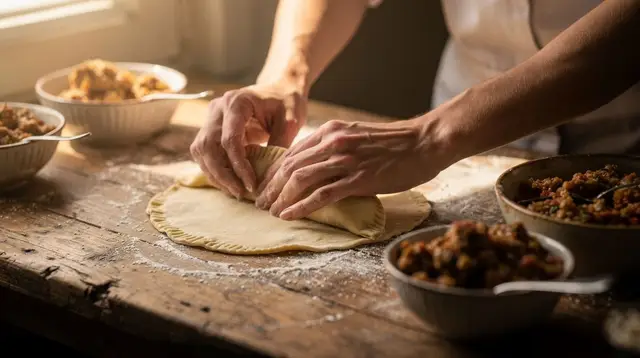
The format is a walking route with several stops, usually six to ten, spread over three to four hours. A typical afternoon might start with an empanada or two, move to a stall inside the Mercado de San Telmo for cheese and cured meat, pause at a wine bar for a glass of Malbec or a regional blend, and finish with something sweet — a pastry or a taste of dulce de leche. Between stops, the guide talks about the barrio’s history, from its origins as a port-adjacent working neighbourhood to its long spell as an antique dealers’ quarter and its current mix of galleries, bars and old apartment blocks.
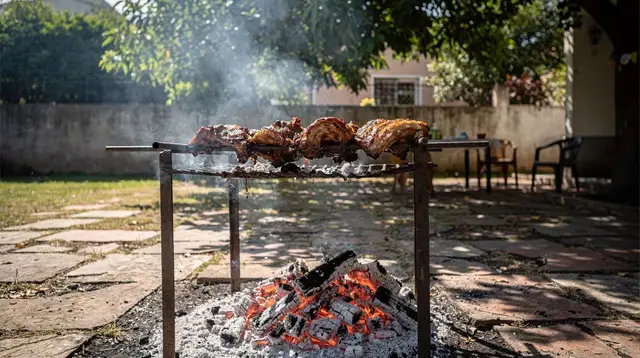
This is a guided, multi-stop route rather than a single meal, which is the main thing that separates it from choosing a restaurant for dinner. If what you actually want is one sit-down parrilla with a proper cut of beef and a bottle of wine, the more useful read is our guide to the best parrillas in San Telmo — that page picks one destination, this one describes a route through several.
Food tour versus a single restaurant visit
The two experiences solve different problems, and it helps to be clear about which one you are actually after before booking.
| Food tour | Single parrilla visit | |
|---|---|---|
| Format | Guided walk, several short stops | One sit-down meal at one restaurant |
| Duration | 3–4 hours | 1.5–2.5 hours |
| Portions | Small tastings at each stop | Full plates, one main course |
| Variety | High — market, bar, bakery, wine | Low — one menu, one kitchen |
| Context given | Guide narrates history and ingredients as you go | Minimal, unless you ask |
| Best for | First-time visitors, food curious travellers | Anyone wanting a proper beef dinner |
Neither is better in the abstract. A food tour is the better first move for a visitor who wants to understand San Telmo’s food culture broadly and doesn’t yet know which parrilla or wine bar deserves a longer visit. A dedicated restaurant meal makes more sense once you already know you want a serious asado, in which case the asado and parrilla guide is the better starting point.
Where the route runs
Most operators build their route around a similar core, even though the exact stalls and bars vary. The spine of the neighbourhood is Defensa street, running roughly north–south through the barrio, with Plaza Dorrego as its central square. The Mercado de San Telmo, a wrought-iron covered market dating to the early twentieth century, is a near-constant stop on these tours: its stalls sell cured meats, cheese, olives, bread and prepared food side by side, and a few also pour wine by the glass.
From there, routes typically branch into the surrounding blocks — a bar with a wine list built around Argentine Malbec and other regional grapes, a bakery for something sweet, and occasionally a short detour toward La Boca or the antique shops that line Defensa when the operator combines food with a broader neighbourhood walk. A handful of tours pair San Telmo with a stop in La Boca on the same outing, covering both the market culture of San Telmo and the painted-house streets around Caminito in a single afternoon.
Because San Telmo is flat and compact, none of this involves serious walking — a few blocks between each stop, with plenty of time standing or sitting at tastings. It suits most fitness levels and works reasonably well for older travellers or families with older children, though the wine component means it leans toward an adult-oriented itinerary by default; ask an operator about a non-alcohol version if travelling with kids.
What changes from one date to the next
It is worth being upfront about something operators sometimes gloss over: the exact stops on a San Telmo food tour are not fixed. Market stalls open, close and change hands. A bar that poured a particular regional wine last month may have swapped suppliers. A guide who built a route around six specific vendors two years ago has likely reshuffled it since, simply because that is how a working, non-touristic market district behaves — it is not curated for consistency the way a museum exhibit is.
This matters for two reasons. First, don’t expect an online description or a friend’s account of “what you’ll eat” to match your own tour exactly — treat any stop list as indicative, not a menu. Second, it is also the honest reason these tours are worth booking with a guide rather than attempting alone: a guide who walks the market regularly knows which stalls are trading well this week, which is a moving target that a one-off visitor has no way to track from outside.
The Sunday fair, and how it relates
San Telmo is also home to one of the city’s best-known weekly events, the Feria de San Telmo, which fills Defensa street and Plaza Dorrego with antique dealers, craft stalls and street performers every Sunday. It draws a very different crowd and a very different kind of stall from a weekday food tour — more bric-a-brac and vintage goods than prepared food, though a few food vendors do set up alongside it. We cover the fair itself, its hours and what to expect, in a dedicated guide to the San Telmo Sunday market, so we won’t repeat that detail here.
The practical point for food-tour planning: if your visit happens to fall on a Sunday, a route through San Telmo will likely cross paths with the fair whether or not that was the plan, since Defensa and Plaza Dorrego are central to both. Some operators actively schedule food tours around the Sunday fair to combine both experiences in one outing; others deliberately avoid Sundays because the crowds slow down a food-focused walk. Check which approach your chosen tour takes if the day matters to you.
Wine on the route
Wine tastings are a fixture of most San Telmo food tours, and Malbec — Argentina’s signature red — tends to anchor the list, though a well-run tour usually includes at least one white or a lesser-known regional variety alongside it. Pours are small, typically enough to taste and compare rather than to drink a full glass at each stop, since the point is variety across several venues rather than settling into one bar for the evening.
For travellers who want to go deeper on wine specifically, rather than as one element of a broader food walk, our dedicated Malbec wine tasting guide covers tastings built entirely around wine, including options with a sommelier-led format. A San Telmo food tour is the lighter, more casual version of that experience, folded into a wider tasting of the barrio’s food.
Timing and what to expect on the day
Most tours run in the afternoon, often starting around midday or early afternoon and finishing before the neighbourhood’s evening rhythm picks up — useful, since dinner in Buenos Aires rarely starts before 21:00 in any case, so an afternoon food tour doesn’t compete with a normal dinner slot. A handful of operators run evening versions instead, pairing the walk with sunset and a slightly more bar-focused stop list.
Expect a small group, usually capped at somewhere between eight and fifteen people, led by a local guide who narrates the barrio’s history between stops — its colonial origins, the waves of Italian and Spanish immigration that shaped its food, and its more recent turn toward galleries and boutique hotels alongside the old antique trade. Comfortable shoes are the only real preparation needed; the surface is mostly flat cobblestone and pavement, manageable in ordinary walking shoes.
Book with some lead time, particularly for weekend afternoon departures, since small-group formats sell out a few days ahead in busier months. If you’re combining a food tour with other San Telmo plans, our one-day San Telmo and La Boca itinerary and the separate Sunday feria itinerary both slot a food tour in alongside the barrio’s other main draws.
Booking a San Telmo food and wine tour
Several small-group operators run this format, generally differing in how many stops they include, whether wine is a core element or an add-on, and whether the route folds in a broader neighbourhood walk or a second barrio such as La Boca.
For a route built specifically around walking and wine tasting through San Telmo’s bars and market stalls, this San Telmo walking tour with wine tasting pairs the neighbourhood’s history with several tasting stops. A version leaning more toward street food and casual bites alongside the history comes from this historical San Telmo tour with street food and drinks.
For a food-first format with a clearer emphasis on tastings at each stop, this San Telmo food walking tour with tastings is built around that structure specifically. Travellers who want to combine San Telmo with a look at La Boca’s painted streets on the same outing can consider this combined San Telmo and La Boca food and walking tour.
None of these routes should be read as a fixed menu — treat the stop list any operator publishes as a sample of the kind of place you’ll visit, not a guarantee of which stall or bar will be open on your date.
Frequently asked questions about the San Telmo food tour
How is a food tour different from choosing one of the best parrillas in San Telmo?
A parrilla visit is one sit-down meal at one restaurant. A food tour is a guided route with several short stops — a market stall, a wine bar, a bakery — over a few hours, built around variety and context rather than one long dinner.
Is this the same as the Sunday antiques fair?
No. The Feria de San Telmo along Defensa street and Plaza Dorrego runs on Sundays and is mostly antiques, crafts and street performance. A food tour runs on other days too and is built around eating, though some routes do pass through fair streets when it happens to be a Sunday.
Will I get the same stops if I book this tour twice?
Not necessarily. San Telmo’s small vendors, market stalls and bar menus change, and a guide adapts the route to what is open and trading well that day. Expect the same style of stop, not an identical itinerary.
How much walking is involved?
San Telmo is flat and compact, so most tours cover it on foot over a few blocks between stops, typically two to three kilometres in total with plenty of standing and sitting breaks at each tasting.
Should I come hungry?
Come with a moderate appetite and skip a heavy meal beforehand. Most routes include six to ten tastings, which adds up to a full meal by the end even though each stop is small.
Are vegetarians accommodated?
Many stops — cheese, empanadas, bread, wine — work for vegetarians, but San Telmo’s food culture leans heavily on cured meat and beef, so it is worth telling the operator about dietary needs before booking rather than on the day.
Is San Telmo safe to walk around on a food tour?
The main tour streets around Defensa, Plaza Dorrego and the Mercado de San Telmo are well used by visitors in daylight and early evening. As anywhere in the city centre, keep phones and bags close and be more careful after dark away from the main routes.
Do I need to book in advance?
Small-group food tours have limited capacity per departure, and popular slots — weekend lunchtimes especially — can sell out a few days ahead, so booking in advance is sensible rather than optional.
Food Tours and Argentine Wine Tastings
Verified deep-linked GetYourGuide tours. Book through these links and we earn a small commission at no cost to you.
GetYourGuide does not provide a product photo for this activity — the image shows the meeting point, photographed by us.