Malbec Wine Tasting in Buenos Aires: The Complete Guide
Can you go wine tasting in Buenos Aires?
Yes, but only in urban wine bars and tasting cellars pouring bottles shipped in from Mendoza and other regions — Buenos Aires itself has no vineyards nearby. A guided tasting typically runs 90 minutes to two hours and costs roughly USD 30 to 70 per person.
Wine tasting in a city with no vineyards of its own
Argentina is one of the world’s great wine countries, and Malbec is the grape most associated with it — but Buenos Aires itself is not wine country. The city and the flat, humid province around it sit on pampas land built for cattle and grain, not for the dry, high-altitude conditions that vines need. There is no vineyard belt a few kilometres outside the capital the way there might be near, say, Mendoza’s own city limits. Anyone picturing an afternoon drive through rows of vines just past the Buenos Aires suburbs is picturing the wrong country entirely.
What the capital does offer, and offers very well, is the drinking end of that industry: urban wine bars, dedicated tasting cellars, and sommelier-led sessions concentrated in Palermo, with more scattered through San Telmo and Puerto Madero. These venues import bottles from the country’s actual wine regions, pour them in a controlled, guided format, and teach visitors how to read a glass of Malbec without anyone needing to leave the city. It’s a genuinely worthwhile way to spend an evening — just a different activity from a vineyard visit, and this guide is explicit about that difference throughout.
Where the wine actually comes from
Nearly everything poured at a Buenos Aires tasting travelled a long way to get there. The country’s wine regions lie hundreds of kilometres from the capital, mostly in the foothills and high valleys along the Andes:
| Region | Distance from Buenos Aires | What it’s known for |
|---|---|---|
| Mendoza | Over 1,000 km west (roughly 1.5–2 hours by flight) | The heartland of Argentine Malbec; most bottles poured in the city come from here |
| Salta (Cafayate valley) | Roughly 1,500 km north-west | High-altitude Malbec and Torrontés, a white grape distinctive to Argentina |
| San Juan | West of Mendoza, similarly distant | A drier, sun-heavy Malbec style, often bolder and fruitier |
| Patagonia (Río Negro) | South, also reached only by flight | Cooler-climate Malbec and Pinot Noir, lighter and more acidic |
A Buenos Aires tasting menu will usually lean heavily on Mendoza, simply because it dominates national production, but a well-curated session will often line up a Mendoza Malbec against one from Salta or Patagonia specifically to show how altitude and climate change the same grape. That comparison is one of the real strengths of tasting in the capital: a single city venue can put four different wine regions in front of you in one sitting, something a single vineyard visit in any one region cannot do.
If the goal is to actually walk through vines, visit a working bodega, and taste at the source, that trip has to go through Iguazú Falls-style planning — a domestic flight to Mendoza, Salta or San Juan, and at least two or three days there. None of the tours listed on this page substitute for that. They are city tastings, honestly labelled.
What a Buenos Aires wine tasting actually involves
Format varies by venue and operator, but the shape is fairly consistent. A guided session typically runs 90 minutes to two hours, is led by a sommelier or trained host, and moves through four to six wines poured in a fixed order — usually lighter or younger wines first, building toward bolder, more tannic reds. Malbec anchors most tastings, but a well-built flight often opens with a white (Torrontés is a common choice) or a rosé before moving into Malbec, Cabernet Franc or a Bonarda blend.
Expect small pours rather than full glasses, paired with bread, cured meats, cheese or empanadas to cleanse the palate between wines. The host will talk through where each wine comes from, the altitude it was grown at, typical vintages, and how to read colour, nose and tannin — useful groundwork even for visitors who’ve never done a formal tasting before.
a guided Malbec tasting flight through several Argentine wine regions is the standard entry point and works well for a first evening in the city. For a smaller, more personal pace, a private Malbec tasting session lets the sommelier adjust the flight and the pace to the group rather than running a fixed group script.
Combining wine with food or tango
Because a tasting alone runs under two hours, several operators bundle it with something else to fill an evening. a broader wine tasting session in the city covers the straightforward format, while others build in a meal or a show. a wine tasting with the option of a dinner and tango show afterward suits visitors who want to fold two evening activities into one outing rather than booking them separately — useful given how late Buenos Aires dinners run (rarely before 21:00).
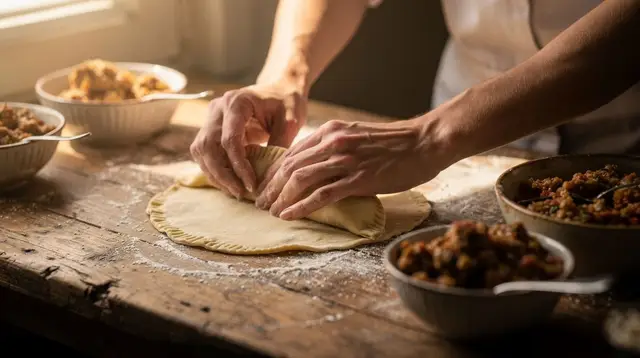
Food-focused pairings are equally common. A wine tasting paired with an empanada or asado cooking session gives a more hands-on version of the same evening; see the asado and parrilla guide for how that cuisine fits alongside the wine, and the empanada cooking class listing for a similar pairing built around Argentina’s classic savoury pastry rather than wine on its own.
Choosing between a group session, a private tasting and a themed variant
Not every Malbec tasting in Buenos Aires follows the same script, and the differences matter more than they first appear. A fixed-schedule group session is the cheapest and easiest to book, but it runs on someone else’s timetable and pours whatever flight the venue has set for the night. a small-group wine tasting sits between the two extremes: still a shared table, but capped low enough that the sommelier can slow down for questions rather than reciting the same script to thirty people.
At the more curated end, a premium city tour built around Catena Zapata wines pairs sightseeing with a tasting from one of Mendoza’s best-known producers, useful for visitors who’d rather fold wine into a first-day orientation than carve out a separate evening for it. A gentler hybrid is a Porteño-style city tour with a wine tasting included, which covers the same ground — landmark neighbourhoods plus a glass or two of Malbec — at a more relaxed pace.
For visitors based in or drawn to Palermo specifically, a private Palermo wine tasting walking tour combines a short neighbourhood walk with a seated tasting, so the evening isn’t spent entirely indoors. a San Telmo wine bar tasting focused on Patagonian wines is worth seeking out specifically for visitors who’ve already tried a Mendoza-heavy flight elsewhere and want the cooler-climate, more acidic style described above, rather than another round of the same regional profile.
Ambitious drinkers with more time can go wider than a single city evening. a five-region Argentine wine journey passport strings together tastings from multiple wine regions across several sittings rather than a single 90-minute session, which suits visitors staying long enough in the city to spread the experience over more than one night.
Pairing wine with Buenos Aires’s other signature evening experiences
Wine is not the only ritual visitors come to Buenos Aires to learn. an authentic Argentine mate ritual with tasting covers the country’s other defining drink — a bitter, caffeinated herbal infusion shared from a single gourd and straw, ordinarily a daily habit rather than a tourist activity, but explained properly here for visitors who keep seeing it on the street and in parks without understanding what it is. It’s a short, inexpensive add-on rather than a substitute for a wine evening, and works well slotted into an afternoon rather than competing with dinner plans.
For a bigger single sitting that folds several Argentine food traditions into one table, a fifteen-course Argentine asado and wine experience goes considerably further than a standard tasting-plus-snacks format, working through a full asado menu alongside a matched wine flight — a good choice for a single big night out rather than a routine dinner.
On the more playful end, a tango and empanada cooking class with wine tasting combines a hands-on cooking lesson with a short tango introduction and a glass of Malbec on the side, useful for visitors who want variety over depth in a single evening. Groups after a broader overview of the city that still includes a tasting can look at a small-group city tour with an Argentine tasting, which threads a wine stop into a wider sightseeing itinerary rather than treating it as the whole evening.
None of these variations changes the underlying fact established earlier: every glass still travelled in from Mendoza, Salta, San Juan or Patagonia. What changes is the format wrapped around it — walking versus seated, single region versus five, wine alone versus wine plus food, tango or mate.
Fitting a tasting into a longer stay
Visitors following a structured plan rather than booking activities day by day can see where an evening tasting slots naturally: the three-day first-timer itinerary and the fuller one-week Buenos Aires itinerary both leave room for an evening free of fixed sightseeing, which is exactly when a 90-minute to two-hour tasting fits best — late enough to follow an afternoon in Palermo or Recoleta, early enough to still make a late Argentine dinner afterward.
For a trip built specifically around the two days in Palermo and Recoleta plan, a tasting is the natural way to close out the Palermo half, given how many of the venues described above sit inside that same neighbourhood.
Where in the city to taste
Palermo is the centre of gravity for this scene. Palermo Soho and Palermo Hollywood are dense with wine bars, small tasting rooms and restaurants with serious by-the-glass lists, and it’s where most bookable group tastings are based. See the wine bars of Palermo for venues to visit independently, and the best parrillas in Palermo for the steakhouse side of the same neighbourhood.
San Telmo carries a handful of atmospheric options in converted colonial buildings and cellar spaces, often quieter and more intimate than Palermo’s bar-heavy strip; the San Telmo food tour is a good way to combine a wine stop with a broader look at the barrio’s food scene. Puerto Madero’s waterfront restaurants also run wine lists worth exploring for a tasting with a view, though the format there skews more toward a restaurant wine list than a dedicated tasting session.
Prices and what to expect to pay
Argentina’s inflation and shifting exchange rules mean any peso figure here is a snapshot, not a fixed price — always check the current rate and the live listing before budgeting. As a rough guide, checked September 2026:
| Format | Typical price per person (USD equivalent) | Notes |
|---|---|---|
| Group tasting, 4–5 wines | USD 30–45 | Fixed schedule, shared table, roughly 90 minutes |
| Private tasting | USD 55–90+ | Flexible timing, personalised flight, often at a chosen venue |
| Tasting with dinner or tango show | USD 60–100+ | Runs a full evening rather than a single session |
| Tasting combined with cooking class | USD 65–95 | Empanada- or asado-focused, wine served alongside the meal |
Prices vary by group size, venue and season, and this table is a starting reference, not a quote. Check the live listing for the current figure before booking, and convert from Argentine pesos using a current rate rather than any number printed in an older source.
Beyond Malbec, briefly
A well-run tasting won’t be entirely Malbec, even though that’s the reason most visitors book one. Torrontés, Argentina’s signature white grape, shows up as an opener in many flights, and Cabernet Franc has become a serious secondary red in Mendoza in recent years, often included to show range beyond the country’s best-known export.
Sommeliers will typically explain how altitude — Mendoza’s vineyards sit at anywhere from around 600 to over 1,500 metres — drives the acidity and structure that distinguishes Argentine Malbec from lower-altitude versions grown elsewhere in the world. None of this requires leaving the tasting room, but it’s worth listening for if the goal is to actually understand what’s in the glass rather than just enjoying it.
Planning the rest of the evening
Because most tastings run in the early or late evening and last under two hours, they pair naturally with dinner either before or after. Buenos Aires restaurants rarely open for dinner before 20:00 and rarely fill up before 21:00, so a tasting at 18:00 or 19:00 leaves the evening free for a parrilla afterward — see the asado and parrilla guide for how to choose a steakhouse to follow it. For visitors who want to fold wine into a night that also covers Buenos Aires’s other signature evening activity, the tango show and tasting combinations above solve both in one booking rather than two separate evenings.
Tipping in wine bars and tasting rooms follows the general Argentine norm: roughly 10% is the usual gesture where service isn’t already included, appreciated in cash but not obligatory. It’s a courtesy, not a rule enforced by the venue.
Malbec wine tasting in Buenos Aires: frequently asked questions
Are there vineyards near Buenos Aires?
No. Buenos Aires city and its surrounding province sit on flat, humid pampas land unsuited to fine wine production. The nearest serious wine regions are Mendoza, over 1,000 km west, plus Salta, San Juan and Patagonia — all reached by domestic flight, not by a day trip from the capital.
Where does the Malbec served in Buenos Aires come from?
The overwhelming majority comes from Mendoza, at the foot of the Andes, which produces most of Argentina’s Malbec. Tasting menus in the city may also include bottles from Salta’s high-altitude Cafayate valley, San Juan or Patagonia, all trucked or flown in.
What is a Buenos Aires wine tasting actually like?
It is a seated session in a wine bar, a converted cellar or a small tasting room, usually led by a sommelier who pours four to six wines alongside bread, cheese or charcuterie, with tasting notes on soil, altitude and vintage rather than a walk through any vines.
How much does a Malbec tasting cost in Buenos Aires?
Expect roughly USD 30 to 45 for a basic group tasting of four to five wines, and USD 55 to 70 or more for a private session, a tasting paired with a meal, or one that includes a tango show or cooking class. Prices are a 2026 snapshot; check the current rate before booking.
Is a wine tasting the same as a vineyard tour in Argentina?
No. A vineyard tour, walking rows of vines and visiting a working bodega, only happens in wine-producing regions like Mendoza. What Buenos Aires offers is a cellar or bar tasting of wines already bottled elsewhere — worth doing, but a different experience from a trip to the vineyards themselves.
Can a wine tasting be combined with other Buenos Aires activities?
Yes. Several operators pair a Malbec tasting with an empanada or asado cooking class, a tango lesson or show, or a broader food tour through Palermo or San Telmo, which suits visitors with limited time in the city.
Do I need to book a wine tasting in advance?
Booking a day or two ahead is sensible, especially for small-group or private sessions and for anything bundled with a dinner or tango show, since capacity is limited and popular evening slots fill first.
Food Tours and Argentine Wine Tastings
Verified deep-linked GetYourGuide tours. Book through these links and we earn a small commission at no cost to you.
GetYourGuide does not provide a product photo for this activity — the image shows the meeting point, photographed by us.