Empanadas Cooking Class in Buenos Aires: What to Expect
What is an empanadas cooking class in Buenos Aires actually like?
It is a short, hands-on workshop, usually two to three hours, where a small group learns to make the dough and one or two classic fillings by hand, then eats what it made. It teaches a recipe you can repeat at home, not a professional pastry skill, and it is different from a tasting tour, which involves no cooking at all.
What an empanadas class actually covers
An empanadas cooking class is a short, focused workshop built around one family of dishes: the small, folded, baked or fried pastries that are Argentina’s most common savoury snack. It is not a general introduction to Argentine cuisine and it is not the longer, more technical grilling session sold as an asado cooking class. The two are often confused because both are labelled “Argentine cooking class” in search results, but they teach different things, run for different lengths of time, and suit different visitors.
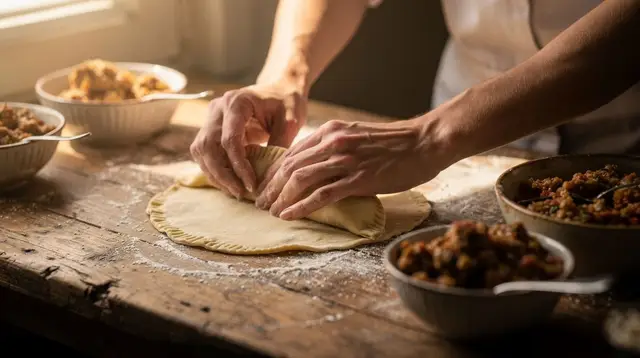
In practical terms, a typical session runs two to three hours. It usually starts with a short introduction to the dough and the classic fillings — beef with egg and olive, chicken, ham and cheese, or a vegetable option — followed by hands-on work: kneading the dough, rolling and cutting the discs, filling them, and learning the repulgue, the twisted fold along the edge that seals an empanada and marks a home cook’s style. The class bakes or fries what the group has made, then sits down together to eat it, often with a glass of Malbec included. Some versions extend into alfajores, the dulce-de-leche sandwich biscuits, as a sweet finish to the same session.
Group sizes are usually small — a handful of people around one kitchen table rather than a large demonstration hall — which is part of the appeal: everyone gets real hands-on time with the dough rather than watching from a distance.
What you take home, and what you do not
Book this class for a recipe and an afternoon, not a diploma. What a two-to-three-hour session reliably gives you is a written recipe for the dough and the fillings you made, the muscle memory of the fold from doing it a dozen times, and a meal you cooked yourself. That is genuinely useful if you like to cook at home and want an authentic starting point rather than a version adapted for a foreign kitchen.
What it does not give you is professional competence. A cook who makes empanadas for a living folds several hundred a week and can shape a tight, even repulgue in seconds without looking; a single afternoon teaches you the sequence, not that speed or consistency. Be wary of any listing that promises you will “master” empanadas or leave “like a professional chef” after one short class — that is marketing language, not a realistic outcome, and this page will not repeat it. A more honest way to think about it: you leave able to make a decent batch of empanadas at home from memory, with room to get better the more you practise.
Empanadas class vs asado class vs tasting tour
These three are often listed side by side and easy to conflate. They are not the same product.
| Experience | What you do | Typical length | Best for |
|---|---|---|---|
| Empanadas cooking class | Hands-on: make dough, fill, fold, bake, eat | 2–3 hours | A short, low-commitment intro to one classic dish |
| Asado cooking class | Hands-on, broader menu, grilling technique | Half day or more | Visitors who want a fuller menu and real grilling practice |
| Empanadas tasting tour | Guided walk between bakeries/stalls, no cooking | 2–4 hours | Eating widely without any hands-on cooking |
If what you actually want is to taste as many styles of empanada as possible across a few neighbourhoods, book the tasting tour instead — it is a passive, walking experience, and it will disappoint you if you were hoping to cook. If you want a longer, more technical session that also covers grilling, book the asado class. The empanadas class sits between the two: shorter and more approachable than an asado session, but genuinely hands-on unlike the tasting tour.
Where the empanada comes from
The empanada itself is older than any class built around it: a filled, folded pastry that travelled from Spain to Argentina with colonial-era cooking and then adapted to local ingredients — beef instead of the meats used in the old-world versions, and regional variations that still show up across the country today. Salta and the northwest favour a spicier, hand-chopped beef filling; the Buenos Aires version, the one most classes teach, leans toward a milder beef-and-egg mix or chicken, cut small and bound with onion and a little cumin or paprika.
None of this is a formal curriculum point in a two-to-three-hour class, but a good instructor usually explains it in passing while the dough rests, and it is part of why the repulgue, the fold, differs slightly from province to province — a trained eye can sometimes tell where in Argentina a home cook learned to fold.
This history matters for one practical reason: it explains why “the” empanadas class does not exist as a single fixed recipe. Two operators in the same neighbourhood can teach genuinely different fillings and a different fold, and neither is wrong. If you have a strong preference — beef only, no beef at all, or a specific regional style — it is worth checking the listing’s description rather than assuming every class is interchangeable.
Where these classes run
Most empanadas cooking classes in Buenos Aires are held in Palermo, in a home kitchen or a small culinary studio, often within walking distance of Palermo Soho’s restaurant streets. A few operators run sessions in San Telmo closer to the antique market and colonial streets. Either location works as a half-day activity that pairs easily with a morning or afternoon walk in the same neighbourhood — the Palermo street art walking tour or a wander through the Palermo Soho and Hollywood shopping streets fits naturally either side of a two-to-three-hour class.
Because the group is small and the kitchen is not large, most operators ask you to book in advance rather than turn up on the day, and confirm dietary needs — vegetarian, vegan or allergy-related — at booking rather than on arrival.
Buenos Aires: Empanadas and Alfajores Guided Cooking Class, a hands-on session covering both the savoury dough-and-fold basics and a sweet alfajores finish, is the most direct match for what this page describes.
If you want a broader Argentine menu instead
Some visitors want more than one dish family in a single session — empanadas plus a main course, or a broader tour of home cooking rather than one recipe. For that, Buenos Aires: Argentinian Cooking Class covers a wider menu in one sitting, which suits a visitor with one free afternoon who wants a fuller sense of the local kitchen rather than a single focused recipe.
Vegetarian and vegan travellers are not an afterthought in this space: Buenos Aires: Vegan Cooking Class with Food Tasting builds a plant-based menu from the start rather than substituting a single filling into a meat-based class, which tends to produce a more considered set of dishes for anyone avoiding animal products.
Other formats worth knowing about
Not every empanadas-focused class follows the same template. A few operators run a family-friendly version with a shorter, simpler sequence and smaller portions of dough to handle, aimed at travellers with children rather than adults working with a full-sized batch — Buenos Aires: Family Friendly Empanada Private Cooking Class is built specifically around that, and being private rather than a shared group class, it also lets you set the pace around a child’s attention span.
Others go the opposite direction and pair the cooking with a private, more personalised session — Private Empanadas Alfajores Cooking Lesson in Palermo covers the same dough-and-fold basics plus alfajores, but one-on-one or as a small private group rather than joining strangers at a shared table, which suits travellers who would rather not mix with other guests or who want more direct time with the instructor.
If your interest runs beyond a single dish family, a couple of operators fold cooking into a wider cultural evening: Argentine Folklore Class Rhythm Songs and Flavors combines food with music and dance rather than being a pure cooking session, which is worth knowing if you are choosing between a straightforward class and an evening built around a broader taste of Argentine culture. None of these change what a standard empanadas class covers — they are alternate formats for travellers whose priorities (children, privacy, or a cultural evening rather than a recipe) do not quite match the default group workshop described above.
Fitting a cooking class into a short trip
A two-to-three-hour empanadas class fits comfortably into a half day, which makes it easy to combine with other things on a first visit. If this is your only full day in the city, pairing a morning walking tour with an afternoon cooking class is a sensible way to cover both sightseeing and a hands-on food experience without rushing either — see Buenos Aires in one day or the broader one-day historic centre walk for how that morning slot might look.
On a longer stay, a cooking class sits naturally alongside the city’s other food experiences rather than replacing them: a food tour of Palermo or San Telmo for grazing across several stops, an asado and parrilla guide for where to eat a proper grilled steak, and a Malbec wine tasting session if wine is part of the trip too. None of these substitute for each other — a cooking class teaches you to make something, a tasting tour or restaurant meal lets someone else do the cooking, and they work best as separate bookings on separate days if your schedule allows it.
Travellers combining Buenos Aires with a wider Argentina trip sometimes ask whether a cooking class competes for time with a day trip to Tigre and the Paraná Delta or an estancia visit further into the pampas. It does not need to: at two to three hours, an empanadas class is a half-day activity, easily scheduled around a full-day excursion on a different date rather than competing with it.
Practical notes for booking
Check three things before you book any listing sold as an “empanadas class”: whether it is genuinely hands-on (you should be kneading and folding, not just watching), how long it runs (two to three hours is standard; anything sold as thirty minutes is closer to a demonstration than a class), and whether a vegetarian or vegan filling option exists if you need one. Prices for this kind of small-group session in Buenos Aires typically sit in the mid range for food experiences in the city — check the current price on the booking page rather than relying on a fixed figure here, since food and ingredient costs in Argentina have moved a great deal in recent years and any number printed on a page like this ages quickly.
Argentina’s kitchens, like its restaurants, run on a later daily rhythm than many visitors expect, but cooking classes are typically scheduled in the late morning or afternoon rather than at dinner hour, which makes them easier to slot around sightseeing than a restaurant booking would be. If English matters to you, most operators aimed at visitors run the class bilingually or fully in English — confirm this in the listing if it is not stated clearly.
For a private alternative that lets you set your own pace around the city on the same day, Buenos Aires: Classic Private City Tour can be booked either side of a cooking class without the fixed timing of a group tour.
Empanadas cooking class: frequently asked questions
How long does an empanadas cooking class take?
Most run two to three hours, including the tasting at the end. That is markedly shorter than an asado cooking class or a full estancia day, both of which build a longer menu and take most of a day.
Will I actually cook, or mostly watch a chef?
In a genuine hands-on class you knead the dough, cut the discs, fill and fold the empanadas yourself, usually at a shared table with a chef or home cook guiding a small group. Confirm this before booking, since some sessions marketed as classes lean closer to a demonstration with a short cooking segment.
Will I be a competent empanadas cook after one class?
No. A single afternoon session teaches the sequence and the feel of the dough and the fold, not the speed or consistency of someone who folds empanadas daily. Treat it as a solid starting recipe you can practise at home, not a finished skill.
What do I actually take home from the class?
Normally a written recipe for the dough and the fillings you made, and the memory and, often, photos of doing it. Some operators add a small printed card or a folder of tips. It is not a cooking certificate and not, on its own, a full Argentine menu.
Is this the same as an empanadas tasting tour?
No. A tasting tour is a guided walk between bakeries or stalls where you eat empanadas made by someone else; a cooking class is a workshop where you make them. If you want to eat widely without cooking, book the tasting tour instead.
Is an empanadas class suitable for vegetarians or vegans?
Many operators offer a vegetable filling alongside the classic beef and chicken ones, and a few classes are built specifically around vegetarian or vegan Argentine cooking. Check the listing or message the operator before booking if this matters to you.
Do I need any cooking experience beforehand?
No. These classes are designed for complete beginners and usually run in English or bilingually, with the chef demonstrating each step before the group repeats it.
Should I book the empanadas class or the asado cooking class?
Book the empanadas class for a short, low-commitment introduction focused on one dish family; book the asado class if you want a longer session covering grilling technique and a fuller Argentine menu. They are not interchangeable and some visitors do both on different days.
Food Tours and Argentine Wine Tastings
Verified deep-linked GetYourGuide tours. Book through these links and we earn a small commission at no cost to you.
GetYourGuide does not provide a product photo for this activity — the image shows the meeting point, photographed by us.