Asado and Parrillas: What an Asado Really Is in Buenos Aires
What is the difference between an asado and a parrilla meal?
An asado is a slow, social cooking ritual built around a wood or charcoal fire, usually shared with family or friends over several hours. A parrilla is simply a grill restaurant that serves grilled meat on demand, which can be excellent but is a commercial meal, not the ritual itself.
The first time someone in Buenos Aires invited me to an asado, I assumed I knew what I was in for: a barbecue, maybe with better beef. I showed up at the stated time and sat around for two hours before anything reached a plate. Nobody seemed to mind. That gap between my expectation and what actually happened is, I think, the whole story of the asado.
It’s a ritual first, a cooking method second
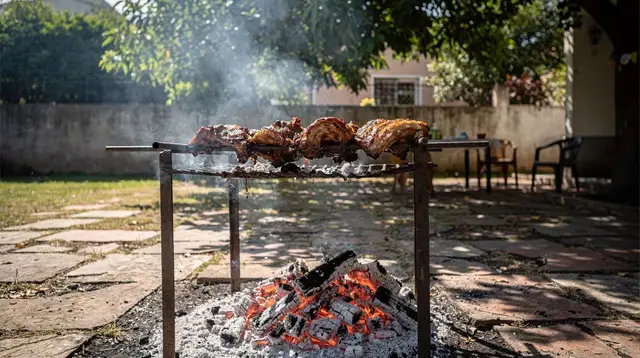
An asado is built around a fire — wood or charcoal, sometimes both — and around one person, the asador, who tends it. That person doesn’t cook to a schedule; the schedule follows the coals. Achuras (offal: chorizo, morcilla, sweetbreads) tend to come out first, in stages, while the main cuts sit over the fire for a long, unhurried stretch. Nobody is plating a finished meal at a set hour. People arrive, stand near the fire, drink, talk, pick at what’s ready, and the meal simply continues around them.
That’s the part a quick backyard barbecue back home skips entirely. A barbecue is usually a means to an end — you’re hungry, you grill, you eat. An asado inverts that: the fire and the gathering are the event, and eating is one part of it, not the goal that ends it. If you go into an asado expecting a fast, efficient meal, you’ll misread the whole thing as slow service.
Where the confusion comes from
Most visitors never experience an actual domestic asado, because it isn’t a commercial product — it happens in homes, on weekends, among people who already know each other. What visitors encounter instead is the parrilla: a restaurant built around a built-in grill, serving the same cuts of beef on a normal restaurant timetable. A parrilla can be genuinely excellent. It just isn’t the ritual — it’s a business serving the output of that tradition to anyone who walks in and orders.
Confusing the two leads to two common disappointments: expecting a restaurant meal to feel intimate and unhurried the way a home asado does, or expecting a home invitation to move at restaurant speed. Knowing which one you’re walking into changes what you should expect from the afternoon.
How I judge whether a parrilla feels real
I don’t recommend specific restaurants — that changes too fast to be useful, and it isn’t really the point. What I look at instead is a handful of signals that tend to separate a grill built for regulars from one built for tour groups.
- Who’s eating there. A room full of Argentine families and regulars on a weekday afternoon says more than any sign out front.
- Whether the fire is visible. A grill you can actually watch, ideally with an asador working it, tends to correlate with a kitchen that takes the cooking seriously rather than reheating from a hidden line.
- How the menu is written. Cuts named specifically — bife de chorizo, entraña, vacío, asado de tira — rather than a single vague “mixed grill for two,” suggests the kitchen expects diners who already know what they want.
- Pace. A place that pushes you through in forty minutes is optimizing for turnover, which is a legitimate business choice, but it’s the opposite instinct from an asado.
None of that is a guarantee, and I’d rather give you the pattern than a name that might not hold up in six months anyway.
Where to look
Two neighborhoods carry most of the reputation for grill culture among visitors, each with a different character worth reading about before you pick a direction: the Palermo neighborhood guide covers the newer, more design-driven end of the scene, and the San Telmo neighborhood guide leans toward older, more traditional rooms near the antique market streets of San Telmo itself.
Our broader asado and parrilla primer walks through cuts, vocabulary and ordering if you want more detail before you sit down, and the steak house guide covers the more formal end of the spectrum.
Experiencing the ritual, not just the meal
If what you actually want is the asado itself — the fire, the pace, the social weight of it — rather than a restaurant version, the most reliable way in as a visitor is an organized day out on an estancia in the pampas, where the asado is built into the program alongside horses and gaucho traditions rather than squeezed into a lunch break.
A gaucho day trip with an asado cookout gives you the long, unhurried version I first encountered, minus needing to already know someone with a backyard grill. It pairs naturally with a stop in San Antonio de Areco, the town most associated with that gaucho tradition, and with the wider theme of our estancia comparison guide.
If you’re building a longer stay and want the asado experience alongside the city’s other food and culture threads — empanadas, Malbec, the San Telmo market — a structured multi-day plan like the four-day Buenos Aires discovery itinerary gives the pace room to include both a proper asado day and a couple of unhurried parrilla dinners in the city, rather than cramming everything into one meal.
The part worth remembering
An asado is not a fast way to eat meat outdoors — it’s a slow, deliberate social occasion where the fire sets the tempo and the meal is the excuse for everyone to stay in one place for a few hours. A parrilla restaurant borrows the technique and the cuts but runs on a commercial clock. Both are worth your time in Buenos Aires; they’re just not the same thing, and knowing which one you’ve walked into will save you from judging either one by the wrong standard. Pair a neighborhood parrilla dinner with an estancia asado if your schedule allows it — they answer different questions about the same tradition, and together they explain far more about Argentine food culture than either does alone.
Food Tours and Argentine Wine Tastings
Verified deep-linked GetYourGuide tours. Book through these links and we earn a small commission at no cost to you.
GetYourGuide does not provide a product photo for this activity — the image shows the meeting point, photographed by us.