Private Cooking Classes in Buenos Aires
What do you get with a private cooking class in Buenos Aires that a group class doesn't offer?
A private class is booked for your own party only, so the start time, the pace, and often the menu can be adjusted to you — asado, empanadas, or a vegan menu, for example. It costs considerably more per person than a shared workshop, and it does not automatically teach better; it mainly buys flexibility and privacy.
What “private” actually changes
Buenos Aires has a healthy handful of scheduled, shared cooking workshops — a fixed time slot, a set menu, a table of travellers who signed up separately. A private class is a different transaction: the booking reserves the instructor, the kitchen, and usually the start time for your party alone, whether that party is two people or ten. Nobody else joins your table.
That single change has three practical consequences, and it’s worth being honest about which ones matter to you before paying the premium.
Timing. A private booking can usually start earlier or later than a group’s fixed slot, which matters if you’re working around a flight, a football match, or a tour on the other side of the city. Group classes run on the host’s published schedule; private ones flex to yours, within reason.
Menu. Many hosts who run private sessions will adjust the menu more than they would for a scheduled group — swap a filling, lean the whole session vegetarian or vegan, or build the class around a specific occasion. This isn’t universal: some hosts run the same fixed menu whether the booking is private or shared, so it’s worth checking the listing rather than assuming.
Privacy and pace. You’re not sharing counter space, ingredients, or the instructor’s attention with strangers. For a couple, a family, or a small group of friends who’d rather not narrate their trip to new people over chopped onions, that’s the actual product being bought.
What a private class does not automatically deliver is a better cooking lesson. The techniques taught — how to fold an empanada, how to season and rest a cut of beef for an asado, how to build a dulce de leche filling — are the same whether you’re one of two people or one of ten. A skilled instructor teaches a group of eight just as well as a group of two; a mediocre one doesn’t improve because the room is smaller. If your priority is learning to cook well, a well-reviewed group workshop earns that as reliably as a private one. If your priority is flexibility, privacy, or a closed setting for a special occasion, private is the format built for that.
What it costs, roughly
Private and small-group cooking experiences in Buenos Aires are priced per booking or per person at a level several times higher than a scheduled group workshop — the instructor and kitchen are being reserved for you rather than shared across a full table of paying guests. Exact pricing moves with group size, menu, and season, so treat any figure here as a planning range and check the current price on the booking page before committing.
| Format | Typical group | What you’re paying for |
|---|---|---|
| Scheduled group workshop | 6–12 travellers, shared table | Lower per-person cost, fixed time slot, fixed or limited menu choice |
| Private class, small party | 2–6 people, your party only | Higher per-person cost, flexible timing, often a more adjustable menu |
| Private class, larger group | Up to roughly 8–10 (venue-dependent) | Per-person cost drops as the group grows, still exclusive to your party |
The gap narrows as your group grows: a private booking for eight people, split among the group, can land close to the group-workshop price per head — worth asking about if you’re travelling with a larger party rather than a couple.
Who a private class actually suits
Not every traveller needs to pay the private premium, and it’s worth being specific about who does.
A couple with a tight schedule — a flight to catch, a same-day booking elsewhere — benefits from being able to set the start time rather than fit a fixed slot. A family with children often prefers the closed setting and the ability to simplify a menu for younger palates without disrupting a room of adults. A small group celebrating something — an engagement, a birthday, a reunion — gets a setting that feels like an occasion rather than a shared class. And anyone with a specific dietary need that goes beyond what a set group menu accommodates — genuinely private, custom vegan, or an allergy that needs real attention rather than a swapped ingredient — is generally better served by a host who’s cooking to their brief alone.
Conversely, a solo traveller or a couple who enjoys meeting other people on the road, and who isn’t working around a fixed deadline, usually gets the same culinary result from a group workshop for less money, plus the social side of a shared table — something a private booking by definition doesn’t offer.
The three menus most commonly offered privately
Private bookings in Buenos Aires tend to cluster around a few recognisable menus, and it’s worth knowing which one you’re actually booking.
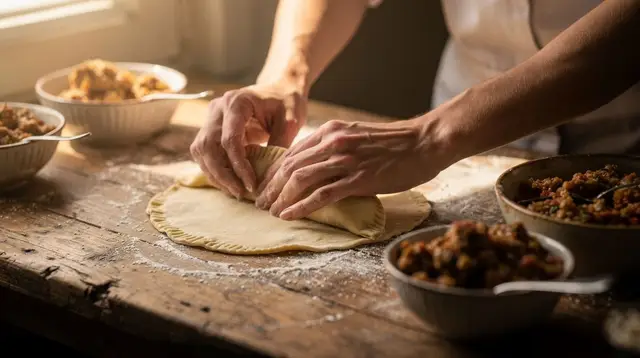
The empanada-focused, family-friendly class teaches the fold and a handful of classic fillings — beef, chicken, ham and cheese — pitched at a pace that works for children and first-time cooks. It’s the gentlest introduction and the easiest to adapt to a mixed-age group. Buenos Aires’ private empanada class built for families is the reference version of this format.
The broader Argentinian menu goes past empanadas into a fuller spread — a starter, a main built around grilled or braised beef, and a dessert, closer to what a home cook would serve for a proper sit-down meal. The full Argentinian menu taught in a private session is aimed at travellers who want the complete picture, not just one dish.
The vegan menu with tasting swaps the beef-centred repertoire for plant-based versions of Argentinian staples, built and finished as a proper multi-course tasting rather than a single dish. It’s worth booking specifically rather than assuming any host will improvise a vegan menu on request — the vegan class with a full tasting menu is designed around it from the start.
Other private and small-group formats worth knowing about
Beyond the three reference menus above, a handful of other private and small-group cooking experiences operate in Buenos Aires, each built around a narrower idea than the general Argentinian repertoire.
A session designed by a Michelin-trained chef pitches itself above the standard home-cooking format — more technique, more precision in plating, aimed at travellers who want the private setting and a more chef-driven lesson rather than a family recipe taught informally. The Argentine cooking class designed by a Michelin chef is the version built around that brief.
Buenos Aires’ large Asian immigrant communities also support a small-group format that has nothing to do with beef or empanadas: an authentic Vietnamese and Thai cooking class, useful for a traveller who’s had several asado-heavy days in a row and wants a change of register without leaving the city.
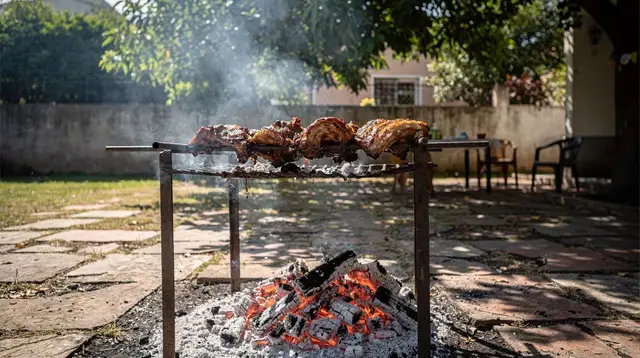
For the classic centrepiece dish itself, some hosts separate the asado from the broader Argentinian menu and offer it as its own private booking, sometimes paired with the option of simply dining rather than cooking — the asado cooking class or dining experience covers both. And for a tighter, dessert-inclusive take on the empanada-focused menu, the empanadas and alfajores guided class adds Argentina’s classic dulce-de-leche sandwich cookie to the fold-and-fry lesson, which the purely empanada-focused version above doesn’t cover.
None of these replace the three core menus — they’re worth knowing about mainly if your group has already ruled out empanadas, a full Argentinian spread, or the vegan tasting menu, and wants something more specific.
Where these classes happen
Most private hosts work out of a home kitchen or a small culinary studio, concentrated in Palermo, with a smaller number in San Telmo. Both barrios put you within a short taxi or walk of the evening’s other plans — Palermo’s restaurants and bars if the class finishes for dinner, San Telmo’s antique streets and milongas if you’re staying nearby.
A few hosts will travel to cook at your apartment or hotel kitchen for an added fee; this is the exception rather than the rule, and it’s worth confirming directly with the operator before booking if it matters to your plans. Sessions typically run two and a half to three and a half hours, including the meal you cook together at the end — long enough to be a proper afternoon or evening, not a rushed hour.
Booking it around the rest of a trip
A private class slots naturally into an evening that would otherwise be unstructured — the night before or after a long day trip to Tigre and the Paraná Delta, for instance, when a fixed group-workshop time might clash with a return train. It also pairs well with barrio time in Palermo, where most hosts are based, letting you walk from the class straight into Palermo’s nightlife or a wine bar afterward rather than crossing the city.
If you’re deciding between a private booking and a group one, it helps to see both side by side before choosing — the comparison of cooking class formats in Buenos Aires lays out what each style actually includes. For the food itself rather than the format, the asado and grilling guide and the empanada tasting guide explain what you’ll be cooking before you decide which menu to book.
Travellers building a full day around food sometimes prefer the market-driven version, where the class starts with sourcing ingredients rather than a fixed pantry — see the market-to-table cooking class for that variant, or the wine-pairing class if a Malbec-matched meal matters more than the cooking technique itself. For a first landing in the city before any of this, the Buenos Aires in one day itinerary and the three-day first-timer itinerary both leave room to slot an evening class in without disrupting the rest of the plan.
Families weighing a private class against other kid-friendly options can compare it with the general Buenos Aires with kids guide, which covers a wider set of family activities beyond the kitchen. And if privacy matters for reasons beyond scheduling — a larger group wanting a closed room, or simply preferring not to share the experience with strangers — it’s worth reading how this format compares with private guided city touring more broadly, since the same trade-off between cost and flexibility applies across most private bookings in the city.
Some travellers stack a private cooking session with tango on the same evening — cook first, then walk into a tango show or a beginner tango lesson once the meal’s finished. If a full evening built around tango rather than food is what you’re after, the group tango class with mate and snacks or the private tango class and milonga tour both work as a private-format alternative to a cooking session, for a group that wants the same flexibility of timing applied to dance rather than the kitchen.
Before locking in a date, check the current best time to visit Buenos Aires if your trip dates are still flexible — summer’s heat (December to February) can make an afternoon class in a smaller kitchen warmer than a spring or autumn booking, worth factoring in if the venue’s air conditioning isn’t confirmed.
Private cooking classes in Buenos Aires: your questions answered
Is a private cooking class better than a group class?
Not inherently. A private class buys flexibility of time and menu and a closed, private setting. A well-run group class with eight to ten people covers the same techniques, usually with more shared energy around the table, and costs less per person.
How much more does a private class cost than a group workshop?
As a rough order of magnitude, private and small-group formats run several times the per-person price of a scheduled group workshop, because the instructor’s and host’s time is being reserved for one party rather than shared across a full table. Confirm the current price on the booking page before deciding, since it depends on group size and menu.
Can we choose the menu for a private class?
Often yes, within the categories the host already teaches — a classic empanada and asado menu, a vegetarian or vegan menu, or a broader Argentinian repertoire. Confirm dietary requirements and any menu substitution when you book, since not every host customises freely.
How many people can join a private cooking class?
This depends on the host’s kitchen, but most private bookings in Buenos Aires suit somewhere between two and around eight to ten people comfortably. If your group is larger, ask before booking whether the venue and instructor can scale to it.
Is a private class worth it for a couple travelling alone?
It depends on what you want. A couple who prefers a quieter, flexible session, or who has a tight schedule and needs a specific start time, gets real value from going private. A couple happy to share a table with other travellers will usually find a group class just as good, and cheaper.
Do private classes include market visits or wine pairings?
Some do, as an add-on or an included step — a short shopping stop for empanada fillings, or a glass of Malbec alongside the meal. This varies by host and by which private cooking class you book, so check the listed inclusions rather than assuming.
Where do private cooking classes usually take place?
Typically in a host’s private kitchen or a small culinary studio, most often in Palermo, sometimes in San Telmo. A handful of hosts can also cook at your apartment or hotel for an extra fee — worth asking about directly if that matters to you.
Cooking Classes and Workshops
Verified deep-linked GetYourGuide tours. Book through these links and we earn a small commission at no cost to you.
GetYourGuide does not provide a product photo for this activity — the image shows the meeting point, photographed by us.