Wine Pairing Cooking Class in Buenos Aires: Malbec Meets the Kitchen
What is a wine-pairing cooking class in Buenos Aires?
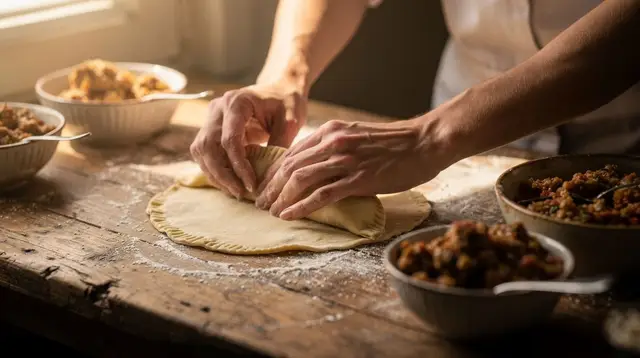
It is a hands-on cooking session, usually empanadas, asado-style beef or a similar Argentine menu, served course by course alongside two to four Argentine wines chosen to complement each dish. Unlike a straight wine tasting, the focus is cooking first, pairing second, and most sessions run three to four hours in a small group.
What actually happens in a wine-pairing cooking class
A wine-pairing cooking class is a hybrid: part hands-on cooking lesson, part guided tasting, built around the idea that Argentine food and Argentine wine were made to be eaten and drunk in the same sitting. In Buenos Aires, that almost always means Malbec somewhere on the table, but the format itself is what makes it different from either a plain cooking class or a plain wine tasting — you make the dish, then the instructor pours a wine chosen to go with it, and you eat and drink the two together while talking through why that combination was picked.
Most sessions run three to four hours, small group (commonly eight to twelve people), in a private kitchen or culinary studio rather than a working restaurant. That size matters: everyone gets bench space, a knife, and enough one-on-one time with the instructor to actually ask questions about the wine rather than just watching a demo. A typical structure looks like this: a short introduction to Argentine wine regions and grapes, then two or three courses built and cooked in sequence — often empanadas to start, a beef course in the middle, and something with dulce de leche to close — with a different wine poured before or alongside each one.
It’s worth being clear about what this is not. It is not a restaurant tasting menu where wine simply arrives with the plates a server brings you; you are doing the cooking. And it is not a cellar-door style tasting built around comparing several bottles side by side — for that, see the note on tastings-only sessions below. This class exists in the middle: less wine breadth than a tasting, more wine context than a standard cooking class.
Buenos Aires wine geography, briefly
None of the wine served in a Buenos Aires class comes from anywhere near Buenos Aires — the vineyards are hundreds of kilometres west, mostly in the province of Mendoza, at altitude in the rain shadow of the Andes. Argentina’s other wine regions (Salta’s high-altitude Cafayate valley, San Juan, parts of Patagonia) turn up occasionally too. Instructors typically cover this briefly rather than in depth: enough to explain why the grape in your glass tastes the way it does, not a full regional survey.
| Grape or style | What it usually accompanies |
|---|---|
| Malbec | Grilled or roasted beef, heavier empanada fillings |
| Cabernet Franc / Bonarda | A second red course, offered for contrast with Malbec |
| Torrontés (white) | Lighter starters, empanadas with vegetable or cheese filling |
| Rosé | Warm-weather menus, lighter first courses |
These are starting points an instructor might use, not fixed rules — see the next section.
Why this guide won’t tell you “the” correct pairing
It’s tempting to write that Malbec is simply the right wine for asado and leave it there, but that overstates what a pairing actually is. Malbec’s dark fruit and firm tannin do stand up well to the char and fat of grilled beef, which is exactly why it became the default match — but “stands up well” is not the same as “the only option.” A leaner cut, a lighter marinade, or simply a personal preference for less tannin can tip the same course toward a Bonarda or even a chilled red. Empanadas complicate things further: a beef-and-onion filling behaves differently in the mouth than a corn-and-cheese or a ham-and-cheese one, so a single wine poured across a plate of mixed empanadas is already a compromise.
A good instructor will say this openly and offer two options rather than issue a verdict — “if you prefer more tannin, try this one; if you want something softer, try this one” — and that is the more useful thing to take away from the class than a rule to repeat afterwards. Treat every pairing suggestion here and in the class itself as a reasonable option among several, not a fixed answer.
A typical menu, course by course
Menus vary by operator and by season, but a representative sequence looks something like this:
| Course | Typical dish | Wine typically poured |
|---|---|---|
| Starter | Empanadas (beef and/or vegetable) | Torrontés or a lighter red |
| Main | Grilled or pan-seared beef, sometimes with chimichurri | Malbec |
| Optional second main or side | Provoleta or grilled vegetables | Rosé or a second red |
| Dessert | Dulce de leche–based sweet | Sometimes a sweeter or fortified pour, sometimes none |
Chimichurri — the parsley, garlic and vinegar sauce that shows up on almost every grilled-meat table in Argentina — is usually made from scratch as part of the class, since it takes minutes and is one of the more approachable techniques on the menu for a beginner cook.
How this differs from a tasting-only session
The single most common confusion when booking is mixing this class up with a straight wine tasting. A Malbec wine tasting in Buenos Aires is built for people who want to taste across several bottles — often five or six wines from different producers or regions — guided by someone who talks through each one in turn. There is little or no cooking involved, and the point is breadth: comparing Malbecs against each other, or comparing Malbec against other varietals.
A wine-pairing cooking class inverts that emphasis. You’ll usually taste fewer wines overall — two to four, one per course — but you’ll cook the food that goes with each one, and the wine is explained in the context of the dish rather than compared against a lineup of other bottles. If your priority is drinking widely across Argentine wine, book a tasting. If your priority is understanding how food and wine work together at the table, and leaving with a recipe or two, this class is the better fit.
a straight wine tasting in Buenos Aires, for comparison, drops the cooking entirely and focuses purely on the glass — useful context before deciding which format suits your trip.
Cooking-only versus pairing versus tasting
To make the distinction concrete, here’s how the three related formats compare:
| Format | Cooking involved | Wine involved | Best for |
|---|---|---|---|
| Argentine cooking class | Full hands-on menu | None or minimal | Learning to cook, no wine focus |
| Wine-pairing cooking class | Full hands-on menu | 2–4 wines, one per course | Cooking and drinking together |
| Wine tasting | None | 4–6+ wines compared | Exploring Argentine wine breadth |
If cooking without the wine focus is what you’re after, a general Argentine cooking class in Palermo covers the technique side without building the session around pairing.
Buenos Aires’s hands-on Argentinian cooking class is the closest match to that food-first version, and it’s a useful comparison booking if you decide the wine element matters less to you than the cooking itself.
Where these classes run, and what to expect on arrival
The great majority of wine-pairing cooking classes are based in Palermo or San Telmo, usually in a converted apartment, a small culinary studio, or occasionally a private home rather than a commercial restaurant kitchen. That venue choice is deliberate — it keeps the group small and the atmosphere closer to a dinner party than a class in the school sense.
Expect to arrive to an apron and a workstation already set up, a brief welcome with the first pour, and then a hands-on structure where the instructor demonstrates a step and the group follows along at their own bench. Photos are generally welcome, and most operators send the recipes home afterwards, either printed or by email, so the class doubles as a takeaway souvenir. Sessions in English are the norm for visitor-facing operators, though it’s worth confirming language on booking if you have a preference.
Dietary requirements — vegetarian, gluten-free, shellfish allergies — should be flagged when booking, not on arrival: substitutions in a fixed multi-course menu are prepared in advance, not improvised.
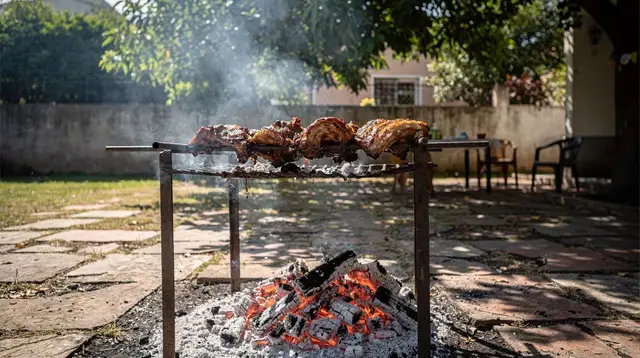
Buenos Aires’s asado cooking or dining experience leans further into the grilled-beef side of the menu specifically, for travellers whose main interest is asado technique with wine as the accompaniment rather than an equal partner.
Timing it around the rest of a Buenos Aires trip
A three-to-four-hour class, usually held in the evening, fits comfortably into a single day without displacing much else. It pairs naturally with a day mostly spent on foot in Palermo or exploring Recoleta, followed by the class as the evening’s main event rather than a rushed add-on before dinner — since the class effectively is dinner. Travellers building a three-day first-timer itinerary or a longer one-week Buenos Aires plan can slot it into any evening that doesn’t already have a tango show or a football match booked, since neither of those pairs well with a heavy meal beforehand.
Because it runs at dinner hour and Buenos Aires meals run notably late — restaurants rarely fill before 21:00 — an early-evening pairing class (often starting around 19:00 or 20:00) lines up naturally with local dining rhythm rather than fighting against it.
If wine is the main draw of your trip rather than a single evening’s activity, it’s worth reading up on Buenos Aires’s best time to visit alongside this class, since harvest season in Mendoza (typically February–April) doesn’t affect what’s poured in the city, but it does affect flight and hotel demand if a wine-focused trip is being planned around it.
Booking sense and what to check before you commit
A handful of practical checks make the difference between a smooth evening and a disappointing one:
- Confirm the menu is fixed or seasonal. Some operators run the same menu year-round; others adjust with the seasons. If a specific dish (say, empanadas) is the reason you’re booking, check it’s actually on the current menu.
- Check the wine count and style, not just “wine included.” A listing that says wine is included doesn’t always specify how many pours or whether it’s Malbec-anchored — ask if it matters to you.
- Ask about group size. Smaller groups (eight to ten) generally mean more instructor attention; some venues run larger sessions, particularly in peak season.
- Flag dietary needs at booking, not on the day.
- Factor in the evening timing. These classes typically run at dinner hour; plan your afternoon accordingly rather than trying to fit in another activity right before it.
a small-group wine tasting in Buenos Aires is a useful alternative to keep in mind if, after reading this, you decide you’d rather taste more wines than cook — the small-group format keeps the same intimate, question-friendly atmosphere without the kitchen component.
A realistic sense of what you’ll leave with
Beyond the meal itself, most travellers come away from a wine-pairing cooking class with three concrete things: a printed or emailed set of recipes (commonly empanadas, a beef preparation, and chimichurri), a working sense of which Argentine grapes exist beyond Malbec, and — more usefully than any fixed rule — a bit of practical confidence about pairing food and wine by taste rather than by formula. That last point is worth repeating: the class works best not as a source of one correct answer, but as a couple of hours spent testing combinations in a low-stakes, well-guided setting, with an instructor on hand to explain why something worked or didn’t.
For a deeper dive into the beef side of Argentine cooking specifically, best parrillas in Palermo and the general asado and parrilla guide both cover restaurant options for travellers who’d rather eat asado prepared by a professional grill cook than cook it themselves — a useful complement either before or after taking the class, and a reminder that Buenos Aires offers both the hands-on version and the sit-down version of the same food culture.
Food Tours and Argentine Wine Tastings
Verified deep-linked GetYourGuide tours. Book through these links and we earn a small commission at no cost to you.
GetYourGuide does not provide a product photo for this activity — the image shows the meeting point, photographed by us.