Two Days in Palermo and Recoleta
Can Palermo and Recoleta be visited in two days without a car?
Yes. Palermo and Recoleta sit next to each other in northern Buenos Aires and are linked by Subte line D or several colectivo routes in roughly twenty minutes, so a car adds nothing. One day per barrio is a comfortable, unrushed pace rather than a forced march.
This plan is not a tour of Sicily’s own Palermo or of Paris’s Recoleta-style cemeteries elsewhere — both names belong to Buenos Aires, and both barrios sit a short ride apart in the north of the city, well away from the historic Microcentro. It is built for a visitor who would rather linger over two green, leafy, architecturally distinct neighbourhoods than tick off the plaza-and-cathedral circuit downtown. Day one is spent in Palermo, moving from its wooded parks through the low-rise streets of Palermo Soho and Palermo Hollywood. Day two is spent in Recoleta, centred on its famous cemetery and the elegant blocks around it.
The two barrios connect easily: Subte line D runs from Palermo’s stations north-south toward the centre, and several colectivo routes cross between them directly, so the whole itinerary works on foot and public transport, with no car needed at any point. For a closer look at each barrio on its own, before or after this two-day plan, see the Palermo, Recoleta and Recoleta Cemetery destination pages, which cover the sights in more depth than a fast two-day pass can.
Day 1: Palermo — parks, Soho and Hollywood
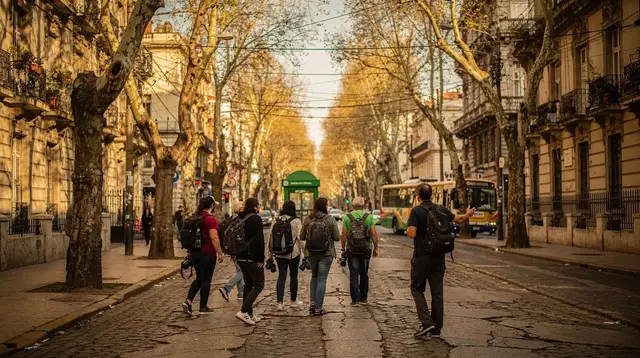
Start the morning in the Bosques de Palermo, the string of parks, lakes and rose gardens that give this part of the city its green character. It is the easiest and cheapest way to get a feel for how residents of /destinations/palermo/ actually spend a weekend morning: joggers, dog-walkers with a dozen leashes at once, and families out with a mate flask. If botanical detail interests you, the nearby Jardín Botánico and Jardín Japonés both reward an hour of wandering, though neither is essential to the plan.
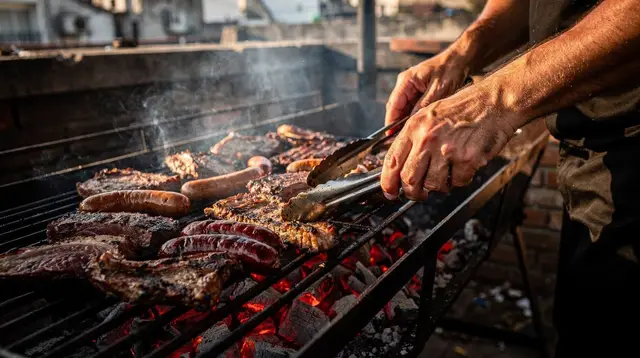
By late morning, head into Palermo Soho, the grid of streets around Plaza Serrano known for independent design boutiques, small art galleries and a dense cluster of cafés. This is a good stretch for a /guides/palermo-street-art-walking-tour/ if you want the wandering to have some structure, or simply for drifting between shopfronts — Soho rewards slow walking more than a checklist. For lunch, this barrio has one of the city’s best concentrations of good kitchens; a sit-down parrilla is the classic choice, and /guides/best-parrillas-palermo/ narrows the options if the density of restaurants feels overwhelming.
In the afternoon, cross into Palermo Hollywood, on the far side of the railway tracks from Soho. It has a different rhythm — fewer boutiques, more production studios, and a nightlife scene that starts to show itself even in daylight in the form of design-forward bars and restaurants setting up for the evening. A gentle way to see both halves of Palermo without doubling back on foot is a guided ride: /guides/palermo-bike-tour/ covers a wider loop through the parks and both Soho and Hollywood streets in a couple of hours, which suits travellers short on a full free afternoon.
For dinner, Palermo Hollywood in particular has strong options for a first real Buenos Aires meal, but do not feel obliged to eat late just because locals do — dinner service in most restaurants does not really start before 20:00, and the room stays quiet until well past 21:00. If tango is on your list at all, this is also a sensible evening to fit in a show or a first milonga, since Palermo has several venues aimed at both visitors and dancers; /guides/tango-lessons-beginners/ is worth reading first if you want to understand what a beginner class actually involves before showing up.
If you are still deciding how much time to give each neighbourhood, Palermo vs Recoleta vs San Telmo compares the three at a glance, and Where to Stay in Buenos Aires by Neighbourhood is worth reading before you book if you haven’t picked a base yet.
A short table for orientation:
| Palermo sub-area | Character | Best for |
|---|---|---|
| Bosques de Palermo | Parks, lakes, gardens | Morning walk, cycling |
| Palermo Soho | Boutiques, galleries, cafés | Shopping, lunch |
| Palermo Hollywood | Studios, bars, restaurants | Dinner, nightlife |
If you would rather have the whole day guided rather than self-paced, a small-group walk through Palermo Soho covers the neighbourhood’s design and food scene with local commentary, and a nature-focused outing through the Palermo Woods is a good fit for the parks stretch if you’d rather not navigate the paths yourself.
Day 2: Recoleta — the cemetery and the barrio around it
Recoleta is a twenty-minute ride from most of Palermo, whether by Subte line D toward the centre and a short walk, or directly by colectivo — check /guides/subte-guide-buenos-aires/ and /guides/colectivos-bus-guide/ before you go if this is your first time using either. A /guides/sube-card-guide/ read is worth five minutes too, since neither the Subte nor the bus takes cash.
Start at the Recoleta Cemetery, a walled city of mausoleums that is genuinely unlike anything else in Buenos Aires — ornate family vaults line narrow stone lanes, many built to the scale of small chapels. Eva Perón is buried here, in the Duarte family vault rather than in a monument bearing her own name; the vault is modest enough that visitors regularly walk past it, so follow signage or ask a guide rather than expecting it to announce itself.
Entry for non-resident visitors is ticketed, and — importantly — the cemetery keeps fixed opening days and hours, posted at the gate; there is no way to see the grounds outside those hours, guided or not, so check the current schedule before you plan the rest of the day around it. A structured visit removes the guesswork: /guides/recoleta-cemetery-walking-tour/ or /guides/recoleta-cemetery-guide/ both cover the layout and the notable tombs in more depth than a self-guided wander usually surfaces on a first pass.
After the cemetery, spend the rest of the morning in the barrio itself. Recoleta reads as Buenos Aires’s most European-feeling neighbourhood — wide avenues, Belle Époque apartment blocks, and a general sense of old money that contrasts with Palermo’s younger, more design-driven streets. /guides/recoleta-neighborhood-guide/ is a useful primer if you want context on how the area developed. For lunch, the cafés around Plaza Francia and along Avenida Alvear range from simple to genuinely formal; this is a fine spot for a leisurely sit-down rather than a quick bite.
In the afternoon, a short walk or a quick colectivo ride brings you to El Ateneo Grand Splendid, a 1919 theatre converted into a bookshop on Avenida Santa Fe. It costs nothing to enter and rewards fifteen or twenty minutes with a camera even if you buy nothing — the stage has become a café, and the boxes are lined with books. /guides/el-ateneo-grand-splendid-guide/ has the practical detail on hours and the best angles if photography is the main draw for you.
Round out the afternoon with one more stop depending on your pace: the Museo Nacional de Bellas Artes sits at the edge of Recoleta for art lovers, or simply more time spent walking the barrio’s quieter residential streets away from the cemetery crowds. For dinner, Recoleta’s restaurants skew a notch more formal and pricier than Palermo’s, which suits a slower final evening before moving on to the rest of the city or beyond it. If Palermo and Recoleta turn out to be highlights of the trip, How Many Days in Buenos Aires helps work out whether to extend beyond two barrios into a longer stay.
A quick comparison of the two days:
| Day 1: Palermo | Day 2: Recoleta | |
|---|---|---|
| Pace | Active, walking-heavy | Slower, more concentrated |
| Signature stop | Bosques de Palermo + Soho streets | Recoleta Cemetery |
| Food style | Casual to mid-range, dense choice | A notch more formal |
| Evening | Tango show or milonga option | Quiet dinner, early night |
If you’d prefer a single guided day that folds Recoleta into a wider loop of the city rather than a standalone visit, a guided tour through Recoleta’s “Little Paris” streets covers the cemetery and the surrounding barrio together, and a combined tour taking in La Boca, Recoleta and the Obelisco is worth considering instead if you’d rather see Recoleta as part of a broader first-day overview of the city and save this two-day plan’s slower pace for a return visit.
Extending this plan into a longer trip
This two-day plan pairs naturally with other short itineraries built around a similar pace. If Palermo and Recoleta are the first two days of a longer stay, Three Days: First-Time Buenos Aires and Five Days: Buenos Aires Essentials both build outward from a comparable northern-barrio base. For a contrasting pace closer to the river, Two Days: Puerto Madero and Costanera Sur covers the reclaimed riverfront and nature reserve, and One Day: San Telmo and La Boca is a sensible third day if you want the older, more historic barrios as well.
Practical notes for this two-day plan
Both barrios sit north of the Microcentro and are best reached from most hotels by Subte line D or a colectivo rather than on foot, unless you are already staying in one of the two. Neither day requires a car, and traffic in this part of the city makes one a liability rather than a convenience. Carry your SUBE card topped up for both days — you will use it at least twice on the Subte or bus alone, more if you add a taxi or ride-hail for the return trip after dark. Keep bags and phones close in busy stretches of both barrios, particularly around cafés with outdoor seating. See Getting Around Buenos Aires for a fuller rundown of Subte, colectivo and taxi options if this is your first visit to the city.
Weather matters more here than in a museum-heavy itinerary, since both days involve real walking outdoors. /guides/buenos-aires-best-time-to-visit/ is worth a look if you are still choosing dates: spring, especially late October into November when Recoleta and Palermo’s jacaranda trees flower purple, is one of the most rewarding windows for exactly this kind of walking plan — see Buenos Aires Jacaranda Season for exactly when the blooms tend to appear.
FAQ: two days in Palermo and Recoleta
Is Recoleta the same Palermo as the one in Sicily?
No. Buenos Aires’s Palermo shares its name with the Sicilian city but has no other connection to it — it is a barrio in northern Buenos Aires known for parks, Palermo Soho and Palermo Hollywood, not a destination in Italy.
Can I visit the Recoleta Cemetery whenever I want, including outside posted hours?
No. The cemetery keeps fixed opening days and hours posted at its gates, and there is no access to the grounds outside them — check the current schedule before building your afternoon around it, since hours have changed more than once.
How do I get from Palermo to Recoleta?
The two barrios are about twenty minutes apart by Subte line D or by several direct colectivo routes; no car or taxi is needed, though a taxi or ride-hail is a reasonable option after dark.
Is Eva Perón’s tomb easy to find in the cemetery?
Not on its own — she is buried in the Duarte family vault rather than a monument bearing her own name, and it is modest enough that visitors often walk past it without noticing; follow the cemetery’s signage or take a guided walk if you don’t want to search.
Do I need to buy tickets for the Recoleta Cemetery in advance?
Non-resident visitors are charged an entry fee, but current prices and whether advance booking is needed can change; check before you go rather than assuming free or walk-up entry.
Is two days enough for both barrios, or should I split them further?
One full day per barrio is a comfortable, unhurried pace for this plan. Trying to combine both into a single day is possible but rushed, especially if you want real time in the Bosques de Palermo and a proper look at the cemetery.
Is El Ateneo Grand Splendid worth the detour from Recoleta’s main sights?
Yes, and it barely counts as a detour — it’s a short walk or ride from the cemetery, free to enter, and most visits run fifteen to twenty minutes, making it an easy add to the Day 2 afternoon.
Do I need a car for this itinerary?
No. Both days are built entirely around walking, the Subte and colectivo buses; a car adds cost and parking hassle without saving meaningful time between two barrios this close together.
tours.2 days
Verified deep-linked GetYourGuide tours. Book through these links and we earn a small commission at no cost to you.
GetYourGuide does not provide a product photo for this activity — the image shows the meeting point, photographed by us.