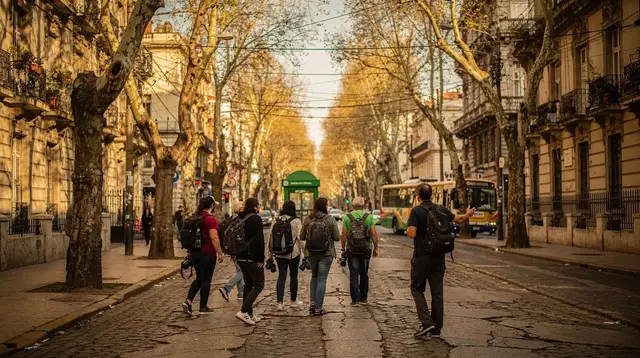
2 Days: Puerto Madero, Costanera Sur and Retiro on Foot
Can you cover Puerto Madero, Costanera Sur and Retiro in two days without a car?
Yes — both days work entirely on foot, with the Subte as an optional shortcut. Day one walks Puerto Madero's docks into the Costanera Sur Ecological Reserve for a late-afternoon light and birdwatching session; day two covers Retiro station and its surrounding streets from the city centre. Check the reserve's posted hours before you go, since it closes earlier outside the summer season.
This two-day plan pairs Buenos Aires’ newest riverside district with one of its oldest transport hubs, and it never asks you to get in a car or a taxi. Day one is about water and light: the glass towers of Puerto Madero give way, within twenty minutes on foot, to the reeds and lagoons of the Costanera Sur Ecological Reserve. Day two is about arrival and departure: Retiro, the city’s grand historic railway terminus, and the streets around it, walked from the centre with only an occasional Subte ride to save your legs. Distances are modest, the terrain is flat, and nothing here requires a booked transfer.
Day 1: Puerto Madero’s Docks to the Costanera Sur Reserve
Start mid-morning in Puerto Madero, the disused nineteenth-century dock system rebuilt in the 1990s into red-brick warehouses, glass office towers and a long pedestrian promenade on both sides of the water. The four numbered docks — Dique 1 to Dique 4 — are lined with converted grain silos now holding restaurants and offices, and the whole strip is easy, flat, well-signed walking. The Puente de la Mujer, the white cable-stayed footbridge near Dique 3, is the district’s best-known landmark and a natural point to cross from one side to the other.
Spend the late morning on a Puerto Madero walking tour at your own pace, or simply follow the eastern dock south. Lunch in Puerto Madero runs mid-to-upper mid-range — riverside terraces charge a premium for the view — so this is a good day to budget a proper sit-down lunch here and keep dinner simpler back in the centre.
By early afternoon, walk south along the docks toward the Ecological Reserve’s northern gate, a walk of roughly twenty to thirty minutes from the Puente de la Mujer at an easy pace. This approach on foot is part of the appeal: Puerto Madero’s towers thin out, the path turns to gravel, and the city noise drops away almost completely before you reach the entrance.
Into the Costanera Sur Ecological Reserve
The Costanera Sur Ecological Reserve is some 350 hectares of wetland, lagoons and scrub that grew up on land reclaimed from the Río de la Plata with rubble from a cancelled 1970s riverside motorway project. It is free to enter, and it is genuinely wild for a site this close to a capital’s financial district — herons, coots, and depending on season a wide range of migratory birds move through the lagoons, and capybara sightings are not unusual along the quieter paths.
Two things to plan around deliberately. First, the reserve keeps fixed opening days and hours, and outside the summer months it closes noticeably earlier — do not assume you can arrive at dusk and stroll in; check the current schedule before you set out rather than treating it as open-ended. Second, there is little shade and no reliable water for sale on much of the interior circuit, so carry water, a hat and sun protection, especially outside the cooler months, and treat a midday visit in high summer as the wrong time to walk it — late afternoon is deliberately the plan here.
That timing is the point of this day: arrive in the reserve two to three hours before closing, take one of the longer loop paths toward the riverbank rather than the short circuit nearest the gate, and be at the water’s edge as the light turns gold over the Río de la Plata. It is one of the few places in the city where you can watch the sun drop over open water with the skyline of Puerto Madero as a backdrop behind you, and birdlife is generally most active in this last stretch of the afternoon. Leave with enough daylight margin to reach the gate before closing — reserve staff do clear the paths at closing time, and there is no exit on the river side.
From the reserve gate, it’s a straightforward walk back into Puerto Madero or a short walk further to a Subte connection if you’d rather ride than retrace your steps. For dinner, Puerto Madero itself has both riverside restaurants and quieter side-street options a block back from the water, where prices ease slightly.
Optional evening add-on: if you want a signature Buenos Aires evening rather than an early night, Puerto Madero is also home to a long-running dinner-and-show venue — for instance a tango dinner show with a beginner class beforehand in Puerto Madero, a polished, visitor-oriented format rather than a social dance hall, and a convenient way to end a day that’s already based in this district.
Day 2: Retiro Station and Its Surrounding Streets
Begin the second day from the centre and walk north toward Retiro. If you’re staying further out, one or two stops on the Subte — Línea C terminates at Retiro — is the practical shortcut; otherwise the walk from Microcentro takes roughly twenty-five to thirty-five minutes on flat, direct streets.
Retiro’s centrepiece is the Retiro railway terminus, actually three separate historic station buildings side by side — Mitre, Belgrano and San Martín lines — the Mitre building in particular a grand early-twentieth-century ironwork-and-glass hall worth walking through even if you’re not catching a train. Just outside, Plaza San Martín is a shaded, sloping park with mature rubber trees and monuments, a pleasant place to sit after the station’s bustle, and a short walk from here leads into Retiro’s smarter residential streets toward Avenida Santa Fe.
Retiro is also one of the two areas in this guide’s safety notes worth being deliberate about: it’s a legitimate, heavily used transport hub by day, but stay alert around the station forecourt and the surrounding streets, keep valuables out of sight, and treat the area with the same ordinary city caution recommended after dark anywhere in central Buenos Aires.
From Retiro into the neighbouring streets
Spend the late morning working outward from the station on foot. Options within easy walking distance include the approach toward Recoleta to the south — worth combining if you have the energy, since the boundary between the two areas is only a matter of blocks — or a slower loop through Retiro’s own quieter residential grid, which mixes early-twentieth-century mansions with newer apartment towers.
If you’d rather have the history narrated than work it out from signage, a Recoleta and Retiro walking tour covers both areas from the centre in a single guided outing; a tip-based option worth knowing about is a tip-based walking tour through Recoleta and Retiro, which keeps the day flexible on cost while still giving context to what you’re seeing.
For lunch, Retiro and the Recoleta border have options across the price range, from simple café counters near the station to sit-down parrillas a few blocks up. This is a good day to keep the pace unhurried — much of the value here is in the walking itself, not in ticking off a single monument.
Rounding out the afternoon
If two days of walking has you wanting one more angle on the city before you finish, a broader half-day overview works well as a closing activity: a half-day city tour through Montserrat, San Telmo, La Boca and Puerto Madero ties together several of the districts this itinerary and its companions cover, useful if you’re short on time for the rest of your trip. Alternatively, an evening tango performance closer to the centre — for example an immersive tango show — makes for a fitting last night after two days spent almost entirely on foot.
Practical Notes for This Itinerary
| Item | Detail |
|---|---|
| Total walking, Day 1 | Roughly 6–8 km, flat terrain, no stairs beyond street crossings |
| Total walking, Day 2 | Roughly 5–7 km, flat terrain |
| Motorised transport needed | None required; Subte optional for shortcuts on Day 2 |
| Costanera Sur entry | Free; fixed opening days and hours, earlier closing outside summer — check before you go |
| Water/shade in the reserve | Little shade, no reliable water for sale on much of the circuit — carry your own |
| Best light for the reserve | Late afternoon, two to three hours before posted closing |
| Areas requiring extra care | Around Retiro station forecourt, especially after dark |
Frequently Asked Questions About This Puerto Madero and Retiro Itinerary
Do I need a car or taxi for this itinerary?
No. Both days are designed entirely on foot, with the Subte available as an optional, inexpensive shortcut on Day 2 between the centre and Retiro. Puerto Madero and the Costanera Sur reserve on Day 1 connect directly by a twenty-to-thirty-minute walk with no transport needed at all.
What time should I arrive at Costanera Sur to catch good light and birdlife?
Aim to enter two to three hours before the reserve’s posted closing time, which varies by season and is noticeably earlier outside the summer months. Arriving in the last stretch of the afternoon gives the best combination of cooler temperatures, active birdlife and golden-hour light over the Río de la Plata, while still leaving a safe margin to reach the exit before the gates close.
Is the Costanera Sur Ecological Reserve open every day?
It keeps fixed opening days and hours that are set by the reserve administration and do change with the season, so it should not be assumed to be open on demand. Check the current schedule shortly before your visit rather than relying on a fixed rule.
Can I get food and water inside the reserve?
Not reliably. Much of the interior circuit has little shade and no consistent vendors selling water or food, so bring your own water, a hat and sun protection, particularly if you’re visiting in the warmer months.
Is Retiro station itself worth visiting, or just a transport hub?
Both. The Mitre line building is a striking early-twentieth-century ironwork-and-glass hall worth walking through purely for its architecture, and the surrounding Plaza San Martín and residential streets make for a pleasant walking loop even if you have no train to catch.
Is it safe to walk around Retiro and Puerto Madero?
Puerto Madero is one of the city’s more heavily monitored, modern districts and generally feels relaxed by day and evening. Retiro is safe as a functioning transport hub but warrants the same ordinary caution recommended around any busy station in a large city — stay alert, keep valuables out of sight, and be more careful after dark.
Can I combine this itinerary with San Telmo or La Boca?
Yes, though not comfortably within these same two days without cutting the reserve visit short. A half-day tour covering Montserrat, San Telmo, La Boca and Puerto Madero is a practical way to add those districts either before or after this itinerary rather than folding them into the same two days.
Do I need to book anything in advance for this itinerary?
No advance booking is required for the walking itself or for entry to Costanera Sur, which is free. If you add an optional evening activity such as a tango show or a guided walking tour, booking a day or two ahead is sensible, especially in high season.
Trip Planning
Verified deep-linked GetYourGuide tours. Book through these links and we earn a small commission at no cost to you.
GetYourGuide does not provide a product photo for this activity — the image shows the meeting point, photographed by us.