Costanera Sur by Bike: The Nature Reserve Next to Puerto Madero
Is Costanera Sur good for a bike tour?
Yes: it is a large riverside wetland reserve right next to Puerto Madero, with a flat perimeter path, herons and other birdlife, and a calm that contrasts sharply with the office towers a few hundred metres away. It has fixed opening days and hours and no shade or water for sale inside, so a morning or late-afternoon ride works better than a midday one.
A wetland a few minutes from the towers of Puerto Madero
Stand at the southern end of Puerto Madero, among its converted brick docks and glass office towers, and the Costanera Sur Ecological Reserve barely looks like it belongs to the same city. Cross into it and the skyline recedes behind reeds and lagoons within a couple of hundred metres.
This is a stretch of reclaimed riverbank on the Río de la Plata that was never built on as planned; decades of neglect let scrub, ponds and native vegetation take it over, and it is now a protected reserve with its own resident and migratory birdlife. A bike tour through it is one of the few ways in central Buenos Aires to go, in the space of an afternoon, from dense urban river-front to something that genuinely feels like wild wetland.
The contrast is the whole appeal. On one side of the reserve gates: espresso machines, riverside restaurants, joggers on brick-paved docks. On the other: herons standing motionless in shallow water, the wind moving through reedbeds, and a quiet broken only by birdsong and the occasional passing cyclist. For visitors staying in Puerto Madero or nearby San Telmo, it is an easy half-day escape that needs no bus, train or ferry to reach.
What the reserve actually is, and what it is not
Costanera Sur is not a manicured city park with flowerbeds and playgrounds, and it is not a wilderness far from anywhere either. It sits on land reclaimed from the Río de la Plata starting in the 1970s, intended at the time for urban development that never happened; nature filled the gap instead. What survives today is a mix of lagoons, marshland, scrubby woodland and open grassland, laced with a network of paths open to walkers and cyclists.
Two things follow from that history, and both matter for planning a ride:
- It keeps fixed opening days and hours, which have changed more than once. This is not a stretch of open riverfront that a cyclist can enter at 6am or on a whim on a closed day — check the current calendar before building a morning around it.
- There is essentially nothing to buy inside. No shade stalls, no water vendors, no café at the water’s edge. Across much of the loop there is also very little tree cover. In summer, that makes a midday ride an uncomfortable idea; a morning or a late-afternoon slot, when both the light and the temperature are kinder, is the better read.
There is a third point worth adding for anyone expecting a conventional park: the reserve was never landscaped. Paths follow the raised ground left behind by decades of construction rubble dumped along the shoreline, and the vegetation that has grown over it is largely self-seeded rather than planted. That is part of why it reads as genuine wetland rather than a garden with a river view — the layout has no symmetry, no flowerbeds, and no obvious “front entrance” feel once you are a few hundred metres past the gate. Cyclists who come expecting a tidy riverside park sometimes need a few minutes to recalibrate; cyclists who come expecting a nature reserve tend to find it delivers exactly that.
Best time of day, and by season
Light and temperature both shape this ride more than they do a typical city tour, simply because so much of the reserve is open ground with no cover. Early morning is generally the strongest option: the air is cooler, the light is soft and low across the lagoons, and birdlife tends to be more active before the heat of the day settles in. Late afternoon, in the hour or two before closing, is the other good window — similar light, similar bird activity, and a cooler ride back into Puerto Madero as the towers catch the last sun.
Midday, particularly in the warmer months, is the slot to avoid if possible. With little shade along most of the path, a ride through the reserve in full sun during the hottest part of the day is simply less comfortable, and less rewarding for spotting wildlife, which tends to retreat into cover once temperatures rise. Across the cooler months, the calculus relaxes a little: shade matters less, and a ride at almost any hour within the opening calendar tends to be pleasant, though wind off the river can still make a light layer worth carrying regardless of season.
Riding in: from Puerto Madero’s docks to open water
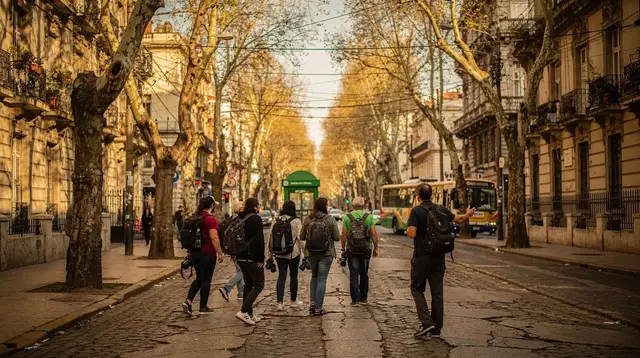
The approach is as much a part of the experience as the reserve itself. From central Puerto Madero, the route runs south along the dockside promenade, past the converted grain silos and the office towers of the newer blocks, before the pavement narrows and the reserve’s entrance gates come into view near the southern end of the docks. That stretch is flat, mostly separated from car traffic, and easy on a bike — a gentle warm-up before the terrain changes underfoot.
Inside the gates, the paths are unpaved but firm and flat, running along raised embankments between the lagoons. There is no need for technical mountain-bike skills; this is a route for a comfortable hybrid or city bike, ridden at a relaxed pace with regular stops. Riders who slow down near the water’s edge, particularly early or late in the day, stand the best chance of spotting herons, coots and ibises working the shallows, and occasionally a coypu — the large native rodent often mistaken for a beaver — moving along the reedbeds.
A full loop of the reserve’s main paths, with stops, takes roughly an hour and a half to two hours at an easy pace. Combined with the ride from central Puerto Madero and back, plan for half a day rather than a quick detour.
Booking a bike, honestly
It would be convenient to say that a bike can simply be picked up at the reserve gates on the day. In practice, that is not something to count on. Casual rental kiosks near tourist areas open and close without notice, and relying on one being there, in working order, on a specific afternoon is a gamble rather than a plan — this guide will not pretend otherwise. What does work reliably is booking a ride in advance, either a guided tour that includes the bike and a route through the reserve and along Puerto Madero, or a rental collected from a fixed shop in Puerto Madero or nearby Palermo before setting out independently.
A guided bike tour heading south from the centre toward the riverside reserve is the simplest way to cover this route without worrying about rental logistics, reserve opening hours or which paths actually loop back to the entrance. For visitors who want more flexibility on timing and pace, a private bike tour with a route built around personal interests can be steered specifically toward Costanera Sur and the docks rather than a fixed city circuit.
Riders with limited time sometimes prefer to fold this stretch into a broader introduction to the city on two wheels, in which case a half-day bike tour covering several barrios in one outing is worth checking against its stated route before booking, since not every half-day itinerary reaches this far south.
Another option that explicitly threads together the riverfront districts is a bike tour linking Puerto Madero, La Boca and San Telmo, which suits travellers who want the reserve as one stop within a longer ride through several barrios rather than an out-and-back on its own. For a different mood entirely, a night tour of the city by e-bike covers the illuminated docks of Puerto Madero rather than the reserve itself, which closes well before dark — a good pairing for a different evening of the same trip, not a substitute for the reserve visit.
What to bring
| Item | Why |
|---|---|
| Water | Nothing is sold inside the reserve gates |
| Sun protection (hat, sunscreen) | Long stretches of the path have no shade |
| Binoculars, if available | Birdlife is often at a distance across the lagoons |
| Insect repellent | Wetland vegetation attracts mosquitoes, especially at dusk |
| A light layer | River wind picks up in the open sections, even on warm days |
Costanera Sur versus a Puerto Madero ride
| Costanera Sur | Puerto Madero docks | |
|---|---|---|
| Surface | Unpaved, flat, firm | Paved promenade |
| Scenery | Wetland, lagoons, birdlife | Converted docks, glass towers, restaurants |
| Shade and services | Very little; nothing sold inside | Cafés, shade from buildings |
| Opening hours | Fixed days and hours, check ahead | Open riverside walkway, no gate |
| Mood | Quiet, natural | Urban, polished |
The two sit back to back, and the best rides treat them as one continuous route rather than a choice between them: dock-front energy on the way out, wetland calm once through the gates, and the towers reappearing on the way back as a reminder of how little distance separates the two.
Pairing this with the rest of the city
A Costanera Sur ride fits naturally alongside a slower walk through Puerto Madero itself, whether before or after the bike leg, and it sits close enough to San Telmo and the Plaza de Mayo area that a full day can combine the reserve in the morning with the historic centre in the afternoon. Riders based further north, near Palermo or Recoleta, can treat the ride down to Costanera Sur as a longer loop rather than a short out-and-back, taking in Retiro and the length of the Puerto Madero docks along the way.
For a broader first look at the city before narrowing in on a reserve ride, the Buenos Aires in one day guide and the three-day first-time Buenos Aires itinerary both show where a half-day at Costanera Sur can sit inside a longer trip. Cyclists curious about the city’s other green spaces might also look at the Palermo bike tour through the Bosques de Palermo parks, a very different, far more manicured kind of ride than the wetland loop described here.
Those weighing up whether to rent independently or book a guide for their whole stay may find it useful to compare this reserve ride against the general Buenos Aires bike tour options covering the wider city, since route, terrain and reserve access all vary between operators in ways that matter more here than on a standard street tour.
After the ride: the river, not just the reserve
Costanera Sur sits directly on the Río de la Plata, and for visitors who want to extend the riverside theme past the bike leg itself, Puerto Madero’s docks are also the departure point for excursions onto the water. A sailing trip from Puerto Madero out toward the Tigre Delta covers, by boat, a stretch of the same river the reserve’s lagoons connect to, and makes a natural half-day pairing for a traveller who has already spent a morning cycling the wetland on foot pedals rather than on deck.
For those who prefer to stay on land once the bike is returned, a private sunset walking tour of Puerto Madero covers the same docks from the earlier approach section, at the hour when the light and the crowd both soften — a gentler bookend to an active morning at the reserve.
Neither of these replaces a visit to the reserve itself, since both stay on the built, paved side of the gates. They are additions for a fuller day rather than substitutes, useful mainly for travellers who have already ticked off Costanera Sur and are deciding what else the same stretch of riverfront has to offer before moving on to Tigre or the wider Paraná Delta on a separate day.
Getting there and back
The reserve’s main entrance sits at the southern tip of Puerto Madero, an easy walk or a short ride from the dockside promenade described above. There is no metro or bus stop at the gates themselves; visitors arrive either under their own power — on foot or by bike from central Puerto Madero, San Telmo or the Plaza de Mayo area — or as part of a guided tour that handles the approach as part of the route. Because the reserve has no vehicle access and no parking of its own, a bike is genuinely one of the more practical ways to cover the distance from central Buenos Aires and still have time for the loop inside, rather than spending most of a visit walking to and from the gates.
For anyone staying further out, in Recoleta, Belgrano or near Retiro station, the practical approach is to reach central Puerto Madero first — on foot along the riverfront, by taxi, or by public transport — and pick up a bike or a guided tour from there rather than attempting the full distance under pedal power from a distant neighbourhood. Details on getting around the wider city, including which transport options suit which distances, are covered separately in the general guide to buenos aires bike tour options.
Costanera Sur bike tour: frequently asked questions
Can I rent a bike right at the entrance to Costanera Sur?
Not reliably. Casual street-corner rental kiosks at the reserve gates come and go and are not something to count on for a given day. A guided ride or a rental booked in advance, typically picked up in Puerto Madero or Palermo, is the dependable option.
How long does a Costanera Sur bike ride take?
The reserve’s perimeter path runs a few kilometres; a relaxed loop with stops for birdwatching takes roughly one and a half to two hours. Combined with the ride out from central Puerto Madero and back, allow half a day.
What will I actually see on the ride?
Lagoons, reedbeds and scrub that have grown over decades of reclaimed land, with herons, coots, ibises and, for early or late riders, the occasional coypu at the water’s edge. It reads as wetland, not as a city park.
Is Costanera Sur open every day?
No. The reserve keeps fixed opening days and hours that have changed over time, so check the current calendar before planning a ride around it rather than assuming daily, all-hours access.
Is there shade, food or water inside the reserve?
Very little. Large stretches of the path are open and unshaded, and there is essentially nothing to buy inside. Bring water and sun protection, especially outside the cooler months.
How does Costanera Sur compare to Puerto Madero for cycling?
Puerto Madero is paved dock-front promenade with cafés and towers on one side; Costanera Sur, reached on foot or by bike from its southern end, is unbuilt wetland with no buildings inside the gates at all. Riding from one into the other is the whole point of this route.
Is the ride suitable for beginners or families?
The reserve path itself is flat and easy. The approach along Puerto Madero’s docks is also flat and largely separated from traffic, which makes the combined route manageable for a casual or family rider, though a guided tour is the simpler choice for a first visit.
Trip Planning
Verified deep-linked GetYourGuide tours. Book through these links and we earn a small commission at no cost to you.
GetYourGuide does not provide a product photo for this activity — the image shows the meeting point, photographed by us.