Five Days in Buenos Aires: The Essential City, Barrio by Barrio
Is five days enough to see Buenos Aires without leaving the city?
Yes. Five days lets you cover the historic center, San Telmo, La Boca, Palermo and Recoleta at a walking pace, using only the Subte, colectivo buses and your own feet, with two half-days left free to linger in whichever barrio you liked best.
Buenos Aires rewards a slow look more than a rushed one. It is flat, dense, and laid out in barrios with genuinely different characters — colonial and official in the center, faded and bohemian in San Telmo, working-class and painted in La Boca, leafy and design-forward in Palermo, grand and funerary in Recoleta. Five days is enough to walk all of that properly, using nothing but the Subte, the SUBE card on colectivo buses, and your own feet — with no excursion outside the city limits anywhere in the plan.
This itinerary is deliberately city-bound. It does not send you to Tigre, to an estancia, or across the river to Uruguay: those are real and worthwhile, but they belong to a different kind of trip, or to extra days added onto this one. What follows is five days built around depth in five barrios, with two half-days left open on purpose, so a neighborhood you fall for gets more time and a Sunday market gets its proper slot.
Day 1: The Microcentro and Plaza de Mayo
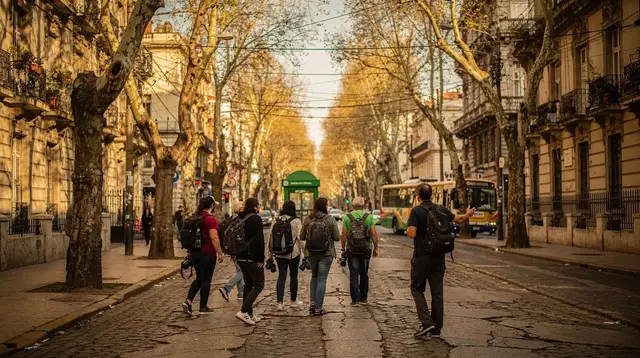
Start where the country’s institutions sit. Plaza de Mayo is the historic and political center of Argentina — the Casa Rosada (the presidential palace) faces the square, alongside the colonial Cabildo and the Metropolitan Cathedral. A walking pass through this area on its own, without rushing, easily fills a morning; a Plaza de Mayo walking tour is a sensible way to get the layered history without piecing it together from plaques.
From there, the Microcentro unfolds north — the pedestrian shopping streets, the banking district, and Avenida de Mayo’s Spanish-influenced architecture. Break for lunch here; it is the busiest, most workaday part of the itinerary, full of quick parrillas and cafés rather than destination restaurants.
In the afternoon, walk or take a short colectivo ride to El Ateneo Grand Splendid, a 1919 theater converted into a bookshop on Avenida Santa Fe — free to enter and a short, photogenic stop rather than a long visit. If your legs and your evening allow it, the Teatro Colón is worth reaching before dark just to see the building from outside; a proper visit, guided tour or performance, is better scheduled for a later evening once you know your rhythm.
Close day one gently: a free walking tour earlier in the day, or simply retracing the plaza at dusk when the Casa Rosada is lit, both work as a soft finish.
Day 2: San Telmo and La Boca
Today moves south into the city’s oldest residential barrio and its most theatrical one. San Telmo is cobbled, low-rise, and full of antique shops around the permanent Mercado de San Telmo — worth wandering slowly, since its character is in the details rather than a single headline sight.
a guided walk through San Telmo’s history, its old bars and its tango roots is a good way to anchor the morning if you’d rather have context than guess at it, especially if today isn’t a Sunday — the barrio’s famous street fair only fills Plaza Dorrego and Defensa street on Sundays, so plan this day around a Sunday if the market matters to you, or treat a weekday visit as the quieter, shop-focused version.
From San Telmo, walk or take a colectivo further south into La Boca for the painted houses of Caminito — a short pedestrian lane with tango dancers performing for tips and a genuinely photogenic, genuinely small stretch of streets. An hour or two here, in daylight, on the Caminito and Vuelta de Rocha strip itself, is the honest reading; the surrounding residential streets are not a place to wander off-route. Football followers can add the La Bombonera stadium tour or its museum, Boca Juniors’ ground, right in the same barrio.
Head back toward San Telmo for the evening — its bars and milongas are a natural way to end a day that started with plazas and finished with painted tin houses.
Day 3: Palermo, slowly
Palermo is large enough to deserve a full day on its own, and this itinerary gives it one. Split your time between Palermo Soho, with its design shops, courtyard restaurants and street art, and the Bosques de Palermo — the city’s largest green space, with a rose garden, a lake, and enough shade to make a hot afternoon workable.
a guided walk through Palermo Soho aimed at travelers who want context, not just a map is a good option for the morning if you want the barrio explained rather than discovered blind. In the afternoon, a walk through the Palermo woods and parks is the calmer counterpart — genuinely useful after a morning of shopping streets and traffic.
Palermo is also the city’s strongest neighborhood for dinner: reservations help on weekends, and remember that dinner here rarely gets going before 21:00. If you want a first taste of tango tonight rather than later in the trip, an evening tango show with dinner is a straightforward, no-planning-required way to do it — just know going in that a dinner show, a milonga where people actually dance, and street tango in San Telmo or Caminito are three different things, and this is the first of them.
Day 4: Recoleta and a free half-day
Move north into Recoleta, the city’s most formal barrio — grand apartment blocks, French-influenced architecture, and at its center the walled Recoleta Cemetery, a genuine city of mausoleums where Eva Perón is buried in the Duarte family vault, unmarked enough that most visitors need the signage to find it. Entry is ticketed for non-residents, so check current hours and price before you go; a guided walk through the cemetery is worth it here specifically, since the history behind the names is not obvious from the stonework alone.
Give the rest of the morning to the barrio itself — its plazas, the cultural center at the former Recoleta convent, and its cafés. Then let the afternoon go free. This is the first of two half-days built into the plan on purpose: return to whichever barrio pulled at you hardest — another pass through Palermo Soho, a longer sit in San Telmo, or simply more of Recoleta itself — rather than being marched to a new sight for the sake of it.
Day 5: A second free half-day, and a Sunday if you have one
The final day is loosely structured by design. If your five days include a Sunday, this is the day to give it to the Feria de San Telmo, when the antique stalls fill Defensa street and Plaza Dorrego properly — it is a different, fuller experience than the weekday version you may have seen on day two. If a Sunday doesn’t land inside your trip, use the morning instead to close a loop: a last walk through the Microcentro, a return to Plaza de Mayo at a different hour, or a first proper stop at the Teatro Colón if you skipped it earlier.
Keep the afternoon genuinely open. Five days of barrio-by-barrio walking adds up, and the honest way to end this itinerary is with unclaimed time — a café you noticed and didn’t stop at, a last look at Puerto Madero’s riverfront from a bridge, or simply packing without a fixed sight left to chase.
FAQ: five days in Buenos Aires without an excursion
Does this itinerary include any day trip outside Buenos Aires?
No. It is built deliberately to stay inside the city limits for all five days — no Tigre, no estancia, no Colonia ferry. Those belong on a separate trip or a later visit, once the city itself has been walked properly.
How do I get between barrios on this itinerary?
Entirely by Subte, by colectivo bus, or on foot. Both the Subte and the colectivos require a SUBE contactless card, bought and topped up at stations, kiosks or machines — drivers do not accept cash fares.
Do I need to book anything for the Recoleta Cemetery or Teatro Colón?
Recoleta Cemetery entry is ticketed for non-residents, and the Teatro Colón guided tour is a separate, bookable visit from an evening performance — book both a little ahead in high season, since hours and prices for the cemetery have changed more than once.
How much should I budget per day in Buenos Aires?
This itinerary does not set a fixed daily figure, because the Argentine peso has moved through years of high inflation and changing exchange rules, and any number printed here would be stale within weeks. Check a live exchange rate and current card and cash rules shortly before you travel.
Is this itinerary walkable, or do I need transport every day?
Most of each barrio is walkable once you arrive by Subte or colectivo — San Telmo, La Boca’s Caminito strip, Palermo Soho and Recoleta are all compact on foot. The Subte and colectivos mainly connect one barrio to the next, not every corner within one.
What if I don’t want to do a full five-day city stay in one block?
The structure holds even if you split it: each day is a self-contained barrio, so you can pause after day 3 to add something else and pick up Palermo and Recoleta later, or extend a free half-day into a full one.
Is five days in the city alone worth it, or should I add a day trip instead?
That depends on what you want from the visit. This itinerary is for travelers who would rather know one city thoroughly than skim it plus a rushed excursion — if a day trip matters more to you, a shorter city stay with a day added on is the better shape.
tours.5 days
Verified deep-linked GetYourGuide tours. Book through these links and we earn a small commission at no cost to you.
GetYourGuide does not provide a product photo for this activity — the image shows the meeting point, photographed by us.