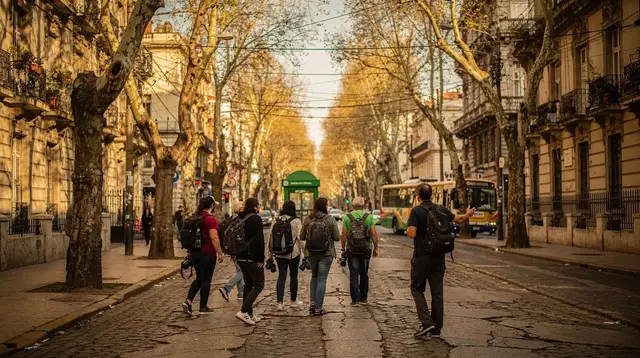
Three Days in the North: Belgrano, San Isidro and the Tigre Delta
Can Belgrano, San Isidro and Tigre be done in a single day?
Not comfortably. Each area rewards a half or full day on its own, and the train and boat connections between them add up over a single afternoon. Spreading them across three days, one area per day, keeps the pace relaxed and leaves time for the delta's slower rhythm.
Why go north for three days instead of one
Buenos Aires empties out toward the Río de la Plata the further you move from the Microcentro, and the northern suburbs are where that shift is easiest to feel: leafy Belgrano, riverside San Isidro, and the wooded, watery world of the Tigre Delta. All three sit along the same train line and none of them needs a car, but they are not a single afternoon’s work. This itinerary spreads them over three unhurried days — Belgrano and Vicente López on day one, San Isidro on day two, Tigre and a boat trip through the delta on day three — rather than promising to cram the whole northern corridor into one exhausting loop.
That refusal is deliberate. Belgrano alone rewards a half day of walking; San Isidro’s historic centre and cathedral are worth lingering over, not rushing past; and the delta only really opens up once you are on the water, which eats a chunk of a day by itself once you count getting to Tigre and back. Squeezing all three into 24 hours turns three genuinely different places into a blur seen from train windows.
Getting around: trains, Subte, and no car needed
The whole route runs on public transport. The Mitre line from Retiro station is the backbone: it runs north through /destinations/belgrano/, /destinations/vicente-lopez/ and /destinations/san-isidro/ before terminating in /destinations/tigre/. The Subte (Line D, and Line B for parts of Belgrano) covers the city-side legs, and the scenic Tren de la Costa offers an alternative, slower approach into Tigre along the riverfront on day three.
A SUBE card is required for all of it — buses, Subte and suburban trains alike — and is easy to buy and top up at any station kiosk on arrival. See the SUBE card guide before you set off, and the Subte guide if the city-side legs are new to you.
| Day | Area | Main transport | Pace |
|---|---|---|---|
| 1 | Belgrano + Vicente López | Subte / Mitre line | Half to full day |
| 2 | San Isidro | Mitre line from Retiro | Full day |
| 3 | Tigre + Paraná Delta | Mitre line or Tren de la Costa | Full day |
Day 1: Belgrano and Vicente López
Start in /destinations/belgrano/, one of the city’s greenest and most residential barrios, reachable directly by Subte Line D (Juramento or Barrancas de Belgrano stations) or by a short Mitre line ride from Retiro. Belgrano rewards an unhurried walk: the barranca (bluff) around Barrancas de Belgrano park, the Belgrano “Chinatown” strip along Arribeños street for lunch, and a scatter of small museums and churches along the way.
If you would rather have the layout explained as you go, a Belgrano walking tour or the more specific Belgrano sightseeing tour of Chinatown and the British neighbourhood covers the same ground with commentary — for the latter, the guided walk through Belgrano’s Chinatown and British-inflected streets is a practical way to see both sides of the barrio in one outing.
For a more general first pass, the local-led walk that uncovers Belgrano’s quieter corners is the gentler option.
In the afternoon, continue a few minutes further up the Mitre line to /destinations/vicente-lopez/, a quiet riverside municipality that most visitors skip entirely. It has no single headline sight, which is rather the point after a morning of sightseeing: a riverside path, a calmer, more residential rhythm, and a preview of the greener, slower character the line takes on as it approaches San Isidro and Tigre. Treat it as a wind-down rather than a destination in its own right, and head back into the city (or on to your accommodation) by early evening.
Day 2: San Isidro’s historic centre
Take the Mitre line from Retiro directly to /destinations/san-isidro/ — a ride of well under an hour. San Isidro is a self-contained day: a compact historic centre built around its unmistakable neo-Gothic cathedral, cobbled streets, an old town hall (the Cabildo-like Quinta Pueyrredón), and a riverside park with views back across the Río de la Plata. It is one of the more genuinely pretty stops on this whole itinerary and easy to underrate as “just a station on the way to Tigre.”
Spend the morning around the cathedral and the historic core, then use the afternoon for the riverside area and a slower lunch — San Isidro has a good concentration of cafés and parrillas without the crowds of the Microcentro. Because the town is compact and walkable, this is also a good day to skip organised tours altogether and simply wander; the San Isidro day trip guide has the practical layout if you want a route to follow. Return to your base by train in the early evening — San Isidro is not a place with much nightlife, and day three starts with a longer outing.
Day 3: Tigre and the Paraná Delta
The final day goes further north again to /destinations/tigre/, the gateway town for the /destinations/parana-delta/. Two routes get you there: the direct Mitre line from Retiro (about an hour), or the more scenic Tren de la Costa, a light-rail line that hugs the riverfront through San Isidro and the northern suburbs — also roughly an hour, at a more leisurely pace and a higher fare. Either way, arrive at Tigre station with the morning still ahead of you, because the delta itself is reached only by boat, and that is where this day’s time really goes.
Tigre town itself has a compact riverside centre worth a short look — start at the Puerto de Frutos guide for the craft and basketry market along the water, no longer a working fruit port but still the town’s liveliest corner. From there, the delta is the main event. Lanchas colectivas are the scheduled public water-buses that serve the island communities on fixed routes, while tourist catamarans run set sightseeing loops at a different price point — see the delta catamaran vs lancha comparison if you are unsure which suits you.
For a first visit, a guided boat outing removes the guesswork: the two-hour boat ride through the delta’s channels with lunch served on board is a straightforward way to see the wooded islands and stilt houses without planning a route yourself. If food is the priority, the boat trip paired with a sit-down lunch at a delta restaurant slows the pace down further.
Travellers more interested in wildlife than architecture might prefer the birdwatching-focused delta tour that includes lunch, which moves more quietly through the channels. See the Tigre delta boat trips guide and the Paraná Delta lancha tour guide for more detail on planning your own route instead.
Plan to be back at Tigre station by mid-to-late afternoon; the return train to Retiro or along the Tren de la Costa takes about an hour, and the delta light is at its best earlier in the day in any case. This closes the loop: three days, three distinct areas, no car, and no single day asked to do more than it reasonably can.
Practical notes for this route
- SUBE card: buy one on day one if you have not already; it covers every train, Subte and bus leg of this itinerary. See the SUBE card guide.
- No car needed: every stage of this route runs on the Mitre line, the Subte, or the Tren de la Costa. Nothing here requires a taxi or rental.
- Seasons: Buenos Aires is in the southern hemisphere — summer runs December to February and winter June to August. Spring and autumn (September–November and March–May) are the most comfortable months for a route that spends two full days outdoors and on the water.
- Pace: this is deliberately not a race. Each day has one clear focus rather than a checklist, which is the whole reason it takes three days rather than one.
Belgrano, San Isidro and Tigre: frequently asked questions
Can I do Belgrano, San Isidro and Tigre in a single day?
Technically the train connections allow it, but it is not a comfortable day. Belgrano rewards a half day of walking, San Isidro’s historic centre deserves unhurried time around the cathedral, and the delta only opens up once you are on a boat — which itself takes a couple of hours once travel to and from Tigre is counted. Three separate days, one focus each, is the more realistic pace.
Do I need a car for this itinerary?
No. The entire route runs on the Mitre line train from Retiro, the Subte, and optionally the Tren de la Costa for a scenic approach to Tigre on day three. A SUBE card covers all of it.
How do I get to Tigre — Mitre line or Tren de la Costa?
Both take about an hour from the city. The Mitre line from Retiro is the direct, functional option. The Tren de la Costa is a slower, more scenic light-rail line running along the northern riverfront through San Isidro, at a higher fare — a pleasant way to arrive if you are not in a hurry.
What is the difference between a lancha colectiva and a tourist catamaran in the delta?
A lancha colectiva is a scheduled public water-bus serving the island communities on fixed routes, used by residents as much as visitors. A tourist catamaran runs a set sightseeing loop aimed purely at visitors, usually with commentary and sometimes lunch included. Catamarans are generally simpler for a first visit; lanchas are cheaper and more local in feel.
Is San Isidro worth a full day, or just a stop on the way to Tigre?
It is worth a full day on its own. Beyond the neo-Gothic cathedral, San Isidro has a genuinely pleasant historic centre, riverside parkland and a good concentration of cafés and restaurants — treating it as a mere train stop en route to Tigre skips one of the nicer parts of the northern corridor.
What should I eat or do differently in Belgrano’s Chinatown?
The Arribeños street strip is the city’s main concentration of East Asian restaurants and grocery stores, distinct from the rest of Belgrano’s largely European character. It is a good lunch stop on day one and a useful contrast to the parrillas and cafés found elsewhere on this route.
Is this itinerary suitable without booking any tours in advance?
Yes. Every day can be done independently using trains, the Subte and walking, with the delta boat trip being the one leg most visitors prefer to book ahead, since availability on set-departure boats is limited, especially on weekends.
What’s the best season for this specific route?
Spring (September–November) and autumn (March–May) suit it best, since two of the three days are spent largely outdoors and on the water. Summer (December–February) is hot and humid with little shade on the delta boats; winter (June–August) is cool and damp but rarely uncomfortable for walking.
tours.3 days
Verified deep-linked GetYourGuide tours. Book through these links and we earn a small commission at no cost to you.
GetYourGuide does not provide a product photo for this activity — the image shows the meeting point, photographed by us.