Five Days in Buenos Aires: San Telmo, Palermo, Tigre and the Pampas
Can Buenos Aires, Tigre and San Antonio de Areco realistically fit into five days?
Yes, but as three separate worlds rather than one smooth loop: two city days around San Telmo and Palermo, one full day at Tigre and the Paraná Delta by train from Retiro, then two days in the pampas around San Antonio de Areco, reached by car or bus. Each move between them costs one to two hours, so the days are shaped around three bases, not one long circuit.
How the Three Legs of This Trip Fit Together
This is not one continuous loop. It is three distinct experiences — dense city neighbourhoods, a wooded river delta, and open pampas cattle country — stitched together with real travel time between each. Two days sit in San Telmo and Palermo, a day trip runs out to Tigre and the Paraná Delta, and the final two days move west to San Antonio de Areco. Budget one to two hours of road or train time for each of these two transitions, and this itinerary will feel generous rather than rushed. Treat it as a straight-through sprint and it will not.
A car is not needed for the first three days. The Subte, colectivo buses and the SUBE card (guide) cover the city and the Retiro–Tigre train comfortably. It only earns its keep once the itinerary turns toward the pampas, where an estancia visit and the roads around San Antonio de Areco reward having your own wheels — though a direct bus does the same route on a fixed schedule for anyone without one.
Base yourself in the city for the first three nights — San Telmo or Palermo both work, and either keeps the Tigre day trip a short train ride away rather than a full relocation. Only for the pampas leg does it make sense to change base entirely, moving out to San Antonio de Areco itself so the two final days do not depend on a long drive each morning and evening. Thinking of it as two accommodation bases rather than five separate hotel nights makes the logistics considerably simpler to plan.
Day 1: San Telmo and the Historic Centre
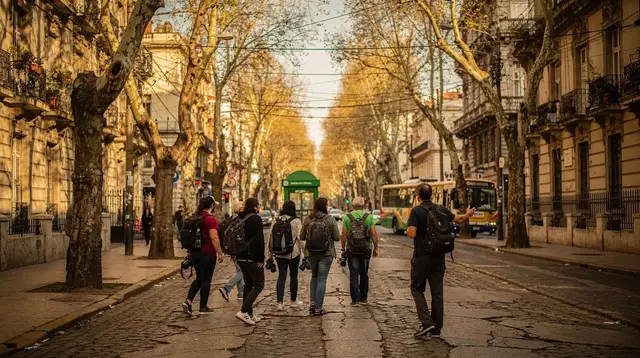
Start where the city itself started. A morning walk through San Telmo takes in cobbled Defensa street, antique shops and the Mercado de San Telmo, then continues north to Plaza de Mayo for the Casa Rosada and the Cabildo. If the day happens to land on a Sunday, the San Telmo fair fills Defensa street and Plaza Dorrego with stalls and street tango — one of the city’s genuine free spectacles, best treated as an hour or two, not a full afternoon commitment.
In the evening, San Telmo’s cobbled streets and old cafés are also where the barrio’s tango scene concentrates, from milongas to dinner shows. A guided evening out is an easy way into the neighbourhood after dark:
a guided evening through San Telmo’s history, bars and tangoRound off the night with a tango dinner show if that suits the pace better than a milonga — the two are different experiences, and San Telmo hosts both.
San Telmo’s Sunday market is worth planning around rather than stumbling into: if the itinerary’s start date can flex, landing Day 1 on a Sunday turns the antique fair from a footnote into the morning’s centrepiece. The San Telmo Sunday market guide covers what to expect stall by stall, and the neighbourhood’s food scene — from classic parrillas to newer wine bars — is worth building into the evening past the tango outing above.
Day 2: La Boca, Puerto Madero and Palermo
Morning belongs to La Boca and the painted Caminito lane — worth an hour or two in daylight, on the tourist strip rather than the surrounding streets. From there, walk or taxi along the water to Puerto Madero and the Costanera Sur nature reserve for a riverside break before the afternoon shifts to Palermo.
Palermo Soho and Palermo Hollywood cover boutiques, street art and a dense restaurant scene, while the Bosques de Palermo parks give the neighbourhood its green core. A guided walk is a fast way to get oriented before returning independently for dinner:
a guided Palermo Soho walk for the curiousPalermo’s parkland side is also where the city’s greenery concentrates, and a short visit to the Bosques de Palermo rounds out the neighbourhood picture before dinner in the barrio’s restaurant streets. For a longer stay in this part of the city, Palermo versus Recoleta versus San Telmo lays out how the three barrios differ for anyone deciding where to spend an extra night.
Day 3: Tigre and the Paraná Delta
This is a full travel day, not a half-day extra. Take the Mitre line train from Retiro, or the slower, scenic Tren de la Costa, to reach Tigre in about an hour. The town itself is the gateway; the Paraná Delta of wooded islands and stilt houses is only reached by boat, and the choice of boat matters — scheduled lanchas colectivas serve the islands as a genuine water bus, while tourist catamarans run a fixed sightseeing loop at a different price point.
a two-hour delta boat ride with lunch on boardBefore heading back, the Puerto de Frutos craft and basketry market is a short walk from the Tigre train station and makes an easy last stop. Travellers with more time can also detour through San Isidro and its neo-Gothic cathedral on the way back into the city.
Beyond the lancha option above, the delta can be covered a few other ways depending on pace and interest. A private boat keeps the schedule flexible for a smaller group:
a private boat ride on the Tigre DeltaFor a more active take on the same stretch of river and islands, an e-bike combines the boat crossing with cycling along the delta’s waterside paths:
a Tigre and delta e-bike tourAnyone short on time who still wants both the city orientation and the delta crossing in a single outing can look at a combined tour that bundles Tigre itself with the boat ride and lunch:
a combined Buenos Aires city tour with Tigre Delta and lunchFor the full detail on comparing lanchas colectivas with catamarans, and on which islands and stilt-house routes suit a first visit, see the delta catamaran versus lancha guide and the Tigre delta boat trips overview.
Day 4: Into the Pampas — San Antonio de Areco
Leave the city in the morning for San Antonio de Areco, roughly 110 km west and one and a half to two hours by car or direct bus — this is the second real transition of the trip, and it is worth treating as a travel morning rather than squeezing in a city stop first. San Antonio de Areco is the reference town for gaucho tradition, silverwork and criollo craft, with a historic centre built for an unhurried afternoon walk among silversmiths’ workshops and the old pulperías.
Spend the afternoon and evening in town before an early estancia start the next day; travellers arriving by car with more flexibility can also detour via Luján and its pilgrimage basilica on the way out.
San Antonio de Areco rewards slow walking more than any other stop on this route: the historic centre around the Ricardo Güiraldes park, the old pulperías and the silversmiths’ workshops are all within easy reach of each other on foot, without needing a car once the town itself is reached. The San Antonio de Areco day trip guide covers the same centre in more detail for anyone treating this as a single day rather than an overnight stop, and is a useful cross-check on which workshops and pulperías are worth prioritising in a short afternoon.
Day 5: An Estancia Day
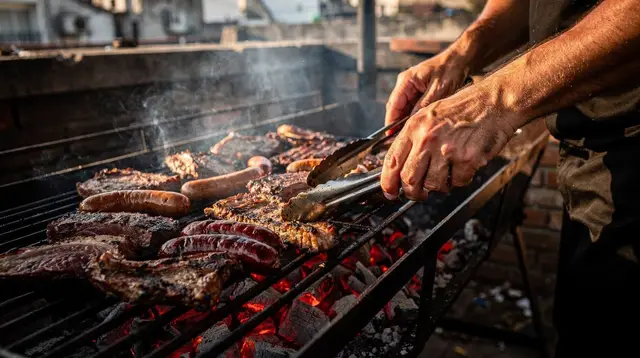
The pampas leg earns its two days here. An estancia visit runs to a fixed programme: transfer out into open cattle country, empanadas and an asado lunch, then horse riding or a carriage ride and doma or folk displays in the afternoon.
a private day tour to an Argentine estanciaIf the calendar lines up with November, San Antonio de Areco’s Fiesta de la Tradición adds gaucho parades and folk music on top of the usual estancia programme — worth checking before booking. From here, the return to Buenos Aires closes the loop: a last drive or bus back into the city, roughly the same one and a half to two hours as the outbound leg.
Riders who want more time in the saddle than a standard estancia day allows, and less time around the asado table, have a horseback-focused alternative that spends the bulk of the day out on the pampas itself:
a gaucho horseback adventure in the pampas with lunchBoth options cover the same cattle country around San Antonio de Areco, and the choice comes down to how much of the day should be spent riding versus at the table and watching the doma displays.
Adapting the Route
Five days is tight enough that a delay on either transition eats into sightseeing rather than slack time, so it is worth knowing where this itinerary can flex. Travellers with less time can drop the pampas leg to a single day and follow the one-day estancia and pampas plan instead, returning to Buenos Aires the same night rather than staying over in San Antonio de Areco. The reverse also works: anyone with more than five days can extend the city portion using the three-day first-time Buenos Aires itinerary as a base before picking up this plan from Day 3 onward.
Travellers arriving with an extra day or two might also consider folding in a short hop across the Río de la Plata to Colonia del Sacramento in Uruguay — about an hour away by fast ferry from Puerto Madero — though that adds a fourth “world” to the trip on top of the city, delta and pampas, along with its own passport and currency, and is better treated as a genuinely separate add-on than squeezed into this five-day frame. The four-day Buenos Aires and Uruguay combo itinerary covers that pairing on its own terms.
Making the Days Work Together
| Leg | Where | Getting there | Time needed |
|---|---|---|---|
| City | San Telmo, La Boca, Puerto Madero, Palermo | Subte, colectivo, on foot | 2 days |
| Delta | Tigre, Paraná Delta, Puerto de Frutos | Mitre line train or Tren de la Costa from Retiro | 1 day |
| Pampas | San Antonio de Areco, estancia | Car or direct bus, ~1.5–2h | 2 days |
Each leg is genuinely self-contained: nobody misses much by treating the city days, the delta day and the pampas days as three separate rhythms rather than forcing a single itinerary logic across all three. For a shorter version of this same idea, see the two-day San Antonio de Areco gaucho itinerary on its own. For general orientation before the trip, getting around Buenos Aires and is Buenos Aires safe cover the practical basics the day-by-day plan above assumes.
FAQ: Planning This Buenos Aires, Tigre and Pampas Itinerary
Can Buenos Aires, Tigre and San Antonio de Areco realistically fit into five days?
Yes, but as three separate worlds rather than one smooth loop: two city days around San Telmo and Palermo, one full day at Tigre and the Paraná Delta by train from Retiro, then two days in the pampas around San Antonio de Areco, reached by car or bus. Each move between them costs one to two hours, so the days are shaped around three bases, not one long circuit.
Do I need a car for this itinerary?
No, not for the city days or for Tigre, which run on the Subte, colectivos and the Mitre line train. A car becomes genuinely useful only for the pampas leg, giving flexibility around San Antonio de Areco and an estancia visit; without one, direct buses from Buenos Aires cover the same ground on a fixed timetable.
How do I get from Buenos Aires to Tigre?
The Mitre line commuter train from Retiro station reaches Tigre in roughly an hour, or the scenic Tren de la Costa covers the same distance with more stops. Both require a SUBE card, the contactless card used on the Subte, colectivos and suburban trains, which does not accept cash fares.
How far is San Antonio de Areco from Buenos Aires?
About 110 km west of the city, roughly one and a half to two hours by car or direct bus. It is the reference town for gaucho tradition, silverwork and criollo craft, and the usual base for a day or two among the pampas estancias.
Should I book an estancia day or stay independently in San Antonio de Areco?
An estancia day is a fixed programme — transfer out, an asado lunch, horse riding and doma displays — while staying in the town itself gives more freedom to walk the historic centre and visit silversmiths at your own pace. This itinerary combines both across two days.
Is this itinerary too rushed?
It covers a lot of ground for five days, and the honest read is that it suits a traveller who accepts a travel day on each side of the pampas leg rather than expecting to squeeze in more sightseeing. A more relaxed version would drop one city neighbourhood or shorten the pampas stay to a single day trip.
What is the best time of year for this route?
Spring (September to November) and autumn (March to May) are the most comfortable seasons for both the city walking and the estancia’s outdoor programme. Summer (December to February) is hot and humid in the city, and the Fiesta de la Tradición in San Antonio de Areco falls in November if gaucho festivities are a priority.
tours.5 days
Verified deep-linked GetYourGuide tours. Book through these links and we earn a small commission at no cost to you.
GetYourGuide does not provide a product photo for this activity — the image shows the meeting point, photographed by us.