One Day on the Pampas: An Estancia Day Trip from Buenos Aires
Spend a full day away from the city on a working estancia in the pampas, the flat cattle country that surrounds Buenos Aires on every side. Most estancias used for day visits sit within about an hour and a half of the capital, generally in the same general area as San Antonio de Areco, the town most closely associated with gaucho tradition, silverwork and criollo craft. The day itself follows a fixed rhythm rather than a free-form wander: arrival and a welcome, time in the saddle or a carriage ride, a doma display of horse-breaking skill, and a long asado lunch that is as much the point of the day as anything else.
This is not a city walking day. It is a single, structured outing built around one property, and it rewards travellers who are happy to hand the schedule over to their hosts for a few hours rather than set their own pace, as they might on a Buenos Aires city tour.
Why a day on the pampas is different from a city day
The pampas are the flat, fertile plain that made Argentina one of the world’s great beef and grain exporters, and the estancia — a large rural estate historically built on cattle ranching — is the institution that grew out of it. Visiting one for a day gives a genuine sense of that landscape and its working culture: open horizon, eucalyptus windbreaks, the low pampas grass, and a way of life still organised around horses and livestock rather than around a museum reconstruction of one.
San Antonio de Areco, roughly 110 km west of Buenos Aires, is the reference town for this world — its silversmiths and saddlers still work the traditional way, and its Fiesta de la Tradición each November is the country’s biggest gaucho festival. Many estancia day programmes operate in the general area around the town, though the exact property, distance and driving time vary by provider, so treat “about ninety minutes from the city” as a working estimate rather than a fixed figure for every estancia.
Day 1: An estancia in the pampas
Morning: departure and arrival
The day starts early, generally between 8:00 and 9:00, since the programme itself typically runs from late morning into the afternoon and there is real driving time on both ends. Two ways to get there exist, and they are genuinely different experiences:
- With your own transfer or rental car: you drive out independently, on your own schedule, and simply arrive at the gate at the agreed time. This suits travellers who have already rented a car for a broader pampas or Luján circuit.
- With an organised transfer: some estancias offer a coach or minivan pickup from a central Buenos Aires point as part of their package, which removes the need to drive and lets the group travel together. Whether a given day includes this transfer, and at what cost, depends entirely on the individual estancia and the package booked — it is never a given, and it should be confirmed directly with the provider before assuming it is included.
Either way, budget the better part of an hour and a half for the outward leg, more if leaving during the city’s morning rush around Retiro and the access roads west.
Late morning: arrival, welcome and orientation
On arrival, most estancias offer a welcome with coffee, mate or a light snack, along with a walk around the main house and grounds. Many of these properties are genuinely old family houses rather than purpose-built tourist facilities, with period furniture, a chapel, and gardens that back straight onto open pasture. This is the moment to ask staff about the exact running order for the day, since it varies from one estancia to the next — some put the horseback riding first, others the doma display, and the asado is nearly always the fixed point around midday to early afternoon.
Midday: horses and doma
The core of an estancia day is time with horses. Options generally include:
- A guided horseback ride across the pampas for those with some riding experience or willing beginners under supervision.
- A horse-drawn carriage ride for those who prefer to watch the landscape rather than ride through it.
- A doma display, in which gauchos demonstrate traditional horse-breaking and riding skills — a genuine display of a working skill, not a rodeo staged purely for cameras, though it is performed for visiting groups.
Riding ability is rarely a strict requirement; most estancias cater to complete beginners with short, supervised rides, while more demanding rides are available on request. If riding is the main draw of the day for you, say so when booking, since the length and difficulty of the ride can usually be adjusted.
Early afternoon: the asado
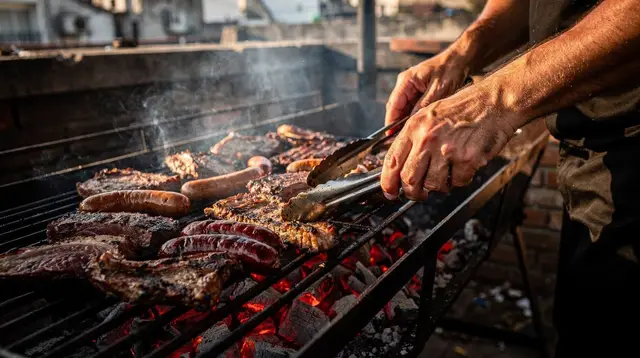
Lunch is the anchor of the day: a traditional Argentine asado, cooked slowly over wood or charcoal, usually starting with empanadas and other starters before the grilled meats arrive in courses, typically with Malbec or another regional wine on the table. This is a long, unhurried, communal meal, generally lasting well over an hour, eaten at long tables either indoors or under a parrilla shelter depending on the weather. Vegetarian options exist at most estancias but should be requested when booking rather than assumed.
Because every estancia sets its own menu, pricing structure and inclusions, this itinerary does not quote a price for the day — the range across providers is wide, and the only reliable figure is the one shown on the specific tour or estancia’s own booking page at the time of reservation.
Afternoon: folk music, crafts and free time
After lunch, many estancias offer folk music and dance, a look at the property’s silverwork or leatherwork, or simply free time to walk the grounds, visit farm animals, or relax before the return journey. Some also run a short asado cooking demonstration or a visit to the stables. This part of the day is generally lighter and less scheduled than the morning, a deliberate wind-down before the drive back.
Late afternoon: return to Buenos Aires
Departure from the estancia is typically mid-to-late afternoon, putting most visitors back in the city by early evening. As with the outward journey, whether the return leg is an organised transfer or a self-driven trip depends on how the day was booked — confirm this detail rather than assume it.
Estancia day at a glance
| Element | What to expect |
|---|---|
| Distance from Buenos Aires | Generally around 90 minutes’ drive, varies by estancia |
| Typical duration | Full day, roughly 8:00–18:00 |
| Core activities | Horseback riding or carriage ride, doma display, asado lunch |
| Transfer included? | Depends entirely on the provider — never assume, always confirm |
| Price | Highly variable by estancia and package — check the current listing |
| Dress | Comfortable closed shoes, layers, sun protection; riding gear usually provided |
| Best paired with | A separate visit to San Antonio de Areco town on another day |
Doing it independently vs. booking a fixed day
Two broad approaches exist for this kind of day. An organised private day tour to an estancia bundles transfer, activities and the asado into a single booking, which is the simpler route for visitors without a car and the one most first-time visitors choose. Independent travellers with their own transport can instead drive out, book an estancia visit directly, and combine it more freely with a stop in San Antonio de Areco town itself for its silversmiths, the Museo Gauchesco and its colonial-era streets — though this takes more planning and typically a longer day.
Travellers building a broader look at Buenos Aires and its province sometimes pair pampas culture with an entirely different day out, such as a guided excursion to La Plata to see the planned provincial capital and its cathedral, or a city-focused outing like a San Telmo history, bars and tango walk the evening before or after the estancia day, to balance rural and urban Buenos Aires within the same trip.
Those planning several days in the country at once may find it more efficient to book activities as part of a wider multi-day Buenos Aires discovery package that includes an estancia day alongside other outings.
Practical notes
- Book ahead, particularly for weekend dates and during the Argentine spring (September–November) and autumn (March–May), the most comfortable seasons for a day outdoors; see this site’s best time to visit guide for a fuller seasonal picture.
- Dress for a working farm: closed shoes for riding, layers (mornings can be cool even in warmer months), and sun protection, since much of the day happens outdoors with limited shade.
- Confirm what is included — transfer, riding, drinks with lunch, and any additional activities — directly with the specific estancia or tour operator before booking, since packages differ significantly from one property to the next.
- Currency and cash: bring some Argentine pesos for tips or incidentals; see the budget and currency guide for a dated snapshot, since peso prices move quickly.
- Combine thoughtfully: an estancia day is a full day on its own. Trying to add a second destination, such as Luján or La Plata, on the same date usually overloads the schedule — better to treat those as separate outings.
Frequently asked questions about an estancia day trip from Buenos Aires
How far is an estancia from Buenos Aires?
Most estancias used for day visits sit within roughly an hour and a half’s drive of the city, often in the general area around San Antonio de Areco, though the exact distance depends on which property is booked.
Is transfer from Buenos Aires included in an estancia day?
Not always. Some estancias and tour packages include a coach or minivan transfer from the city, others do not and expect visitors to arrive independently — always confirm this with the specific provider before booking rather than assuming either way.
Do I need riding experience to join the horseback riding?
No. Most estancias cater to complete beginners with short, supervised rides, and a horse-drawn carriage ride is usually offered as an alternative for anyone who prefers not to ride at all.
What is a doma display?
A doma is a traditional demonstration of gaucho horse-breaking and riding skill, performed by working riders as part of the estancia’s cultural programme — a display of a genuine rural skill, not a staged rodeo act.
What is included in the asado lunch?
A typical estancia asado includes empanadas or other starters followed by grilled meats served in courses, usually with wine, and it is a long, communal meal that anchors the middle of the day.
How much does an estancia day cost?
Prices vary widely between estancias and packages, depending on what is included (transfer, drinks, riding time). There is no single standard price — check the current listing for the specific estancia or tour before budgeting.
Can I visit San Antonio de Areco town on the same day as an estancia?
It is possible with your own transport, but most fixed estancia-day programmes do not build in time for the town itself. Visitors who want both usually treat them as two separate outings.
What should I wear on an estancia day?
Comfortable closed shoes, layers for a cool morning that warms up, and sun protection, since a large part of the day is spent outdoors with limited shade. Riding gear, when needed, is generally provided by the estancia.
tours.1 days
Verified deep-linked GetYourGuide tours. Book through these links and we earn a small commission at no cost to you.
GetYourGuide does not provide a product photo for this activity — the image shows the meeting point, photographed by us.