Gaucho Show and Asado at an Estancia: What the Experience Actually Is
What is a gaucho show and asado at an estancia near Buenos Aires?
It is a staged, half-day or full-day programme built around horsemanship displays (doma, folk games), a barbecue lunch, and often live folk music and dance, run for visitors at a countryside estate roughly one to two hours from the city. It is a polished performance of gaucho culture, not a candid look at working ranch life.
What actually happens at a gaucho show
Say “estancia” to most first-time visitors and they picture something quiet: a long lunch, a walk through the fields, maybe a slow ride along a fence line. A gaucho show and asado is a different, more theatrical animal, and it is worth being precise about that before booking, because the two get marketed under overlapping language.
The format is built around a performance. Riders in traditional dress — wide-brimmed hats, bombachas trousers, a facón knife at the belt — put on a doma display, working with young or half-broken horses to show the skill involved in gentling them. Between the horsemanship, there are riding games that test speed and precision: the sortija, where a rider at a gallop tries to spear a small ring hung from a ribbon with a short stick, is the signature one, and a near-miss draws as much cheer as a hit. Folk musicians and dancers perform malambo and other traditional numbers, often pulling visitors up to join a simpler dance later in the afternoon.
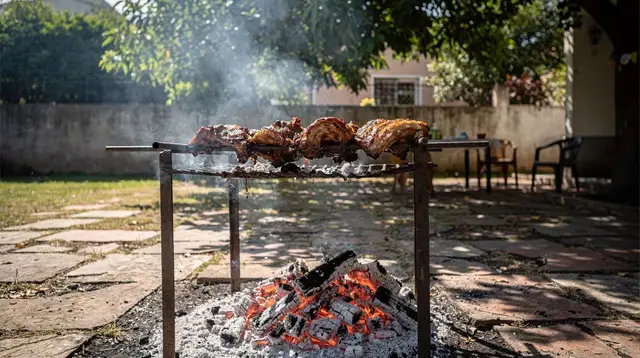
Lunch is a full asado: beef cuts grilled slowly over wood coals, usually alongside chorizo, morcilla and other achuras, served with bread, salad and, at most operators, a glass or two of Argentine wine included in the price. It is not a quick barbecue plate — expect a long, unhurried table service that runs to a couple of hours on its own.
None of this is invented for a review of the format — it is exactly what the operators themselves advertise, and it is worth taking them at their word: a show, run to a schedule, for an audience. The honest way to describe the day is as gaucho theatre with a very good lunch attached, staged at a countryside property that may or may not otherwise function as a working farm.
Staged tradition, not a documentary of ranch life
This distinction matters enough to spell out directly, because marketing photos tend to blur it. What you are watching is a performance of gaucho culture for visitors, choreographed and scheduled, performed by riders and dancers who are frequently professionals rather than resident ranch hands going about an ordinary day. The costumes are traditional and the skills on display — particularly the horsemanship in the doma segment — are genuinely difficult and genuinely impressive. But nobody on a real, unvisited pampas ranch spends a Tuesday afternoon running the sortija for an audience.
This is not a criticism of the experience. Plenty of cultural traditions live on partly because they are performed for visitors, and a well-run gaucho show can be a genuinely good afternoon — skilled riding, good food, live music, an easy day out of the city. The point is simply to set expectations correctly: treat it as a polished, well-produced piece of folk theatre with lunch, not as a fly-on-the-wall look at how gaucho families actually spend their days. If what you want instead is the texture of a real working town — silversmiths, saddlers, a museum, ordinary streets — that is what San Antonio de Areco itself offers, and it rewards a slower, self-guided visit rather than a fixed show schedule.
How this differs from a general estancia day
Buenos Aires day-trip listings use “estancia” loosely, and it is easy to book the wrong format for what you actually want. Three things separate a gaucho show and asado from a broader estancia day trip:
| Gaucho show & asado | General estancia day | |
|---|---|---|
| Centrepiece | Scheduled horsemanship display, folk dance, riding games | A mix of grounds walk, longer ride, sometimes a carriage tour |
| Pacing | Fixed programme, show times, audience seating | More open, self-paced between activities |
| Riding for visitors | Usually spectator-only, optional short ride | Often a proper guided ride included |
| Lunch | Full asado, often the anchor of the day | Asado included, but one part among several |
| Best for | Visitors who want spectacle and photos in a single sitting | Visitors who want a slower, more hands-on countryside day |
If you specifically want to get on a horse yourself for a real stretch of time rather than watch someone else do it, look at a listing built around horseback riding at an estancia instead — some gaucho-show operators offer this as an add-on, but it is not guaranteed, and it is worth confirming before you book rather than assuming.
Getting there and how the day is timed
Estancias that run this format sit roughly one to two hours from central Buenos Aires, out toward the pampas around San Antonio de Areco, which is the reference town for gaucho and criollo tradition and the natural anchor for this whole category. Most operators run a coach transfer from a central pickup point, which is the simplest option if you don’t have a car and don’t want to navigate rural roads yourself.
Expect a rough shape like this:
| Time | What happens |
|---|---|
| Mid-morning | Pickup in Buenos Aires, transfer out (roughly 1–2 hours) |
| Late morning | Arrival, welcome drink, grounds open for a first look |
| Midday | Doma and horsemanship display begins |
| Early afternoon | Asado lunch, wine, bread and salad, unhurried table service |
| Mid-afternoon | Folk music and dance, riding games such as the sortija |
| Late afternoon | Transfer back to the city |
Full-day formats run close to this in full; half-day versions compress the same elements into a shorter window, which usually means less time at the table and a tighter schedule around the show itself — worth checking the exact inclusions before comparing prices between operators, since “half-day” and “full-day” gaucho shows are not standardised terms across the market.
Comparing your options
There is more than one way to book this kind of day, and the differences are mostly about group size, flexibility and exactly which elements are included:
a classic full-day gaucho show and asado at Estancia Santa Susana, one of the longest-running operators in this category, runs the full format described above — horsemanship display, folk dancing, riding games and a full asado lunch with wine, on a fixed group schedule with transfer included.
a gaucho day tour to the Don Silvano estancia follows a similar shape at a different property, useful to compare if dates or group size don’t line up with the Santa Susana schedule.
If you would rather build your own day around a private group instead of joining a scheduled coach tour, a private day tour to an Argentinian estancia gives more control over pacing and start time, at a higher price point than the shared-coach formats.
For a different combination altogether, a wine tasting, asado criollo and hot air balloon day pairs the asado tradition with a hot-air-balloon flight over the pampas rather than a gaucho horsemanship show — worth a look if the flight interests you more than the doma display, since it is a genuinely different day rather than a variant of the same one.
Before deciding between any of these, a side-by-side read of how the main estancia-style tours compare is worth five minutes, since price differences often track directly to group size and how much of the day is scheduled versus open.
Practical notes for the day
Weather and clothing. The pampas are flat and open, and weather can turn faster than in the city. Bring a layer even in the warmer months, and wear closed shoes — the grounds are grass and packed dirt, not paving.
Photography. The doma display and the riding games are the best photo opportunities of the day; a longer lens helps since riders move fast and the arena is often larger than expected. Ask before photographing individual performers up close.
Dietary needs. Tell the operator about any dietary restriction when booking, not on arrival — a vegetarian plate is usually available, but the kitchen needs notice, and vegan options are less consistently available than vegetarian ones.
Combining with the town. A gaucho show at an estancia and a walk through San Antonio de Areco proper are genuinely different experiences that some visitors fold into the same trip when time allows — see a two-day San Antonio de Areco and gaucho itinerary for one way to sequence them, or a shorter San Antonio de Areco day trip if you only have time for the town itself on a separate visit.
If the pampas isn’t the only day trip on your list. Buenos Aires sits within range of several other single-day excursions — the river-delta town of Tigre, the pilgrimage basilica at Luján, and the planned provincial capital of La Plata — and it’s worth reading a general overview of day trips from Buenos Aires before committing a full day to any single one, gaucho show included.
Meat and the wider food scene. If the asado at the estancia leaves you wanting more of the same style of cooking back in the city, a general guide to asado and parrillas is the natural next stop, and it also explains what distinguishes a countryside asado like this one from a city parrilla dinner.
Booking practicalities
Most gaucho-show operators sell out popular weekend dates in high season (spring and summer, roughly October through March), so book a few days ahead if your travel window is fixed. Confirm three things before paying: whether round-trip transfer from Buenos Aires is included, whether wine is included or extra, and whether the listed price is per person or per group — private options in particular are often priced as a flat group rate. If you are unsure how this fits into a broader trip, a look at how many days to allow in Buenos Aires or a full Buenos Aires itinerary can help decide whether a countryside day like this earns a place in your schedule.
Gaucho show and asado, questions answered
Is a gaucho show a real, everyday ranch activity?
No. What you see — choreographed doma, riding games, folk dancing in costume — is staged specifically for visitors on a fixed schedule. Some hosting estancias are working farms the rest of the week, but the show itself is a performance, not something ranch staff do routinely for themselves.
How is this different from a general estancia day trip?
A general estancia day emphasises a broader countryside experience — walking the grounds, a longer horseback ride, sometimes a carriage tour — with the asado as one part of several. A gaucho show and asado is built specifically around the performance: horsemanship displays and folk dance are the headline, with lunch built around them.
How long does the programme run?
Most operators run a half-day or full-day format, typically departing Buenos Aires mid-morning and returning by early evening. Transfer time from the city is usually one to two hours each way, so a half-day option can feel rushed once transfers are counted.
Is round-trip transport from Buenos Aires included?
On the tours that specifically bundle a gaucho show with transfers, yes — check the listing before booking, since some estancia programmes are sold as entry-only for travellers arriving independently by car.
Can vegetarians or people who don’t drink alcohol still enjoy it?
Most operators can accommodate a vegetarian plate with advance notice, and wine is typically optional rather than compulsory. The horsemanship display, music and dancing are the same for everyone regardless of what is on the plate.
Do I need riding experience?
No. The gaucho display is performed by professional riders; visitors watch rather than take part unless the programme separately offers an optional short ride, which is usually a gentle, guided walk rather than anything demanding.
What should I wear?
Comfortable outdoor clothing and closed shoes. Estancia grounds are grass and dirt, seating for the show is often outdoors or in an open-sided barn, and weather can shift quickly on the open pampas.
Is this worth doing if I’m also visiting San Antonio de Areco?
The two overlap in theme but not in content. San Antonio de Areco is a real working town with silversmiths, a gaucho museum and everyday commerce; a gaucho show estancia is a single scripted event. Many visitors do both across a longer trip rather than choosing one over the other.
Food Tours and Argentine Wine Tastings
Verified deep-linked GetYourGuide tours. Book through these links and we earn a small commission at no cost to you.
GetYourGuide does not provide a product photo for this activity — the image shows the meeting point, photographed by us.