La Plata Day Trip from Buenos Aires: Cathedral and Planned City Guide
Is La Plata the same as the Río de la Plata?
No. La Plata is a specific city roughly 60 km south-east of Buenos Aires, the provincial capital of Buenos Aires Province. The Río de la Plata is the wide estuary on which Buenos Aires itself sits, and it is not near the city of La Plata's centre. They share a name and nothing else.
Two names, one word in common — and nothing else shared
Before anything else, a correction worth making plainly: La Plata is not the Río de la Plata. The Río de la Plata is the vast, brown-water estuary that Buenos Aires city sits on, the stretch of water you look out at from Puerto Madero or Costanera Sur, and the water that ferries cross to reach Colonia del Sacramento and Montevideo in Uruguay. La Plata is a distinct, landlocked provincial capital roughly 60 km south-east of the city of Buenos Aires.
Its centre does not sit on the estuary shoreline. Visitors who arrive expecting a riverside town, or who book a “Río de la Plata” boat trip thinking it will drop them at La Plata’s cathedral, have simply confused two places that share a name for historical reasons and nothing else. This guide treats them as what they are: separate destinations, reached differently, offering different experiences.
The shared name traces back to the colonial silver trade — “plata” is Spanish for both silver and, informally, money — which named the estuary first. When Buenos Aires Province needed a new provincial capital in the 1880s after the city of Buenos Aires was federalised and split off to become the national capital, the new planned city took a version of the same name. That is the entire connection. Keep the two apart when planning, and this trip is straightforward.
What La Plata actually is
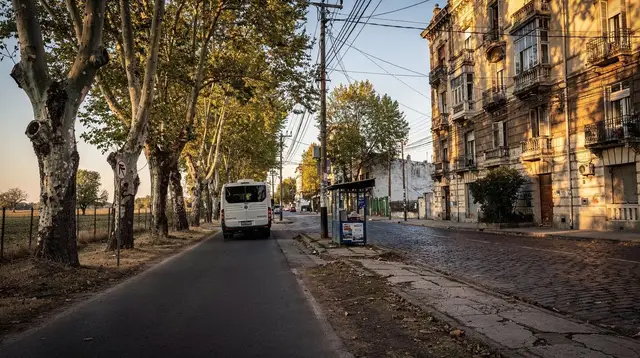
La Plata was designed, not grown. In 1882, after Buenos Aires city became the separately governed national capital (the Ciudad Autónoma de Buenos Aires), Buenos Aires Province needed a capital of its own and built one from a blank plan: a perfect square grid of numbered streets, cut diagonally by broad avenues that converge on public squares at regular intervals, with a large forested park at one end. It is one of the most deliberate pieces of 19th-century urban planning in South America, and it still governs how the city reads today — visitors used to the older, organically layered streets of central Buenos Aires notice the difference immediately.
The centrepiece is the Catedral de La Plata, a neo-Gothic cathedral on Plaza Moreno that ranks among the largest church buildings in the Americas. Construction began in 1884 and continued, in stages, into the 20th century; the towers were only completed decades after the main structure. The scale is the point: twin spires, a vast nave, and a rooftop terrace open to visitors that gives a clear view over the grid city below. Around Plaza Moreno sit the provincial government house and the municipal building, both part of the same original plan, which is why the cathedral, the square and the civic architecture read as one composition rather than separate sights bolted together over time.
Beyond the cathedral, the Paseo del Bosque is a large wooded park at the northern edge of the grid, home to the Museo de La Plata, a 19th-century natural history museum with strong palaeontology and anthropology collections — a reasonable add-on for a full day rather than a half day. The city is also, as home to the Universidad Nacional de La Plata, a genuine university town, with a large student population that gives the centre an everyday, lived-in feel rather than a purely touristic one.
La Plata also has its own football culture, distinct from the Boca Juniors–River Plate rivalry that dominates the capital. The city is home to Estudiantes de La Plata and Gimnasia y Esgrima La Plata, two clubs with a long-running local derby of their own, and match tickets are a genuine option for travellers who want a football fixture away from the crowds around La Bombonera or El Monumental.
The Estudiantes de La Plata match entry is worth checking against the fixture list before travel, since it depends entirely on the calendar; for background on what attending a match involves, see the general guide to watching a football match in Buenos Aires and the football match safety guide.
Getting there from Buenos Aires
| Option | Duration | Notes |
|---|---|---|
| Suburban train (Roca line, from Constitución) | ~1 hour | Cheapest option; requires a SUBE card |
| Long-distance bus (from Retiro terminal) | ~1 hour | Frequent departures |
| Car via Autopista Buenos Aires–La Plata | 45–75 minutes | Depends on traffic |
| Guided half-day tour with transport | Half day, fixed schedule | No logistics to plan |
The train from Constitución on the Roca line is the straightforward independent option, and it uses the same SUBE card that covers the Subte and city buses in Buenos Aires — worth topping up before heading to the station. Long-distance buses from Retiro terminal run a similar route. Drivers can use the Autopista Buenos Aires–La Plata, with journey time depending heavily on traffic around the city’s edges.
For travellers who would rather not plan a suburban train connection on a single visit to the city, the guided excursion to La Plata and the half-day city tour of La Plata both handle transport and typically bundle in the cathedral and the main civic square, which removes the need to work out train schedules or bus stops.
Planning a half day versus a full day
A half day is enough to see what makes La Plata worth the trip: the cathedral, including the rooftop terrace if it is open, a walk across Plaza Moreno and the surrounding government buildings, and enough of the grid streets to appreciate the layout. This suits travellers already stacking La Plata alongside something else that day, or those simply short on time in Buenos Aires.
A full day adds the Museo de La Plata and a slower walk through the Paseo del Bosque, plus time to sit in one of the cafés around the centre and take in the university-town atmosphere rather than moving straight through. Neither pace requires an overnight stay — La Plata is a comfortable return trip within a single day from central Buenos Aires, unlike destinations that genuinely need two days, such as the Iguazú Falls.
What to combine La Plata with
La Plata sits in the same general direction, south-east of the city, as a cluster of other day-trip options, though each stands on its own and none should be assumed to overlap with La Plata by name or geography.
Travellers interested in football culture sometimes extend a day in this direction with a match, since several clubs in Greater Buenos Aires play south of the capital; the guided football match tour at Lanús is one option that operates in that general area, though it is a separate booking from a La Plata city visit and follows its own schedule tied to fixture dates.
Cruise passengers arriving through the port of Buenos Aires occasionally use La Plata as a shore excursion destination given its manageable distance from the port; the shore excursion from Buenos Aires port to La Plata is built specifically around that timing constraint.
What La Plata is not a natural pairing with, despite the name similarity, is anything involving the Río de la Plata itself — river cruises, sailing trips, or the ferries to Uruguay. Those depart from Puerto Madero in the city and have nothing to do with the inland city of La Plata. If a booking description mentions “Río de la Plata,” check carefully whether it means the estuary or has been mislabelled, since the two are genuinely easy to conflate when skimming listings quickly.
How La Plata compares to Buenos Aires Province’s other day trips
La Plata is one of several worthwhile trips out of the city, and it is useful to know how it differs from the others before deciding whether it belongs on a given itinerary. A full overview of the options sits in the day trips from Buenos Aires guide; the short version is below.
North, toward the delta: Tigre and the Paraná Delta are the opposite of La Plata in character — wooded islands and stilt houses reached by wooden lancha launches, rather than a formal grid of civic architecture. The Tigre day trip guide and the Tigre Delta trip with a visit to Puerto de Frutos cover it in detail, and San Isidro, with its own neo-Gothic cathedral, sits on the same route north and makes an interesting counterpoint to La Plata’s cathedral for anyone comparing the two.
West, into the pampas: San Antonio de Areco is the reference town for gaucho tradition, silverwork and criollo craft, and full-day estancia visits from the city typically combine an asado lunch with horses and doma displays. See the San Antonio de Areco day trip guide, the estancia day trip guide and the comparison of estancia tours for how these differ from a formal city visit like La Plata.
The authentic gaucho day trip in a small group covers this side of Buenos Aires Province directly. The pilgrimage basilica at Luján sits roughly along the same westward corridor and has its own day trip guide.
Across the river, into a different country: Colonia del Sacramento and Montevideo are reached by fast ferry from Puerto Madero rather than by land, and both require a passport and a currency change, since they are in Uruguay, not Argentina.
The Colonia ferry guide and Colonia day trip guide explain the logistics; the 2-day Colonia del Sacramento trip and the 2-day trip to Colonia and Montevideo package both destinations together for travellers who want to see Uruguay properly rather than rush it.
Further afield: the Iguazú Falls are on the Argentina–Brazil border, roughly two hours away by flight and classically visited over two days rather than as a single road trip — a different scale of trip entirely from a La Plata day out. The Iguazú Falls from Buenos Aires guide and the 2-day Iguazú Falls trip with airfare lay out what that involves.
Fitting La Plata into a longer itinerary
Travellers building more than a single day around Buenos Aires Province sometimes group La Plata with Luján and the pampas into one themed stretch — see the three-day Luján, La Plata and pampas itinerary for a worked example of how the logistics can line up.
Those with a full week to spend on the wider region can look at the one-week Buenos Aires, Iguazú and Uruguay itinerary or the five-day Buenos Aires, Tigre and pampas itinerary for how a day like this one sits alongside the delta and the gaucho country to the west. None of these require treating La Plata as an overnight stop — it remains a same-day return from central Buenos Aires in every version of the plan.
Practical notes
Money and cards. As anywhere in Argentina, carry pesos as a dated snapshot rather than assuming a fixed rate — the Argentine peso has moved considerably and will likely keep doing so. Check a live rate before budgeting for the day, and don’t expect Uruguayan pesos to be relevant here at all; La Plata is entirely within Argentina, unlike Colonia del Sacramento or Montevideo, which require crossing an international border.
Cathedral access. The cathedral itself is generally free to enter, though the rooftop terrace access has at times required a ticket or a guided slot — check current opening hours and terrace access before travelling, since these details shift.
Timing. La Plata’s centre is a comfortable walking city once you arrive, thanks to the grid layout, but the diagonals can be disorienting at first because they cut through the square blocks at angles rather than following them — a city map or phone map helps for the first half hour.
Getting around once you’re there. The same SUBE card used on the train from Constitución also works on La Plata’s local buses, so there is no separate transit card to buy for the day — see the SUBE card guide for how to top it up before leaving Buenos Aires. Taxis and remises are a straightforward fallback for the short hop between the station and the cathedral, or between the centre and the Paseo del Bosque; the taxis, remises and rideshare guide covers the difference between the two.
Frequently asked questions about visiting La Plata
Is La Plata the same as the Río de la Plata?
No. La Plata is a planned inland city roughly 60 km south-east of Buenos Aires. The Río de la Plata is the estuary that Buenos Aires city sits on. The two share a name because both were named after the same colonial-era silver trade, but they are separate places, and La Plata’s centre is not on the riverbank.
How do I get from Buenos Aires to La Plata?
By suburban train from Constitución station (Roca line) in roughly an hour, by long-distance bus from Retiro terminal, by car via the Autopista Buenos Aires–La Plata in 45 to 75 minutes depending on traffic, or with a guided day tour that includes transport.
How much time do I need in La Plata?
A half day covers the cathedral, the main square and a walk through the grid centre. A full day allows time for the Museo de La Plata (natural history) and the Paseo del Bosque park as well, without rushing.
Can I visit La Plata as a half-day trip?
Yes. Several guided options cover La Plata in half a day, focused on the cathedral, the government buildings around Plaza Moreno and the city’s grid layout, which suits travellers combining it with something else that day.
Is La Plata worth visiting if I’ve already seen Buenos Aires?
Yes, for a specific reason: La Plata is architecturally unlike Buenos Aires. It was designed from scratch on a strict grid in the 1880s, which makes its cathedral, boulevards and civic buildings feel deliberate and uniform in a way the older, organically grown capital never is.
What is La Plata famous for?
Its neo-Gothic cathedral, one of the largest church buildings in the Americas, and its 19th-century planned layout: a perfect grid of numbered streets cut through by diagonal avenues, with a large park (Paseo del Bosque) and a natural history museum.
Is La Plata safe to visit?
La Plata is a normal, functioning provincial capital with a large student population from the national university. Ordinary city-centre caution applies, as it does anywhere in greater Buenos Aires; there is nothing unusual to flag beyond that.
Day Trips from Buenos Aires
Verified deep-linked GetYourGuide tours. Book through these links and we earn a small commission at no cost to you.
GetYourGuide does not provide a product photo for this activity — the image shows the meeting point, photographed by us.