Dulce de Leche and Medialunas: The Real Argentine Breakfast
What are medialunas and how do they relate to dulce de leche?
Medialunas are small Argentine croissants, eaten every morning with coffee, either plain or split and filled with dulce de leche. They come in two styles, de manteca (butter, sweet and glazed) and de grasa (savoury, made with lard), and neither is a special-occasion food — both are ordinary daily bakery items.
I did not go looking for dulce de leche. It found me, the way ordinary things do when you live somewhere for a while instead of passing through. My first morning in Buenos Aires I ordered a coffee and it arrived with two small croissant-shaped pastries on the saucer, no explanation offered because none was needed. That was breakfast. It still is, most mornings, whether I am in Palermo or San Telmo.
Not a souvenir, a Tuesday
It took me longer than I’d like to admit to stop treating dulce de leche as something to hunt down. Guidebooks talk about it the way they talk about a regional delicacy — something you seek out, photograph, tick off. In practice it is closer to how butter functions in a French kitchen: everywhere, assumed, rarely remarked on.
It’s in the best empanadas sold as a sweet dessert version, it’s the default filling in a slice of layer cake at any Palermo Soho or Palermo Hollywood café, it turns up folded into pancakes, spread thick on toast at a Sunday brunch, and eaten straight from the jar with a spoon, which nobody here considers remarkable.
The habit that surprised me most was how unceremonious it all is. There’s no ritual moment where a waiter announces the dulce de leche has arrived. It is simply there, the way milk is there for your coffee, and the city’s rhythm has been built around it for so long that pointing it out to a local gets you a polite, slightly puzzled look — the same look you’d get abroad for marvelling at bread.
What it actually is
I want to correct something before going further, because it changes how the whole thing tastes to you. Dulce de leche is not jam. It has no fruit in it, no pectin, nothing preserved from a harvest. It is milk and sugar, cooked down slowly until the sugars caramelise and the whole thing thickens into something between a sauce and a spread, somewhere in colour and texture between caramel and toffee. The “jam” comparison, which I’ve seen more than once in visitor write-ups, comes from the jar it’s sold in and the way it’s spread, not from anything about how it’s made or how it behaves on the tongue. Once you taste it warm, on a fresh medialuna, the caramel kinship is obvious and the fruit-preserve comparison stops making sense.
Jars vary. Dulce de leche repostero is thicker, made for baking into cakes and alfajores without running. Dulce de leche clásico is looser, made for spreading and eating with a spoon. Neither is more “authentic” than the other; they’re simply for different jobs, the way you’d choose a different olive oil for frying versus finishing a salad.
Manteca or grasa, and why it matters
Order a medialuna anywhere and you may get asked, or you may not, whether you want de manteca or de grasa. I ignored the distinction for weeks, assuming it was a minor bakery detail. It isn’t. Medialunas de manteca are made with butter — sweeter, softer, with a light glaze on top that makes them slightly sticky to the touch.
Medialunas de grasa are made with lard instead — flakier, less sweet, with a faint savoury edge that makes them the better match if you’re not adding dulce de leche at all. I won’t walk through how either is made; that’s a baker’s business, not a traveller’s. What matters for a visitor is knowing the two exist, because a menu or a bakery counter will often just say “medialunas” and assume you know which kind you’re getting, or offer both without further explanation.
My own habit settled quickly: de manteca in the morning with coffee, split and filled with a smear of dulce de leche if the coffee is bitter enough to want the contrast; de grasa in the afternoon, plain, alongside a mate if I’m somewhere that serves one. Neither choice is fancy. Both are what a working porteño eats before a normal day, not what a tourist eats to sample something exotic.
Where the ritual actually lives
If you want to see this in its full, unhurried form rather than a quick counter purchase, a historic café gives it proper context. I’d point you toward the Café Tortoni guide for that — not because the dulce de leche or the medialunas there are unusual, but because the surroundings slow the whole thing down into the ritual it’s meant to be: a marble-topped table, a silver tray, a coffee that isn’t rushed. It’s the same food you’d get standing at a neighbourhood bakery counter, served the way it would have been a century ago.
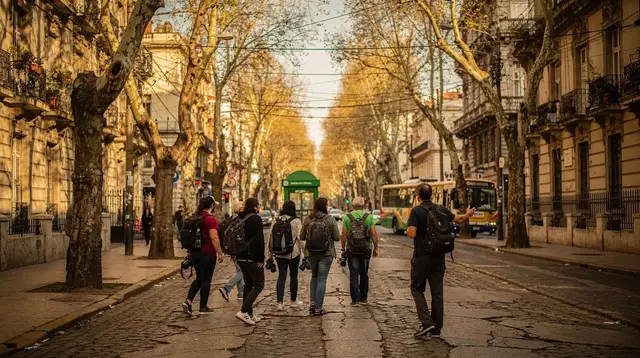
Beyond the café itself, this is a habit best absorbed rather than scheduled. A walking tour through San Telmo or an afternoon in Recoleta will put you past a dozen bakeries and cafés without you needing to plan a single stop for it. If mornings in a Belgrano apartment or a Puerto Madero hotel room feel too quiet, step out to whatever café is nearest — this isn’t a food you need an itinerary for.
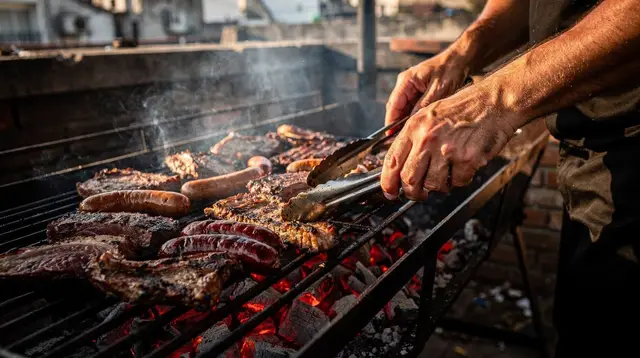
For a broader sense of what else fills an Argentine plate around it, the asado and parrilla guide covers the other daily staple, and mate culture explains the drink that usually sits alongside the afternoon medialuna rather than the morning coffee. If you’re weighing which neighbourhood to base yourself in for easy access to good bakeries and cafés, the Palermo versus Recoleta versus San Telmo comparison and the broader where to stay guide are useful starting points.
A guided city tour that includes a dulce de leche tasting is a reasonable shortcut if you’d rather have the context explained than pieced together, and travellers building a longer stay sometimes fold it into a four-day Buenos Aires discovery itinerary that mixes city mornings with a day out at an estancia asado and gaucho day trip, where dulce de leche turns up again at the end of the meal, cooked into a simple pastry.
Taking the habit home
Jarred dulce de leche is sold in every supermarket in the city, and it travels well enough sealed in checked luggage if you’re careful. I’ve brought back a jar or two more than once, less as a souvenir and more because the coffee at home never tastes quite complete without something to dip. What I’ve stopped doing is looking for the “best” bakery, the definitive medialuna, the one shop that does it properly. That search misses the point of the thing. It’s not a specialty. It’s breakfast, and it’s better for it.
Frequently Asked Questions About Dulce de Leche and Medialunas
Is dulce de leche the same as caramel or jam?
No. It is milk and sugar slow-cooked until it thickens and browns, closer in method to caramel than to fruit jam, and it has no fruit in it at all. Calling it a jam misses both how it is made and how it is eaten.
What is the difference between medialunas de manteca and de grasa?
De manteca are made with butter, sweeter, softer and lightly glazed on top. De grasa are made with lard, less sweet, flakier and slightly savoury. Both are sold in every bakery and both are normal breakfast food, not a regional specialty.
Do Argentines eat dulce de leche on medialunas every day?
Plenty do, though just as many eat medialunas plain and keep dulce de leche for spreading on toast, filling pastries, or eating by the spoonful. It is a pantry staple rather than an occasional treat.
Where is the best place to try dulce de leche and medialunas?
Almost any neighbourhood café or bakery, at breakfast or for the afternoon merienda. A historic café such as Café Tortoni gives the ritual its full context, but there is no single destination bakery you need to seek out.
Is dulce de leche only found in Argentina?
It is eaten across much of Latin America under various names, but in Argentina it sits at the centre of daily eating in a way that goes beyond a regional export product.
Can I buy dulce de leche to take home?
Yes, jarred dulce de leche is sold in supermarkets everywhere in the city, in varying thicknesses from repostero (for baking) to clásico (for spreading), and it travels reasonably well if sealed properly for the flight.
tours.Food & Drink
Verified deep-linked GetYourGuide tours. Book through these links and we earn a small commission at no cost to you.
GetYourGuide does not provide a product photo for this activity — the image shows the meeting point, photographed by us.