Sunday Brunch in Palermo: A Buenos Aires Guide
Is Sunday brunch a traditional Argentine custom?
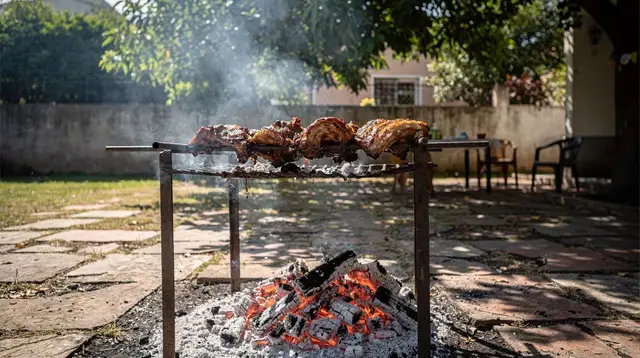
No. Sunday brunch is a recent, imported café-culture habit concentrated in Palermo Soho and Palermo Hollywood, not a national ritual. The older, genuinely traditional Sunday meal in Argentina is a family asado, usually eaten at home in the early afternoon.
A newer habit, not an old one
Ask a porteño what Sunday means for food, and most will describe an asado: a long, late lunch at a relative’s house, the grill going since mid-morning, wine on the table, nobody in a hurry to leave before mid-afternoon. That is the old, genuinely national custom, and it has nothing to do with eggs Benedict or a flat white in a converted townhouse on a cobbled street in Palermo.
Brunch is a different, much younger thing. It arrived in Buenos Aires the way it arrived in a lot of cities — as a café-culture import, picked up from abroad and adapted locally — and it took root specifically in Palermo Soho and Palermo Hollywood, the barrio’s design-shop-and-coffee-bar core. It is, at most, a couple of decades old as a recognisable local trend, and it only really became a fixture of the weekend in the last several years.
It is not a tradition handed down through generations, it is not eaten by most families across the city on a Sunday, and it is not something you will find with the same intensity in San Telmo, Recoleta or Belgrano. Framing it as a piece of Argentine heritage overstates it considerably; framing it as a Palermo-specific, fairly recent urban habit gets it right.
That distinction matters for a visitor because the two meals answer different questions. If the goal is to experience something rooted and traditionally Argentine on a Sunday, the asado — or an estancia day built around one — is the closer match. If the goal is a relaxed, photogenic, coffee-and-pastry late morning in one of the city’s most stylish barrios, Palermo’s brunch scene delivers that well, on its own terms, without needing to borrow the language of tradition to justify itself.
Why Palermo, specifically
Palermo is the natural home for this because it is the barrio where the city’s café and small-restaurant culture is densest and most design-conscious. Palermo Soho — the streets around Plaza Serrano — is full of independent boutiques and converted houses turned into cafés, which is exactly the kind of small, characterful space brunch culture tends to colonise elsewhere too. Palermo Hollywood, a short walk or short taxi ride north, has a slightly more design-industry, slightly less touristy version of the same thing.
The crowd on a Sunday morning in these cafés skews young: remote workers with laptops that get put away once the food arrives, couples, groups of friends catching up over a long table. It is a local scene that visitors are welcome to join rather than a show staged for them, which is part of what makes it pleasant — nobody is performing tradition, everyone is just having a slow morning.
Because the scene is concentrated rather than city-wide, going looking for “Buenos Aires brunch” anywhere else is likely to disappoint. A café in San Telmo is far more likely to serve a straightforward coffee-and-medialunas breakfast than a full brunch menu with eggs, avocado and fresh juice. Palermo earns its reputation here specifically, not as a stand-in for the whole city.
What is actually on the plate
A Palermo brunch menu borrows heavily from the international brunch template — eggs cooked several ways, avocado toast, granola bowls, pancakes, fresh-pressed juices, good coffee — filtered through Argentine produce and a few local touches. Medialunas, the small croissant-like pastries usually associated with breakfast, often turn up on a brunch table too, alongside dulce de leche in one form or another. A proper dulce de leche and medialunas primer is worth reading before a first Palermo brunch, since the pairing shows up constantly, brunch or not.
Coffee culture has grown alongside brunch culture, and Palermo has a genuine specialty-coffee scene now, distinct from the traditional café con leche of an older Buenos Aires bar. Some of the same cafés doing serious brunch plates are also doing carefully sourced, well-pulled espresso — a shift that, again, is recent rather than inherited.
What is largely absent from a brunch plate is red meat. That is worth flagging precisely because it underlines how separate this meal is from the asado: brunch is an egg-and-pastry meal, the asado is a beef-and-charcoal meal, and treating the two as points on the same tradition misses what actually distinguishes them.
Brunch versus the Sunday asado, side by side
| Sunday brunch (Palermo) | Traditional Sunday asado | |
|---|---|---|
| Origin | Recent, imported café-culture trend | Long-established national custom |
| Setting | Cafés and small restaurants, mostly in Palermo | Usually a home, a backyard or an estancia |
| Typical food | Eggs, pastries, coffee, juice, avocado | Grilled beef, chorizo, salad, wine |
| Typical timing | Roughly 09:00–14:00/15:00 | Starts late morning, lunch served mid-to-late afternoon |
| Who eats it | Mostly younger locals and visitors | Families across generations, city-wide |
| Where to find it | Concentrated in Palermo Soho/Hollywood | Homes everywhere; also parrillas and estancias |
If a Sunday itinerary has room for only one of these, the asado is the more representative Buenos Aires experience; the brunch is the more distinctly Palermo one.
A realistic Sunday morning in Palermo
A workable plan starts with an early-ish table, before about 11:00, to avoid the worst of the wait. From there, the barrio itself is worth the rest of the morning: Palermo Soho’s streets around Plaza Serrano reward slow wandering, with independent design shops opening later in the morning, and the wider Bosques de Palermo parks are a short walk away for anyone wanting green space after a heavy plate.
For a more structured introduction to the barrio’s food scene, several guided options exist that go well beyond a single café stop.
a guided walk through Palermo’s food spots that strings together several tastings in one outing covers more ground than a single brunch table, moving between small producers and eateries across the barrio.
a walking tour focused specifically on Palermo Soho’s food culture stays closer to the Plaza Serrano core, useful for a visitor who wants the concentrated version of the scene rather than the wider barrio.
For something sweeter after a savoury brunch, an ice-cream-focused walk paired with a wider look at Palermo works well later in the day, once the brunch crowd has thinned out.
Where the scene sits within Palermo’s wider food identity
Brunch is one layer of a barrio that has several distinct food identities stacked on top of each other, and it helps to know where it fits. Palermo is also where a lot of the city’s best parrillas operate, serving the more traditional grilled-meat meal at lunch and dinner rather than at brunch hour. It has a growing wine bar scene, mostly an evening pursuit. And it has its own version of a food tour built around tastings rather than a sit-down brunch plate.
Treating brunch as the whole of Palermo’s food identity would be as much a distortion as ignoring it altogether. It is one recent, popular, Sunday-specific layer within a much broader and older food scene — one that also includes plenty of long-standing parrillas and cafés that have nothing to do with the brunch trend.
For a visitor curious about the wine side of a Palermo weekend, a private wine-tasting walk through Palermo is a natural pairing later in the day, once the brunch tables have cleared.
Comparing it with the city’s other Sunday traditions
Buenos Aires has several genuinely old Sunday institutions that a brunch-focused morning should not crowd out of an itinerary. The Feria de San Telmo, the antiques and street market filling Defensa street and Plaza Dorrego, is a much older Sunday fixture than anything in Palermo’s café scene, and it runs on the same day. Further out, the Feria de Mataderos is a genuine gaucho and folk-music fair on weekends — again, a far deeper-rooted tradition than a flat white and a bowl of granola, though it pauses or shifts hours in the height of summer, so its calendar is worth checking before crossing the city for it.
A visitor with a single Sunday in Buenos Aires faces a real choice, not just a scheduling one: spend the morning at a Palermo brunch table, or head to San Telmo’s market, or head further out to Mataderos, or build the day around a family-style asado somewhere in the city or on an estancia. None of these is more “correct” than the others, but only some of them are actually old traditions, and brunch is honestly not one of them.
Practical notes for a Palermo brunch
Reservations matter for the well-known spots, particularly for a table between about 11:00 and 13:30, which is the busiest stretch. Walking a few blocks to a second-choice café is often faster than waiting for a table at the most talked-about one.
Prices are in Argentine pesos, and given how quickly peso prices have moved in recent years, any figure here would be stale within weeks — treat cost as something to check on the day against a current menu and a live exchange rate, rather than something to plan a budget around months in advance. As a general shape, a full brunch plate with coffee tends to land nearer the price of a proper sit-down lunch than a quick coffee-and-pastry stop.
Tipping follows the same loose norm as elsewhere in the city: roughly 10% in cash is the usual, appreciated gesture where service is not already included, not a fixed rule.
Sundays in Palermo also mean the barrio’s usual weekday quiet gives way to a fuller, more social atmosphere — worth knowing for anyone planning to combine brunch with a broader look at how the neighbourhood compares to San Telmo or Recoleta for a place to stay, or with a two-day Palermo and Recoleta itinerary that gives the barrio proper time.
For a guided introduction that puts brunch in the context of Palermo’s wider food scene in one outing, a guided food tour through Palermo led by a local guide covers several stops beyond a single café table, useful for a visitor without much time to explore independently.
The honest summary
Sunday brunch in Palermo is real, popular, well worth doing, and worth doing specifically because it is a distinctive, current expression of how this one barrio eats — not because it carries any deep national history. The asado remains the genuinely traditional Argentine Sunday meal; the San Telmo market and the Mataderos fair remain far older Sunday institutions than any café menu.
Palermo’s brunch scene is best enjoyed for what it is: a relaxed, recent, thoroughly local-feeling late morning in one of the city’s most pleasant barrios, best explored alongside — not instead of — the older traditions that define a Buenos Aires Sunday elsewhere in the city.
Anyone building a food-focused day around it can browse the wider things to do for food and wine in the city, or look specifically at what else Palermo offers beyond the brunch table, and for a first-time visitor trying to fit everything in, the city’s best empanadas and its mate culture are both worth reading up on alongside this one.
Sunday Brunch in Palermo: Frequently Asked Questions
Is brunch an old Argentine tradition?
No. It is a recent import, roughly a decade or two old, that took hold first in Palermo’s café scene and has since spread to a few other barrios. It sits alongside, not in place of, the much older Sunday asado.
What is the difference between brunch and the traditional Sunday asado?
Brunch is a mid-morning to early-afternoon café meal of eggs, pastries, coffee and juice, eaten mostly by younger porteños and visitors in Palermo. The asado is a longer, later, home-based grilled-meat lunch shared with extended family, and it remains the more deeply rooted Sunday custom across the city.
Which neighbourhood in Buenos Aires is known for Sunday brunch?
Palermo, and specifically the Palermo Soho and Palermo Hollywood sub-areas, where most of the brunch-focused cafés are concentrated. Other barrios have a handful of places, but the scene is not evenly spread across the city.
Do I need a reservation for Palermo brunch?
For the well-known spots, yes, or expect a wait of thirty minutes to an hour on a Sunday between about 11:00 and 13:30. Walking a few blocks to a second-choice café is usually faster than queuing.
What time does Sunday brunch run in Palermo?
Most cafés serve brunch from around 09:00 or 10:00 through to early-to-mid afternoon, roughly 14:00 to 15:00. It overlaps with, rather than replaces, the lunch hour.
How much does brunch cost in Palermo?
Prices are in Argentine pesos and have moved quickly in recent years, so treat any figure as a dated snapshot rather than a fixed number; check a current menu and a live exchange rate before budgeting. As a rough shape, a full plate with coffee tends to sit toward the pricier end of the city’s café scene, closer to a sit-down lunch than to a quick coffee.
Is brunch in Palermo aimed at tourists or at locals?
Mostly at a local, largely younger crowd — remote workers, couples, friend groups — with visitors joining in rather than driving the trend. It reads as an urban lifestyle habit more than a tourist product.
Can I combine brunch with other things to do in Palermo on a Sunday?
Yes. A late-morning brunch pairs naturally with a walk through Palermo Soho’s streets and parks, and many visitors fold it into a wider food-focused day in the barrio.
Food Tours and Argentine Wine Tastings
Verified deep-linked GetYourGuide tours. Book through these links and we earn a small commission at no cost to you.
GetYourGuide does not provide a product photo for this activity — the image shows the meeting point, photographed by us.