Empanadas in Buenos Aires: An Everyday Food, Not a Tourist Dish
What kind of food are empanadas in Buenos Aires?
They're an everyday food, not a special dish for visitors — eaten as a quick lunch, taken away from a bakery, or served as a starter before a bigger meal. The classic filling is beef (carne), alongside ham-and-cheese (jamón y queso) and corn (humita), and there is no single official recipe; every province, bakery and household makes its own version.
I didn’t plan to write about empanadas. I planned to write about restaurants, the way I usually do, and then I noticed I couldn’t. Every time I tried to list “the best places,” I realized I was really just describing what’s near my apartment, or what I happened to grab on a Tuesday because I hadn’t cooked and didn’t want a full sit-down meal. That’s the thing about empanadas here: they’re not really a destination food. They’re what you eat when you’re not thinking about food at all.
A snack, a starter, a whole meal, a shortcut
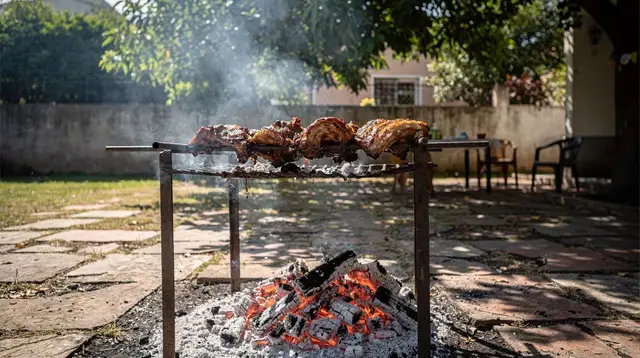
In Buenos Aires, empanadas slide into almost any slot in the day. At lunch, a docena (a dozen, often mixed flavors) bought from a bakery or a dedicated empanada shop is a completely normal thing to eat at a desk or standing at a counter. At dinner, they show up first, before the main course, especially if that main course is going to be a big parrilla spread — a couple of empanadas while the grill gets going is standard, not indulgent. And on nights when nobody wants to cook, a box of empanadas from the place around the corner is the local equivalent of ordering a pizza: fast, cheap relative to a restaurant meal, and something everyone in the group can agree on because there are enough flavors to cover everyone’s preference.
What they are not, in daily life, is a special-occasion food. Nobody here treats them the way a visitor might treat, say, a parrilla dinner — as an event to plan around. They’re closer to bread. You don’t go looking for the best bread in the city; you just eat the bread that’s near you and get on with your day. Empanadas work the same way for most porteños I know.
Where they actually come from, and why that matters
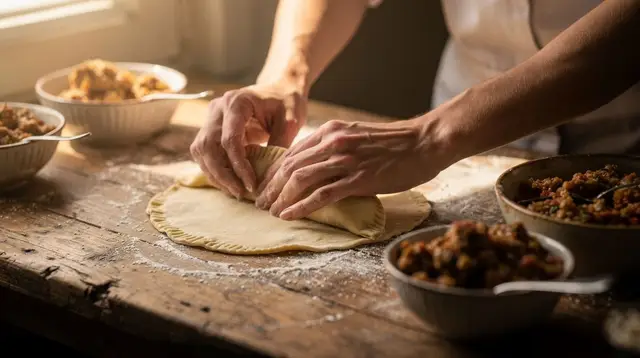
This is worth being upfront about: empanadas are not originally a Buenos Aires dish. They belong to a much wider tradition that runs across Argentina’s interior provinces — Tucumán, Salta, Catamarca, Mendoza, Córdoba — each with its own filling conventions, its own dough, its own way of folding the edge (the repulgue), and its own strong opinions about what counts as correct.
Buenos Aires, being the capital and the place where people from every province eventually end up living, has absorbed most of these regional styles into one crowded, overlapping menu. A single empanada shop in Palermo might sell a Tucumán-style beef empanada next to a Salta-style one next to something the owner’s grandmother used to make in a town you’ve never heard of, and none of them is “more real” than the others.
I mention this because I used to assume there was a correct, official empanada, the way there’s arguably a correct margherita pizza. There isn’t. Ask ten people in Buenos Aires what makes a “real” empanada and you’ll get ten answers, usually organized around whichever province their family came from, or simply around whichever bakery they grew up walking past. Treat any claim of a single authentic recipe with mild suspicion — it usually just means “the one I grew up with.”
The fillings you’ll actually see
You don’t need to memorize a long list. In Buenos Aires, three fillings cover most of what you’ll encounter, and it’s worth knowing what they are before you order, mostly so you’re not surprised.
Carne (beef) is the default, and if a menu just says “empanadas” with no further description, this is usually what you’ll get. It’s minced or hand-cut beef cooked down with onion and often a boiled egg piece and an olive tucked inside, seasoned with cumin, a little paprika, sometimes a touch of chili. The beef-onion mixture is meant to be moist enough that the empanada has some juice to it — a dry beef empanada is generally considered a bad one.
Jamón y queso (ham and cheese) is the reliable, uncomplicated option, and it’s the one you’ll most often see kids order or the one a group defaults to when someone doesn’t eat beef. Melted cheese, cured or cooked ham, nothing surprising, and it’s on almost every menu because it needs to be — it’s the empanada equivalent of a safe choice.
Humita is the vegetarian one worth knowing, made from fresh corn cooked down with onion, sometimes a little cheese, sometimes a hint of basil, into a soft, slightly sweet, slightly creamy filling. It comes from the same northern provincial tradition as the beef version, and it’s the filling I’d point a vegetarian friend toward first, ahead of anything trying too hard to be a meat substitute.
Beyond these three you’ll run into regional and seasonal variations — spinach and cheese, chicken, criolla mixes with olives and raisins that surprise people who weren’t expecting fruit in a savory pastry — but carne, jamón y queso, and humita are the three that will follow you around the city regardless of neighborhood.
Baked or fried, and why it’s not really a debate
You’ll also notice empanadas come either baked (al horno) or fried (fritas). This isn’t a quality marker — it’s a style difference tied to the same regional variety as the fillings. Baked empanadas have a firmer, flakier pastry and are what most Buenos Aires bakeries default to for everyday eating. Fried empanadas have a softer, richer crust and show up more at asados, gatherings, or places leaning into a specific provincial style. If a menu doesn’t specify, it’s almost always baked. Neither is more correct than the other; they’re just different, the way baked versus fried is a matter of tradition rather than hierarchy anywhere else.
Where you’ll run into them around the city
You don’t need to seek empanadas out — they turn up as a background detail wherever you’re already headed. Wandering the San Telmo Sunday market or browsing the stalls at the Mercado de San Telmo, you’ll pass more than one counter selling them by the unit for exactly this kind of grazing. A food tour through Palermo will usually work one in alongside the parrillas and ice cream stops, since it’s the fastest way to show a visitor several regional styles in one afternoon.
Out at the weekend Mataderos fair, where the gaucho and folk-culture side of the city is on full display, empanada stalls sit next to the asado grills as a matter of course. And if a day trip to Tigre takes you through the Puerto de Frutos market, grabbing a few for the boat or train ride back is close to a local habit.
Empanadas alongside the rest of the food scene
Empanadas rarely stand alone on a trip built around Argentine food. Most visitors pair them with a proper steakhouse meal at some point, since the two are really two halves of the same beef-heavy tradition. If you’re curious about the sweeter side of things, dulce de leche and medialunas cover the breakfast end of the spectrum the way empanadas cover lunch and the pre-dinner starter.
A glass of Malbec alongside a tasting is a common way locals dress up an otherwise casual empanada dinner, and if beer is more your speed, the city’s craft beer scene has plenty of bars that treat a plate of empanadas as the obvious thing to order alongside a flight. Travelling with someone who doesn’t eat meat is no obstacle either — our guide to vegetarian and vegan eating in Buenos Aires covers humita and other meat-free options well beyond what’s on this page.
Practical notes for eating on the move
Because empanadas are so often a grab-and-go food, it helps to have the basics of getting around sorted before you’re standing outside a bakery with a warm paper bag. Our guide to getting around Buenos Aires covers the subte, buses and taxis in one place, and the SUBE card and subte guide explains the transit card you’ll want if you’re hopping between neighborhoods to compare bakeries.
If you’re still deciding where to stay, our breakdown of Palermo vs. Recoleta vs. San Telmo and the fuller where to stay in Buenos Aires by neighbourhood guide both note which areas have the densest, most casual food scenes — useful if empanada access is genuinely a factor in your choice of base. And if your trip includes time outside the city, our roundup of day trips from Buenos Aires points to towns like San Antonio de Areco, where the empanada and asado traditions are even more central to daily life than they are in the capital.
How to actually order and eat them
If you’re at a bakery or a dedicated empanada counter, you order by the unit or by the dozen, mix flavors freely, and they’re handed over in a paper bag or a small box — this is a takeaway transaction, quick and unceremonious. If you’re at a parrilla or a more sit-down restaurant, empanadas usually appear as a starter on the menu, ordered per person or to share before the main event, which is where the asado and grilled-meat culture of the city really lives.
I’d treat empanadas as the opening act and the asado as the main story if you only have room for one deep dive into Argentine food culture on this trip — the empanada page is about a format, the asado page is about the ritual around fire and meat that Argentines actually build evenings around.
One small practical note: empanadas are eaten by hand, not with cutlery, and they’re hot enough straight out of the oven or fryer that the first bite is often a slightly careful one. That’s normal. Nobody’s judging you for waiting thirty seconds.
A quick reference, not a ranking
| Filling | Base ingredients | Typical texture |
|---|---|---|
| Carne | Beef, onion, egg, olive, cumin | Juicy, savory |
| Jamón y queso | Ham, melted cheese | Simple, mild |
| Humita | Fresh corn, onion, cheese | Soft, slightly sweet |
This table is about what’s inside, not about where to get it — I’m deliberately not naming specific shops or prices here, because both change constantly and because the honest truth is that good empanadas are genuinely everywhere in this city, not concentrated in a handful of famous spots.
Empanadas as a way into the culture, not a checklist
If there’s one thing I’d want a first-time visitor to take from this, it’s that empanadas reward curiosity more than research. You don’t need a ranked list of the top five places; you need to be willing to buy a few from whatever bakery is near wherever you’re staying, try a beef, a ham-and-cheese, and a humita, and notice which one you keep thinking about. That’s closer to how locals actually relate to this food than any “best of” list could be — empanadas here aren’t a destination, they’re a habit, and habits are best picked up by doing them, not by reading about them.
If you’d rather have someone walk you through the fillings and history hands-on, a guided empanadas tasting tour or an empanadas cooking class covers the same regional ground in a structured way. And for a fuller taste of the countryside version of this food culture — a full day on a pampas estancia with a traditional asado barbecue pairs well with an empanada-focused day in the city, since the two dishes usually appear together at the same table.
If tango is also on your list, a private tango show that includes empanadas alongside the bandoneón performance is a natural way to combine both in one evening. For a longer first trip, a four-day guided introduction to the city will naturally put empanadas in front of you more than once, and a half-day out on the water with the Tigre Delta brunch and guided boat visit is a good excuse to eat a dozen on the train ride back.
Empanadas in Buenos Aires: frequently asked questions
Are empanadas a Buenos Aires speciality?
Not originally — they come from Argentina’s northern and interior provinces (Tucumán, Salta, Córdoba, and others), each with its own style. Buenos Aires, as the capital where people from every province settle, has absorbed most of these regional traditions, so the city’s empanadas are really a mix of many origins rather than one local recipe.
What is the most common empanada filling?
Beef (carne) is the default and the most widely available, typically made with minced or hand-cut beef, onion, a piece of boiled egg, an olive, and spices like cumin. If a menu simply lists “empanadas” without specifying, beef is the safest assumption.
Is there a vegetarian empanada?
Yes — humita, made from fresh corn cooked with onion and sometimes cheese, is the most common vegetarian option and comes from the same provincial tradition as the beef version. Spinach-and-cheese versions are also common.
Should I eat empanadas as a meal or a starter?
Both are normal. They work as a quick lunch or takeaway meal on their own, and they also commonly appear as a starter before a bigger dinner, especially before an asado. There’s no fixed rule — it depends entirely on the setting.
What’s the difference between baked and fried empanadas?
It’s a style and regional-tradition difference, not a quality marker. Baked (al horno) empanadas have a flakier, firmer crust and are the everyday default at most bakeries; fried (fritas) empanadas have a softer, richer crust and show up more at gatherings and asados. Neither is more “authentic” than the other.
Is there one authentic or official empanada recipe?
No. This is a common misconception. Fillings, dough, folding style, and even the correct level of spice vary by province, by bakery, and often by family, and locals themselves disagree on what counts as the “real” version. Treat any claim of a single official recipe with skepticism.
Where should I go to try the best empanadas in Buenos Aires?
This guide deliberately doesn’t rank specific restaurants or bakeries, since good empanadas are genuinely widespread across the city and prices and standout spots shift constantly. The more useful approach is to try a few from whatever bakery is near where you’re staying and compare fillings yourself, or join a guided tasting for context.
How do empanadas relate to asado and the rest of Argentine food culture?
Empanadas and asado are often eaten at the same table, with empanadas as the opening course before the grilled meat. For the full picture of Argentina’s grilling and meat culture, see the separate asado and parrilla guide.
Food Tours and Argentine Wine Tastings
Verified deep-linked GetYourGuide tours. Book through these links and we earn a small commission at no cost to you.
GetYourGuide does not provide a product photo for this activity — the image shows the meeting point, photographed by us.