Vegetarian and Vegan Buenos Aires: A Realistic Guide
Is Buenos Aires hard for vegetarians and vegans?
No, but it is not effortless either. A real and growing vegetarian and vegan scene exists, concentrated in Palermo, alongside pockets in San Telmo and Recoleta. Outside those areas, and especially in traditional parrillas, the city still runs on grilled meat, so planning matters more than it would in a city built around plant-based eating.
Setting expectations honestly
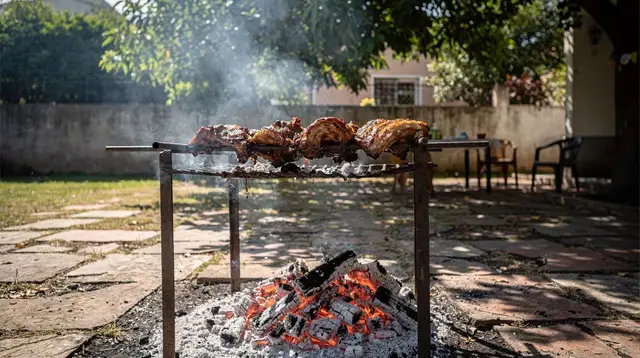
Buenos Aires built its food identity around the grill. The asado and parrilla culture is not a niche tradition here — it is close to the civic religion, and a huge share of the city’s most famous restaurants exist to serve steak, sausage and offal cooked over wood or charcoal. That reputation is accurate, and it has led to a persistent idea among travellers that Buenos Aires is hostile territory for vegetarians and vegans. That idea is out of date.
Over roughly the last decade, a genuine vegetarian and vegan food scene has taken root, concentrated heavily in Palermo, with smaller pockets in San Telmo and Recoleta. Dedicated all-vegan restaurants, vegetarian buffets charged by weight, plant-based bakeries and juice bars now exist in real numbers, not as a token gesture. What has not happened is a takeover: this remains a minority offering set against a dominant parrilla culture, and the honest way to plan a trip is to know exactly where that minority offering lives, and where it thins out to almost nothing.
This guide will not tell you that a vegan restaurant in Palermo is “as good as a parrilla.” That comparison does not make sense — they are different categories of food serving different purposes, and pretending one substitutes for the other does a disservice to both. What this guide will do is tell you where to eat well as a vegetarian or vegan, where to expect very little, and how to navigate the grey areas in between.
Where the vegetarian and vegan scene actually is
Palermo, and specifically the Palermo Soho and Palermo Hollywood sub-areas, is where the plant-based food scene concentrates. Multiple all-vegan restaurants operate here, ranging from casual bowls-and-smoothies spots to more considered sit-down menus, alongside vegetarian buffets that let you build a plate from a wide salad and hot-dish spread and pay by weight — a format that works well for groups mixing dietary preferences. Juice bars, plant-based bakeries making egg-free and dairy-free pastries, and cafes with clearly marked vegan options are common enough in Palermo that you can eat here for several days without repeating a restaurant.
Outside Palermo, the picture changes. San Telmo has a handful of vegetarian and vegan-friendly cafes mixed in among its antique shops and traditional bars, enough to get by but not enough to browse. Recoleta has some options aimed at its wealthier, more international clientele. The Microcentro, Puerto Madero and much of Belgrano are comparatively thin on dedicated plant-based restaurants, though a generic Italian, Middle Eastern or vegetable-forward option can usually be found if you are willing to look.
The practical implication: if a satisfying vegetarian or vegan meal matters to you on a given day, bias your plans toward Palermo, or check a specific restaurant’s location and current status before crossing the city for it — closures and openings move faster than any guide can track.
| Area | Vegetarian/vegan density | What to expect |
|---|---|---|
| Palermo (Soho & Hollywood) | High | Dedicated vegan restaurants, buffets by weight, juice bars, plant-based bakeries |
| San Telmo | Low to moderate | A few cafes and vegetarian-friendly spots mixed among traditional bars |
| Recoleta | Moderate | Upmarket cafes with marked vegetarian/vegan options |
| Microcentro / Puerto Madero | Low | Mostly generic Italian or Middle Eastern fallback options |
| Belgrano | Low | Sparse; plan ahead or head toward Palermo |
What actually works, and what doesn’t
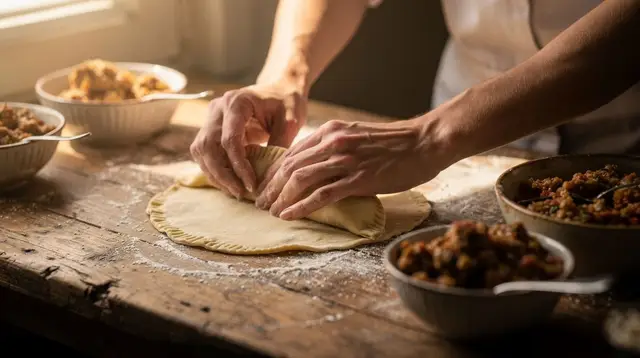
Empanadas are the easiest win. Vegetarian fillings — corn and cheese (humita), spinach and cheese, caprese (tomato, mozzarella, basil) — are standard at most empanada bakeries across the city, not just in Palermo. Vegan empanadas are less universal but increasingly available, mostly at bakeries and food halls that specifically cater to plant-based diets.
Pasta and pizza are a reliable fallback almost anywhere, a legacy of the city’s deep Italian immigrant influence. A simple tomato-and-cheese pizza or a plain pasta with olive oil is vegetarian by default in most places, though checking that stock or sauce bases don’t contain meat is worth doing for anyone strict about it.
Provoleta, a thick disc of grilled provolone cheese, is the closest thing to a vegetarian centrepiece you’ll find at a parrilla, and it is genuinely good — smoky, slightly charred at the edges, meant to be shared. It is, however, one dish, not a menu, and it will not replicate the experience of an asado as a meal.
A traditional parrilla, to be direct about it, is not designed for vegetarians and is close to unusable for vegans. The menu exists to showcase cuts of beef; a non-meat eater will typically be offered a side salad, fries, grilled vegetables if you’re fortunate, and provoleta. It is worth going once, for the cultural experience and the smell of the grill, but not worth expecting a satisfying meal from — and it is not, and should not be treated as, an alternative to the vegetarian and vegan restaurants described above.
Sweets need a specific note. Argentina’s classic dulce de leche is a dairy product, so the ubiquitous medialunas (croissants) and alfajores (dulce de leche sandwich cookies) are not vegan in their traditional form. A small number of specialty bakeries, again mostly in Palermo, now make plant-based versions using coconut or oat milk, but they are the exception rather than the rule — don’t expect to find a vegan alfajor at a random corner kiosk.
Mate, the herbal infusion Argentines drink constantly, is naturally plant-based and a safe, sociable thing to be offered.
Ordering and communicating
Rioplatense Spanish uses vos rather than tú, but the core vocabulary for dietary needs is standard and understood in tourist-facing restaurants: soy vegetariano/a (“I am vegetarian”) and soy vegano/a (“I am vegan”) will be recognised almost everywhere with any experience serving foreign visitors, especially across Palermo. It helps to be specific: sin carne (without meat), sin lácteos (without dairy) and sin huevo (without egg) close the loopholes that a general “vegetarian” request sometimes leaves open — stock made with meat, or a “vegetable” empanada that still contains cheese.
Menu labelling for vegetarian and vegan dishes has improved but is not consistent citywide, and staff knowledge of exactly what goes into a dish varies restaurant to restaurant. Asking directly, rather than trusting an icon on a printed menu, remains the more reliable approach, particularly outside Palermo.
Organised options if you’d rather not navigate it alone
For visitors who want the plant-based side of the city curated rather than self-researched, a few structured options exist. A Buenos Aires vegan tour with transport strings together several plant-based stops across the day without requiring you to work out which neighbourhood has what. a guided vegan food tour with transport included covers ground efficiently for visitors short on time.
For a hands-on introduction, a vegan cooking class that ends with a tasting is a good way to learn how Argentine flavours — chimichurri, empanada dough, regional vegetables — translate into plant-based cooking, rather than only eating the results.
A different kind of pairing worth knowing about: a vegan-catered day trip to the Tigre Delta with lunch included on the ferry combines the Paraná Delta boat excursion with a meal that doesn’t require separate planning once you’re out among the islands.
And if you do want the counterpoint — the full parrilla experience, on its own terms, without pretending it’s something it isn’t — a traditional asado experience is the honest way to see what the city’s dominant food culture actually looks like, before or after spending the rest of your trip on its plant-based margins.
Beyond restaurants: markets, buffets and self-catering
The Mercado de San Telmo mixes traditional butcher stalls with produce vendors and small food stands, and is a reasonable place to piece together a vegetarian lunch from fresh ingredients if you’re staying somewhere with a kitchen. Vegetarian buffets charged by weight — common in Palermo and scattered elsewhere — are worth seeking out specifically for their flexibility: you build the plate, so there’s no need to interrogate a fixed menu.
If your accommodation has any kitchen access, supermarkets across the city stock a normal range of vegetables, legumes, tofu (less common but present in larger supermarkets, especially near Palermo) and plant-based milks, making short-term self-catering realistic for strict vegans who want a guaranteed option on a given evening.
A realistic day in Palermo for a vegetarian or vegan visitor
Start the morning with coffee and a plant-based pastry at one of Palermo’s vegan bakeries. Spend the late morning browsing Palermo Soho’s boutiques and street art, pairing well with a Palermo street art walking tour if you want context rather than just wandering. Lunch at a vegetarian buffet by weight, which lets you sample widely without commitment.
In the afternoon, a Palermo bike tour covers the barrio’s parks and the Bosques de Palermo efficiently. For dinner, book ahead at one of Palermo Hollywood’s sit-down vegan restaurants — the better ones fill up, particularly on weekends, and Buenos Aires runs on late dinners, so a 21:00 reservation is normal rather than early.
The bottom line
Buenos Aires is not a vegetarian or vegan city by nature, and it would be misleading to suggest otherwise. It is, however, a large, food-obsessed capital that has developed a genuine plant-based scene over the past decade, heavily concentrated in Palermo, workable in a few other neighbourhoods, and sparse across much of the rest of the city.
Visitors who plan around that geography — leaning on Palermo for dedicated restaurants, using empanadas and pasta as reliable fallbacks elsewhere, and treating the parrilla as a cultural visit rather than a place to eat well as a vegetarian — will eat well. Visitors who assume plant-based options are everywhere, or who expect a vegan restaurant to replicate what a parrilla does, will be disappointed on both counts, for different reasons.
FAQ: Eating vegetarian and vegan in Buenos Aires
Is Buenos Aires vegan-friendly?
It is workable, particularly in Palermo, where dedicated vegan restaurants, cafes and juice bars have multiplied over the past decade. Beyond that barrio and a handful of others, options thin out fast, so a little research per neighbourhood goes a long way.
Can vegetarians eat well at a parrilla?
Rarely more than adequately. A traditional parrilla is built around grilled beef, and its non-meat offering is usually limited to a side salad, grilled provoleta cheese, and fries. It is not the place to expect a satisfying vegetarian main course.
Are empanadas ever vegetarian or vegan?
Vegetarian empanadas exist and are common, usually filled with corn (humita), spinach and cheese, or caprese. Vegan versions are rarer but increasingly available at bakeries and food halls that cater to plant-based diets, particularly in Palermo.
Is dulce de leche vegan?
No, traditional dulce de leche is made from dairy milk and sugar, so classic medialunas and alfajores are not vegan by default. Some specialty vegan bakeries make plant-based versions with alternatives like coconut or oat milk, mostly found in Palermo.
Do restaurants outside Palermo mark vegetarian and vegan dishes on the menu?
Inconsistently. Menu labelling has improved in recent years but is far from universal, and a waiter’s knowledge of what actually goes into a dish can vary. Asking directly, and naming ingredients you want excluded, is more reliable than trusting a menu icon alone.
Is Buenos Aires street food vegetarian-friendly?
Empanada and pastry stalls typically sell cheese-based or meat-based fillings, so vegetarians have some options and vegans very few. Fruit and juice stands are the safest plant-based street food.
What should I say to order vegetarian or vegan in Spanish?
Soy vegetariano/a (I am vegetarian) or soy vegano/a (I am vegan) is understood in most restaurants with any English-speaking or tourist-facing staff, especially in Palermo. It helps to add sin carne (without meat) and, for vegans, sin lácteos (without dairy) and sin huevo (without egg).
Food Tours and Argentine Wine Tastings
Verified deep-linked GetYourGuide tours. Book through these links and we earn a small commission at no cost to you.
GetYourGuide does not provide a product photo for this activity — the image shows the meeting point, photographed by us.