A barrio built around an abattoir, and a fair that outlived it
Mataderos sits at the far western edge of the Ciudad Autónoma de Buenos Aires, a good deal further out than Palermo or Belgrano, and it shows. The barrio takes its name — literally “slaughterhouses” — from the cattle market and meatpacking plants that operated here from the late nineteenth century, drawing waves of rural workers and, with them, the gaucho culture of the pampas into a corner of the capital.
The old municipal market building, the Mercado de Liniers livestock yards nearby, and streets still named for cattle trades are what is left of that industrial past. The abattoirs themselves are long closed or relocated, and today’s Mataderos is a modest, working-class residential barrio of low houses and quiet blocks.
None of that industrial history is why anyone visits. What draws people out here — and it is a real, deliberate trip, not something to stumble into — is the Feria de Mataderos, a weekend fair that has kept the gaucho and folk traditions of the countryside alive inside the city limits. It is one of the few places in Buenos Aires where you can watch skilled horsemanship, live folk dance, and genuine rural craft in one afternoon, without leaving the city. That is the entire case for coming here, and it is a strong one — on the right day.
This page is honest about the trade-off: Mataderos rewards a fair-day visit generously and rewards any other day barely at all. If your dates do not line up with the fair, skip the barrio and spend the afternoon in San Telmo or on a San Antonio de Areco day trip instead, where gaucho culture is the whole town rather than a weekend event.
The migration that shaped Mataderos is worth understanding, because it explains why a folk fair rooted in rural tradition ended up inside a dense, European-looking capital in the first place. As the meatpacking industry drew rural workers toward the city’s edge, they brought the customs of the pampas with them — horsemanship, mate, criollo silverwork, chacarera and zamba — and those customs took root in Mataderos rather than dissolving into the city around them.
The fair that exists today is a direct descendant of that history, not a folkloric event invented for visitors. That distinction matters: unlike some staged “gaucho experiences,” the sortija riders and dance troupes at Mataderos are performing a living local tradition for a mostly local crowd, tourists included almost incidentally.
The Feria de Mataderos: what it actually is
The fair fills Avenida de los Corrales and the surrounding blocks near Plaza Ferro with stalls, a stage, and — its real centrepiece — a roped-off street where riders perform the sortija, a traditional gaucho game in which a horseman at full gallop tries to spear a tiny ring suspended overhead with a small stick. It takes real skill, several attempts usually go wide, and the crowd’s reaction is part of the show. Around it, folk musicians and dance troupes perform chacarera, zamba and other traditional dances, sometimes pulling spectators in to join.
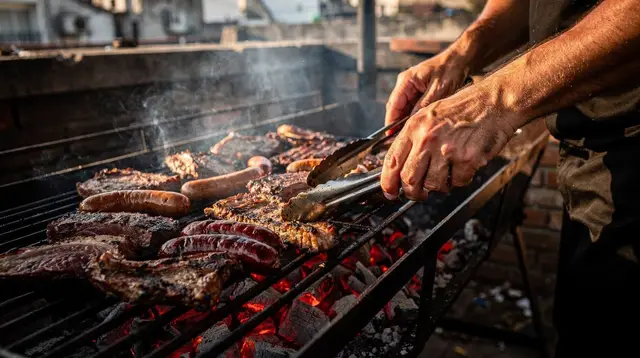
The stalls sell what you would expect from a genuine countryside fair rather than a souvenir strip: leatherwork, mate gourds and bombillas, ponchos, silver facón knives, woven textiles, and food — choripán, empanadas, and asado sandwiches cooked on the spot. Prices are generally lower and the goods more traditional than in the tourist-facing stalls of San Telmo’s Sunday market, which is part of why craft shoppers rate this fair highly.
When the fair actually runs
The Feria de Mataderos runs on Sundays year-round, typically from late morning into early evening. In the warmer months — broadly spring through early autumn — it also adds a Saturday evening session, since Buenos Aires summer afternoons are punishingly hot for standing in an open street. In the coldest weeks of winter, and during the most intense heat of January, hours can shift or a date can be paused altogether. Check the current calendar before crossing the city for it — this is not a fair that runs every single day of the week, and turning up on a Tuesday afternoon expecting music and horses is the single most common way visitors waste a trip out here.
| Day | Typical fair status |
|---|---|
| Monday–Friday | No fair — barrio is quiet residential streets |
| Saturday (spring–early autumn) | Evening session, check current hours |
| Saturday (winter / peak summer) | Often paused — verify before travelling |
| Sunday | Main fair, late morning to early evening, year-round |
Getting there, and being honest about the distance
Mataderos is genuinely out of the way. It sits roughly 12–14 km from the Microcentro, in the far west of the city near the Buenos Aires Province line, and reaching it takes noticeably longer than a hop to Recoleta or Puerto Madero.
- Colectivo (city bus): several routes reach Plaza Ferro from the centre, but the ride is long — expect 60–75 minutes depending on traffic and your starting point, using your SUBE card.
- Taxi or ride-hailing app: the simplest option for most visitors, typically 45–60 minutes from downtown depending on the time of day; fair days bring extra traffic and parking congestion right around the venue, so budget a little more on the way back.
- Combined train and bus: it is possible to combine a suburban train with a short bus or taxi leg, but for a single afternoon visit this rarely saves time over a direct taxi.
There is no way to make this a quick errand. Treat it as a deliberate half-day excursion, not a stop bolted onto a Palermo or San Telmo itinerary on the same afternoon — the transfer alone eats a meaningful chunk of the day.
Why a weekday visit is not worth it
It needs saying plainly: outside a fair day, there is very little reason to make this trip. The barrio is residential, low-rise, and largely without the kind of museums, landmarks or café culture that reward aimless wandering in Palermo or Belgrano. The old market building and a handful of gaucho-themed murals and monuments exist, but they do not add up to an afternoon’s sightseeing on their own, and they are an hour’s transfer each way from the centre.
If your trip dates simply do not include a Saturday evening (in season) or a Sunday, the better use of your time is one of the alternatives below rather than a weekday detour to Mataderos:
- A San Antonio de Areco day trip, where gaucho and criollo culture is the town’s everyday identity, not a weekend event.
- A full estancia day, such as the Buenos Aires: Gaucho Day Experience with Asado BBQ a full-day estancia outing with an asado lunch, horses and folk displays, which delivers a similar theme with transport and a fixed programme handled for you.
- The San Telmo Sunday market, which runs weekly and sits inside a barrio with plenty else to do around it.
Visiting Mataderos on a fair day
Arrive by early-to-mid afternoon to catch the sortija riders and dance performances at their liveliest; the fair thins out as evening approaches, though the Saturday summer sessions run later into the night. Wear comfortable shoes — the action is spread along a stretch of street and around Plaza Ferro, and there is a fair amount of standing.
Bring cash: many of the smaller craft and food stalls do not take cards, and the fair is a good place to pick up genuinely local leatherwork or silverwork rather than mass-produced souvenirs. As with any crowded outdoor event in the city, keep valuables zipped away and phones out of back pockets.
A guided option removes the guesswork on timing and transport. The private tour pairing San Telmo’s Sunday market with the Mataderos fair covers both fairs in a single Sunday outing, which suits visitors who only have one weekend day free and want to see both without managing the cross-town logistics themselves. The small-group cultural tour of the San Telmo and Mataderos fairs covers similar ground with a guide’s commentary on the gaucho traditions behind what you’re watching.
Visitors building a longer city stay sometimes fold Mataderos into a broader overview — the 4-day Discovering Buenos Aires itinerary is one option that spreads the city’s neighbourhoods, including a fair-day excursion, across several days rather than trying to force everything into a single weekend.
For visitors who want to understand what they are watching rather than just watch it, the mate ritual experience in a gaucho-style bar is a short, focused way to learn the etiquette behind the mate gourds and bombillas sold at the fair’s craft stalls — how the gourd is passed, why the bombilla stays in place, and why refusing a round is considered impolite. It is a useful primer either before or after a Mataderos visit, since the ritual comes up constantly around the stalls and food stands.
Gaucho culture beyond Mataderos
Mataderos is a concentrated, single-afternoon dose of gaucho culture, but it is not the only — or even the fullest — way to encounter it around Buenos Aires. Three other options go deeper, at the cost of more travel time:
- A full estancia day trades the fair’s stalls and stage for horseback riding, an asado lunch, and open countryside. The small-group authentic gaucho day trip and the gaucho day trip to Don Silvano Ranch both follow this format, with estancia day trip programmes typically built around a doma horsemanship display, a countryside asado, and time in the saddle.
- Riders and first-timers who specifically want time on horseback rather than a spectator programme can look at the gaucho horseback adventure in the pampas with lunch, which puts riding itself at the centre of the day rather than around the edges of a broader programme; see also the general horseback riding at an estancia guide.
- San Antonio de Areco remains the deepest version of this theme: an entire town built around gaucho and criollo silverwork tradition, rather than a fair that visits it for a weekend afternoon. The gaucho show and estancia asado guide compares the format of these full-day options in more detail.
Which of the three suits a given trip depends on how much time is available and how much of the day should be spent on a horse versus watching from the crowd — Mataderos suits travellers with a spare afternoon and no interest in riding themselves; an estancia day suits those with a full day free and want hands-on participation.
Combining Mataderos with the rest of a weekend
Because the fair only really justifies a Saturday evening or Sunday visit, it pairs naturally with other weekend-only or seasonal plans elsewhere in the region. If you are already dedicating a Sunday to Mataderos, consider what else fills the rest of that day or the one before it — the planned grid city of La Plata, reachable via the excursion to La Plata, makes a sensible companion half-day trip on the same weekend, since it is likewise a deliberate excursion rather than a casual stop.
Travellers weighing Mataderos against a river crossing should note the two are unrelated in scheduling terms — Colonia del Sacramento and Montevideo run daily ferry service regardless of the fair calendar, so there’s no need to force those into the same weekend as a Mataderos visit.
Mataderos versus San Telmo’s Sunday fair
Visitors often ask whether they need both. They are different enough to justify seeing each, if time allows:
| Feria de Mataderos | San Telmo Sunday fair | |
|---|---|---|
| Theme | Gaucho horsemanship, folk dance, rural craft | Antiques, general crafts, street performance |
| Setting | Residential barrio, far west of the city | Historic barrio, close to the centre |
| Travel time from Microcentro | 45–75 minutes | 10–20 minutes |
| Crowd | Mostly locals, fewer tourists | Heavily touristed |
| Runs when | Sundays year-round, plus warm-season Saturdays | Sundays year-round |
If you can only manage one and your time in the city is short, San Telmo’s proximity makes it the easier win; Mataderos rewards the extra travel time with a more distinctly local, less tourist-oriented atmosphere.
Mataderos fair FAQ
Is Mataderos worth visiting outside the fair?
Not really. The barrio has little beyond a few gaucho-themed monuments and the old market building, and the hour-long transfer from the centre is hard to justify for a residential neighbourhood with no fair happening. Save the trip for a fair weekend.
What days does the Feria de Mataderos run?
Sundays, year-round, typically late morning into early evening. In the warmer months (roughly spring through early autumn) it also runs on Saturday evenings. Hours and Saturday dates shift around the peak of summer and the depths of winter, so check the current calendar before travelling.
How do I get to Mataderos from central Buenos Aires?
Taxi or ride-hailing apps are simplest, at roughly 45–60 minutes from the Microcentro depending on traffic. City buses (colectivos) reach Plaza Ferro too, using a SUBE card, but the ride runs closer to 60–75 minutes.
What is the sortija at the Mataderos fair?
It’s a traditional gaucho horsemanship game: a rider gallops down a roped street and tries to spear a small suspended ring with a thin stick, at speed. It’s the visual centrepiece of the fair and draws the biggest crowds.
Can I combine Mataderos with San Telmo’s Sunday market in one day?
Yes — both run on Sundays, and guided tours exist specifically to pair the two fairs in a single outing, which is the easiest way to see both without managing the cross-town transfer yourself.
Is Mataderos safe to visit?
The fair itself is busy, family-oriented and well attended, with the ordinary big-crowd precautions of keeping valuables out of easy reach. The surrounding residential streets away from the fair are not a tourist area and offer little reason to wander after the event winds down.
Do I need cash at the Mataderos fair?
Yes, plenty of the smaller food and craft stalls are cash-only. Bring pesos in a range of denominations rather than relying on cards.
Is Mataderos a good alternative to an estancia visit?
It’s a taste of gaucho culture rather than a substitute. An estancia day trip gives horseback riding, an asado lunch and a full countryside setting; Mataderos gives a concentrated afternoon of performance and craft inside the city, on fair days only.
Is Mataderos a good place for photography?
Yes, on a fair day. The sortija riders at full gallop, the dance performances, and the stalls of leatherwork and silverwork all make for strong candid photography, and the crowd is used to visitors photographing the action. Arrive early-to-mid afternoon for the best light and the liveliest riding, and expect to be on your feet — a long lens helps for the sortija itself, since the roped street keeps spectators back from the riders.