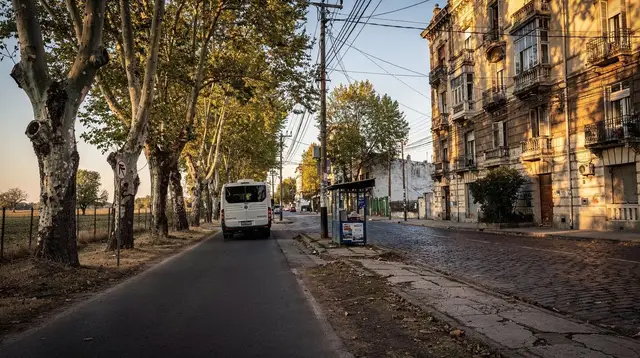
Montevideo Day Trip from Buenos Aires
Can you visit Montevideo as a day trip from Buenos Aires?
Yes, but it is a long one: the fast ferry takes roughly two and a quarter hours each way, so a same-day round trip leaves only a few real hours in the city. Many visitors prefer to stay one night rather than rush back.
Montevideo Is a Different Trip Than Colonia
Buenos Aires sits across the Río de la Plata from two Uruguayan destinations, and it is worth being precise about which one you are planning for, because they are not interchangeable and they are not easily combined into a single day. Colonia del Sacramento is a small, cobbled colonial town, about an hour away by the fastest ferry.
Montevideo is something else entirely: Uruguay’s national capital, a working port city of roughly a million and a half people in its metropolitan area, with a genuine downtown, a national theatre, government buildings, museums and a long riverside promenade. The crossing to Montevideo takes around two hours fifteen minutes on the direct fast ferry — about twice the sailing time to Colonia — and that extra time is the single fact that should shape how you plan this trip.
It is tempting to see both places on a map, a short distance apart, and assume a traveller could see Colonia in the morning and Montevideo in the afternoon. In practice this rarely works well. The direct fast ferry to Montevideo departs from Puerto Madero and sails past Colonia without stopping; getting from Colonia to Montevideo separately means a bus of around two and a half hours, or another boat leg, on top of whatever time you already spent getting to Colonia.
Stacking both destinations into one day usually means several hours in transit and very little time actually spent in either city. If you want to see both, plan them as two separate outings, or accept an overnight stay in Uruguay and treat it as a short two-country trip rather than a single day trip.
If Uruguay is only one stop on a longer Buenos Aires itinerary, it helps to see where each option sits relative to everything else worth doing across the river. The day trips from Buenos Aires overview lays out Montevideo and Colonia alongside the closer options within Argentina — Tigre and the Paraná Delta, the gaucho town of San Antonio de Areco, and the cathedral city of La Plata — so a first-time visitor can decide how much of a limited number of days to spend outside the capital at all, and how much of that allowance Uruguay is worth.
Crossing the River: Ferry Options
The ferry is the only realistic way to reach Montevideo from Buenos Aires for a day visit — there is no direct flight schedule built for a same-day return, and driving would mean a long loop around the river or through Colonia regardless. Two ferry operators run the Río de la Plata crossing, and schedules and exact sailing times change with the season, so always check the current timetable before booking.
| Route | Typical duration | Crossing type |
|---|---|---|
| Buenos Aires (Puerto Madero) → Montevideo, direct | ~2h 15min | Fast ferry, direct |
| Buenos Aires → Colonia → bus → Montevideo | ~4–5h total | Ferry + bus combination |
| Buenos Aires (Puerto Madero) → Colonia del Sacramento | ~1h | Fast ferry, direct |
Every option involves a formal border crossing. Passport control happens at the ferry terminal, on the Argentine side before boarding and on the Uruguayan side on arrival, exactly as it would at an airport. Bring the same passport you used to enter Argentina, and check current entry rules for your nationality before travelling — they vary and they change, and no fixed rule should be assumed without checking the relevant migration authority close to your travel date.
Once you land, Uruguay uses its own currency, the Uruguayan peso (UYU), which is entirely separate from the Argentine peso. Card payment is common in central Montevideo, but it is worth having a little local cash for small vendors, snacks along the Rambla, or a taxi.
a direct day trip across the river to Montevideo is the simplest way to book the crossing with fixed timings already arranged, which matters given how much of the day the ferry itself occupies.
For the mechanics of the crossing itself — terminal check-in windows, luggage rules, and how the two operators’ schedules differ — the dedicated Montevideo ferry guide goes into more detail than fits here. If your plans are still open between the two Uruguayan destinations, the companion Colonia ferry guide covers the shorter crossing on the same terms, which makes it easier to compare the two before booking either one.
Getting to the Puerto Madero Terminal
The ferry terminal sits inside Puerto Madero, the redeveloped dock district on the eastern edge of downtown Buenos Aires, which is itself worth arriving early for rather than treating purely as a departure point. A short walk along the restored docks and the pedestrian Puente de la Mujer, or a stroll into the Costanera Sur nature reserve just beyond it, is an easy way to fill the hour before boarding rather than sitting in a terminal waiting room.
Travellers based in Recoleta, San Telmo or the Microcentro are all within a short taxi or rideshare ride of the terminal; the getting around Buenos Aires overview covers how the city’s taxis, rideshare apps and public transport compare for a trip like this one, and the same guide is worth checking again on the Montevideo side, since Uruguay’s transport apps and payment methods are not the same as Argentina’s.
What a Day in Montevideo Actually Looks Like
Because the round-trip crossing alone can take four and a half hours, a same-day visit to Montevideo means an early outbound sailing and a late return, with the middle of the day free for sightseeing. Realistically, that leaves somewhere between four and six hours in the city itself, which is enough for a focused walk through the historic centre but not enough to see everything Montevideo offers.
Most day visitors concentrate on the Ciudad Vieja, Montevideo’s old town, where colonial-era streets meet early-20th-century buildings. Plaza Independencia is the natural starting point, anchored by the Palacio Salvo and the mausoleum of national hero José Gervasio Artigas beneath the square. From there, pedestrian Calle Sarandí runs through the old town toward the port, past cafés, small museums and the Mercado del Puerto, a covered market known for grilled meat and an easy, informal lunch — Uruguay’s own parrilla tradition, distinct from but closely related to the asado culture across the river.
Along the waterfront, the Rambla — Montevideo’s long riverside promenade — is worth a stretch on foot or by taxi, especially toward Punta Carretas or Pocitos if time allows, giving a sense of the city as a genuinely lived-in capital rather than a tourist set piece. For visitors with more time, the Teatro Solís, Uruguay’s principal opera and theatre house near Plaza Independencia, and the modern Torres de las Comunicaciones area are reasonable additions, but on a tight same-day schedule the old town and the port market are the realistic core of the visit.
a guided full-day itinerary through Montevideo is a practical option if you would rather not plan the walking route yourself, since it structures the limited hours ashore around the main sights without wasted time.
Food is one of the easiest ways to make short hours in Montevideo feel substantial rather than rushed. The Mercado del Puerto is the obvious anchor for lunch, but it is worth remembering that Uruguay’s grilling tradition sits alongside, not underneath, the asado culture on the Argentine side of the river — visitors coming from a parrilla crawl in Palermo or San Telmo will recognise the technique but find a distinct set of cuts and rituals in Montevideo.
If sightseeing on the water appeals more than a walking route, a private sailing trip on the Río de la Plata is a different way to experience the same river, though it is a separate outing from the scheduled ferry crossing and worth treating as its own activity rather than a substitute for it.
Montevideo Versus Colonia: Choosing the Right Uruguay Trip
Confusing these two destinations is the single most common planning mistake for this side of the river, so it is worth stating the difference plainly before booking anything.
| Colonia del Sacramento | Montevideo | |
|---|---|---|
| What it is | Small colonial town, UNESCO-listed old quarter | National capital, large working city |
| Ferry time from Buenos Aires | ~1 hour | ~2h 15min direct |
| Best suited to | A relaxed half-day or day trip | A full day, or better, an overnight stay |
| Atmosphere | Cobbled streets, quiet, compact | Urban, varied, markets, museums, theatre |
| Combinable in one day with the other | Difficult — adds hours of transit | Difficult — same constraint in reverse |
If your time in Buenos Aires is short and you want a genuine taste of Uruguay without eating a whole day, Colonia del Sacramento is the easier choice. If you specifically want to see Uruguay’s capital — its politics, its scale, its port culture — Montevideo is the right destination, but it deserves to be planned as its own trip rather than an add-on to Colonia.
For travellers who do want to see both without shortchanging either, a two-day Colonia and Montevideo itinerary handles the logistics of moving between the two Uruguayan towns, with an overnight built in rather than a rushed connection. Alternatively, a two-day Montevideo getaway focuses purely on the capital and gives the city the time it actually needs.
If Colonia on its own is a better fit for the time available, the Colonia del Sacramento day trip guide covers that shorter crossing in the same level of detail as this page covers Montevideo, and the Colonia and Montevideo itinerary comparison lays out a full three-day structure for travellers who want to see both towns without collapsing them into a single rushed day. A shorter one-day Colonia ferry itinerary is also available for the reverse case — a quick Uruguay stop with the rest of the trip staying in Argentina.
Should You Stay Overnight?
Given the length of the crossing, an overnight stay in Montevideo is worth serious consideration rather than defaulting to a same-day return. Splitting the ferry legs across two days — arriving in the afternoon, spending a full next day in the city, and returning that evening or the following morning — turns a rushed few hours into a proper visit, with time for the Rambla at sunset, a relaxed dinner, and a second morning in the old town before heading back.
a day trip to Montevideo with lunch and ferry included is a good fit for travellers who prefer the crossing and a meal handled for them but still want the day-trip structure rather than an overnight commitment. Whichever approach you choose, book the ferry crossing itself first — it is the fixed point the rest of the day has to work around, in a way that a short hop to Colonia never quite demands.
The ready-made two-day Montevideo ferry itinerary is built around exactly this structure — an afternoon arrival, a full day in the city, and a return crossing the following day — and is a useful reference even for travellers assembling their own version of the trip rather than following it exactly.
It also fits naturally onto the end or the start of a broader Buenos Aires plan, such as the four-day Buenos Aires and Uruguay combo or the longer one-week Buenos Aires, Iguazú and Uruguay itinerary for travellers combining the river crossing with the Iguazú Falls further north.
Practical Notes Before You Go
Sailings can be affected by weather on the Río de la Plata, particularly wind, so it is sensible to arrive at the Puerto Madero terminal with time to spare and to keep return timings flexible where the ticket allows. Bring your passport, check current entry requirements for Uruguay for your nationality before travelling, and expect a short immigration process on both sides of the crossing. Time zones align between Buenos Aires and Montevideo, so there is no clock adjustment to plan around, but do confirm your ferry’s departure time in local terms when booking, since schedules are published by the operator and can shift seasonally.
Money is worth sorting out before you board rather than after. Argentine pesos are not usable in Uruguay, and exchange counters at the ferry terminal are not always the best rate, so it is worth reading the Buenos Aires budget and currency guide for how cash and card use compares across both countries before the trip, and carrying a card that works reliably abroad as the default.
Coming back into Buenos Aires, the ferry docks in Puerto Madero itself, so the return leg does not require the airport transfer logistics covered in the EZE vs AEP airport guide — that guide is only relevant if Montevideo is a stop within a longer Argentina trip that also involves flying in or out.
A same-day Montevideo trip rewards travellers who start early, accept that the ferry itself will take up a meaningful part of the day, and pick one neighbourhood — the Ciudad Vieja and the port — rather than trying to cover the whole city. Those who can spare a second day get a noticeably fuller sense of Uruguay’s capital, and avoid the trap of treating Montevideo as a quick add-on to a Colonia trip when it is, in every practical sense, its own destination.
Frequently Asked Questions About the Montevideo Day Trip
How long does the ferry from Buenos Aires to Montevideo take?
The direct fast ferry from Puerto Madero to Montevideo takes about two hours fifteen minutes, roughly twice as long as the direct fast service to Colonia del Sacramento. Some fares route through Colonia with a bus connection, which takes longer overall.
Is Montevideo the same trip as Colonia del Sacramento?
No. Colonia is a small colonial town about an hour away by fast ferry; Montevideo is Uruguay’s capital, a much larger and more urban city about two and a quarter hours away. They sit on the same ferry network but are two distinct destinations.
Can I visit Montevideo and Colonia in one day?
Not comfortably. Combining both means a long ferry leg, a bus or second boat between the two Uruguayan towns, and very little time actually spent in either place. Treat them as separate trips, or combine them over two days.
Do I need a passport to visit Montevideo?
Yes. Uruguay is a separate country, and passport control happens at the ferry terminal on both the Argentine and Uruguayan sides. Argentine pesos are not usable as local currency; Montevideo uses the Uruguayan peso (UYU).
What is the best way to get around Montevideo once there?
Central Montevideo’s main sights, from the Ciudad Vieja to Plaza Independencia and along the Rambla, are walkable or a short taxi ride apart, so most day visitors do not need to rent a car.
Is it better to do Montevideo as a day trip or an overnight stay?
An overnight stay is more relaxed given the crossing time. A same-day round trip is possible on an early outbound and late return sailing, but it compresses sightseeing into the middle of the day.
What currency is used in Montevideo?
The Uruguayan peso (UYU), not the Argentine peso. Card payment is widely accepted in central Montevideo, but carrying some local cash is useful for small purchases.
Day Trips from Buenos Aires
Verified deep-linked GetYourGuide tours. Book through these links and we earn a small commission at no cost to you.
GetYourGuide does not provide a product photo for this activity — the image shows the meeting point, photographed by us.