Tango Shows vs Milongas: What Actually Happens at Each
The first time someone told me a milonga was “basically a tango show but more casual,” I believed them, and I spent an entire evening standing against a wall wondering why nobody was performing. Nobody was going to. That was the whole point, and it took me a while, and a few wasted evenings, to understand why.
If you have not yet decided which of these two things you even want, start with our beginner’s guide to tango in Buenos Aires, which lays out the basic categories. This piece assumes you already know there is a difference and want to understand it properly before you go.
A show is built to be watched
A dinner-and-show tango house is, honestly, a fine thing to see once. Professional dancers, choreographed numbers, a live orchestra or a very good recording, a set menu, and an audience that came to sit and watch. Nothing about it pretends otherwise: you buy a ticket, you are shown to a table, and the evening happens to you rather than with you. It is theatre with a tango theme, staged for an audience that is, overwhelmingly, visiting the city rather than living in it.
That is not a criticism. A well-run show is technically dazzling in a way that ordinary social dancing simply is not — the lifts, the fast footwork, the drama, none of that belongs on a crowded social dance floor where couples need room to move without colliding. If you want spectacle and you want it on one predictable night with no learning curve, a show delivers it reliably. You can compare formats through our tango dinner shows comparison or look at shows without the dinner if you would rather eat elsewhere first.
Shows also range more widely in price and style than the phrase “dinner and tango” suggests. Our budget options guide covers the more affordable end for travellers watching costs, while the luxury options guide looks at the higher end — better seating, a fuller orchestra, sometimes a more elaborate set. If you would rather not think about transport after a late night out, some houses offer pickup, which our show-with-transfer guide explains in more detail.
A milonga is not a show at all
Here is the correction I wish someone had made for me sooner: a milonga is not staged for visitors, and it is not a performance you attend as a spectator. It is a social dance event, run by and for people — porteños mostly, but increasingly a mixed crowd — who come specifically to dance with each other. Nobody is performing for the room. Everybody in that room, or nearly everybody, is either dancing or waiting to be asked.
That distinction matters because it changes what you are supposed to do when you walk in. At a show, your job is to sit and watch. At a milonga, if you are not there to dance, you are essentially in the way of people who are — though most venues tolerate a quiet spectator at the edges, especially for a class beforehand. Our guide to milongas for visitors goes into venue etiquette in more depth than I can here, but the short version is: come to dance, or come to watch quietly and unobtrusively, and know which one you are doing before you arrive.
The cabeceo, and why it exists
The single hardest thing to explain to a newcomer is the cabeceo — the small, deliberate exchange of eye contact and a nod across the room that, in a proper milonga, substitutes for walking up and asking someone to dance out loud. It looks almost nothing from across the room; that is the point. A dancer catches another’s eye, holds it for a beat, tilts the head slightly toward the floor, and waits for a nod back before crossing to the table.
It exists for a reason that has nothing to do with tradition for its own sake: it lets a refusal happen without anyone having to say no to anyone’s face. If eye contact is not returned, nothing happened, nobody was rejected in front of the room, and both people can pretend the moment never occurred. Walking directly up to someone’s table and asking out loud is, in many milongas, read as slightly clumsy at best and as ignoring the room’s actual code at worst. It is a small thing, and it took me two or three evenings of sitting confused before another dancer quietly explained it to me between tandas.
Seating, tandas, and the shape of an evening
Traditional milongas seat men and women separately, or at least seat by an unspoken logic that puts people in sightline of potential partners — a detail that surprises visitors who expect mixed seating as a default. This is loosening, especially at more contemporary or queer-friendly milongas, but you should not assume a free-for-all seating plan and be caught out.
The dancing itself runs in tandas — sets of three or four songs by the same orchestra or in the same style — separated by a short pause called a cortina, a burst of different, non-tango music that signals partners to separate and return to their seats. You dance a tanda with one partner, not one song at a time with rotating strangers; leaving mid-tanda without a real reason is a minor breach of etiquette. Most milongas that welcome visitors run a beginner class in the hour before the dancing starts, which is genuinely the easiest way to walk in with at least a working sense of the floor. See our beginner tango lessons guide if that is the door you want to walk through first.
Which barrio, which kind of evening
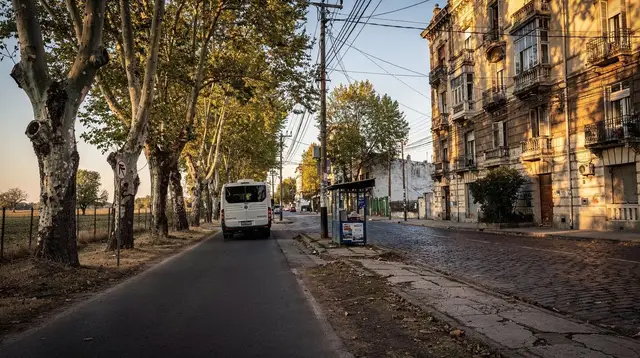
Where you go shapes what you get almost as much as which format you pick. San Telmo is the classic tango barrio — cobbled streets, antique shops by day, and a dense cluster of both milongas and dinner shows by night; our San Telmo neighbourhood guide and San Telmo walking tour are useful context before you commit to an evening there, and our San Telmo tango shows guide narrows it down to the venues specifically.
La Boca, with its painted Caminito lane, leans more toward street-corner performances aimed squarely at day visitors; see our La Boca tango shows guide for what to expect there and how it differs from an evening house. Recoleta, more formal and residential, has its own cluster of polished dinner shows, covered in our best tango shows in Recoleta; our Recoleta neighbourhood guide gives the wider context of the barrio if you are combining the show with a daytime visit to the cemetery.
One venue worth a specific mention is Café Tortoni, the city’s oldest café and a genuine piece of tango history rather than a purpose-built show venue — our Café Tortoni guide and its tango show details cover what the format looks like there. If the history itself interests you more than either a show or a milonga on its own, our tango history walking tour traces the dance’s roots through the barrios where it was born, which adds useful context to everything above.
What I will not give you, and why
I am not going to name a specific milonga, tell you which night of the week is “the good one,” or quote you a cover charge. That is a deliberate omission, not laziness: milonga schedules shift constantly, venues close for renovations or change nights without much notice, and a cover charge quoted today reads as wrong within a season, sometimes within weeks, in a city where prices in general move fast. Any list I wrote here would be stale before you booked your flight. Check current programming close to your travel dates rather than trusting anything printed with a date on it — including this one.
What I can tell you with more confidence is the shape of the experience, because that changes far more slowly than any single venue’s Tuesday schedule. A milonga is social, self-selecting, and coded; a show is staged, ticketed, and passive. Neither is the “authentic” one and the other the fake — they are different things doing different jobs, and conflating them is the single most common mistake I see visitors make, myself included on that first confused evening.
If you want structure before you improvise
If the idea of walking into a room and reading a silent code cold feels like too much on a first night, private lessons are a reasonable bridge — see our private tango lessons guide — and a short, low-stakes evening at a show first, before attempting a milonga, is a perfectly sensible way to ease in rather than a failure of nerve.
If you would rather build tango into a fuller trip than a single evening, our two-day tango and football weekend itinerary pairs a show or milonga with a Boca Juniors or River Plate match, which gives a useful sense of how a night of dance fits alongside the rest of a short Buenos Aires stay.
a polished dinner tango performance with live orchestra is the low-commitment option for a first night, while an intimate tango show in a smaller historic setting trades scale for atmosphere if spectacle is not what you are after. For a broader first look at the city before deciding how deep to go with tango specifically, the four-day Buenos Aires discovery itinerary gives context to the neighbourhoods where both shows and milongas cluster.
Tango shows and milongas: your questions answered
Is a milonga a tourist show?
No, and this is the most common misconception. A milonga is a social dance event for people who come to dance with each other, not a performance staged for an audience. Visitors are usually welcome, but you are stepping into a functioning social scene, not buying a seat at a spectacle.
What is the cabeceo and do I have to use it?
The cabeceo is a nonverbal invitation to dance, made through sustained eye contact and a small nod, traditionally used instead of walking up and asking aloud. You do not strictly have to use it, but understanding it helps you read the room and avoid an awkward direct approach that some dancers find intrusive.
Can beginners go to a milonga?
Yes, especially at milongas that run a beginner class beforehand, which many aimed at a mixed local-and-visitor crowd do. Go with modest expectations for your first visit, expect to spend some of the evening watching, and treat it as a place to observe the codes before you dance much yourself.
What is a tanda and a cortina?
A tanda is a set of three or four songs, usually by the same orchestra, that you dance with one partner rather than swapping every song. The cortina is the short burst of non-tango music between tandas that signals everyone to leave the floor and return to their seats.
Should I book a dinner show or go to a milonga first?
If you want a reliable, ticketed evening with no learning curve, a dinner show is the easier first step. If you want to see how porteños actually dance socially, a milonga is closer to the real thing, but it rewards at least a little preparation — a class beforehand helps enormously.
Why won’t this article name specific milongas or prices?
Because milonga nights, venues, and cover charges change often and without much notice, and any figure printed here would likely be outdated by the time you travel. Check current listings and prices close to your trip rather than relying on a fixed schedule from an article.
Is it rude to just watch at a milonga without dancing?
Not inherently, as long as you are unobtrusive about it — many milongas have spectators, especially early in the evening or during the class. What reads poorly is taking up a table clearly meant for dancers during a busy night without at least attempting to participate.
Do I need to dress up for a milonga?
Smart, neat clothing that allows you to move is the general expectation, though it varies by venue and is generally more relaxed than the formality of a dinner show. Comfortable shoes with a smooth sole that lets you pivot matter more than the outfit itself.
Tour Comparisons
Verified deep-linked GetYourGuide tours. Book through these links and we earn a small commission at no cost to you.
GetYourGuide does not provide a product photo for this activity — the image shows the meeting point, photographed by us.