Milonga or Tango Show? What I Wish I'd Known in Buenos Aires
What's the difference between a milonga and a tango show in Buenos Aires?
A milonga is a real social dance hall where porteños go to dance tango, often with a beginner class beforehand; a dinner tango show is a staged, professional performance aimed at visitors who want to watch rather than dance. One is participation, the other is spectacle, and they exist as two separate worlds in the city.
The tango I expected, and the tango I found
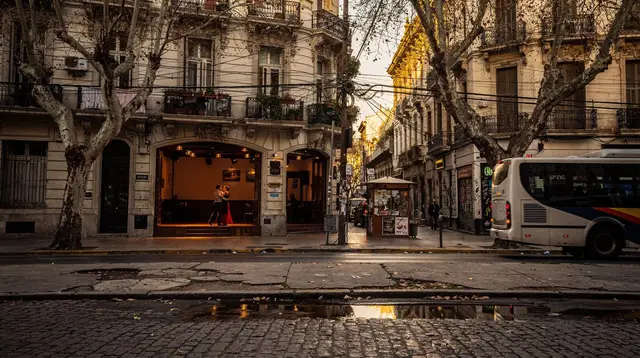
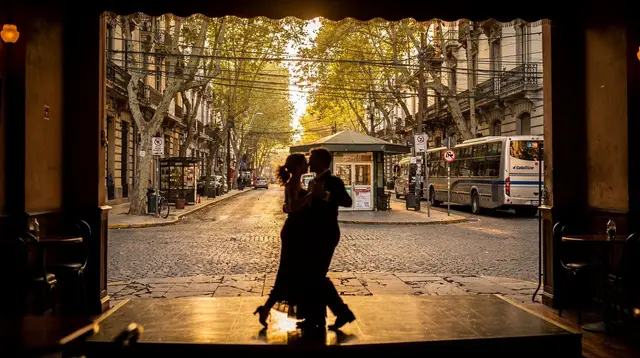
Before I first came to Buenos Aires, my idea of tango was a single image: a couple in a spotlight, the woman in a slit skirt, a bandoneón wheezing somewhere in the dark, and a room full of tourists with cameras. That image exists here, and it’s not fake — but it’s only one slice of what tango actually is in this city, and treating it as the whole picture is the single biggest misunderstanding I see visitors carry in. The bigger, older, more ordinary tango happens on a dance floor with no stage at all, among people who came to dance, not to be watched.
Working out which of these two worlds you actually want takes about thirty seconds of honest thinking about yourself, and it changes the whole evening.
The milonga: a dance floor, not a performance
A milonga is a social dance event — a hall, a DJ or live orchestra playing tango, tanda by tanda, and a room of regulars who know the codes: how you invite someone to dance with a glance across the floor, how the floor moves counter-clockwise, when it’s polite to sit a set out. Many milongas open with a beginner class before the social dancing starts, so you don’t need to already know how to tango to walk in. What you’re buying, in effect, is a evening inside a genuinely local ritual rather than a ticket to watch one.
The atmosphere is unglamorous in the best way: mixed ages, mixed skill levels, people who’ve been coming for decades next to a nervous couple on their third lesson. Nobody is performing for you. If you dance, even badly, you’re part of the room rather than an audience to it. I’d put a milonga with an introductory class ahead of almost anything else on a first tango night in Buenos Aires, precisely because it doesn’t feel staged.
I’m deliberately not naming a specific hall here, or giving times — milongas shift nights, rooms, and schedules more often than any static page can keep up with, and a beginner-friendly class-plus-milonga evening is easy to book once you’re here rather than something to lock in months ahead. For a working shortlist of where and how, our milongas guide for visitors and the walkthrough on beginner tango lessons go into the mechanics.
The dinner show: tango as spectacle, and that’s fine too
The other tango — the one in most postcards — is the dinner-and-show format: a fixed evening at a venue built for it, professional dancers, a live orchestra, choreography, often a set dinner beforehand. It is polished, it is aimed squarely at visitors, and there’s no shame in that. You don’t need rhythm, Spanish, or courage to walk onto a floor; you sit, you eat, you watch people who’ve trained for years do something genuinely spectacular. For a lot of travellers — especially on a short trip, or with people who have zero interest in dancing themselves — that’s exactly the right evening.
Where I think people go wrong is assuming this is the tango experience of Buenos Aires, full stop, rather than one specific and fairly touristy format among several. It’s worth knowing there’s a lighter version too — a show without the dinner, for a shorter, less expensive evening — alongside the full production; our comparison of tango dinner shows and the show-without-dinner option lay out that range. I’m not going to quote you prices here, because these packages get repriced often enough that anything I wrote today would be stale within a season — check current rates when you book.
a polished evening tango show is the easy version of this if you’d rather just watch professionals do the work.
Street tango is a third, smaller thing
Worth separating out from both: the dancers you’ll see performing for tips on Caminito in La Boca or on the pedestrian streets of San Telmo. That’s a third category again — buskers, essentially, putting on a few minutes of tango for passers-by, not a milonga and not a ticketed show. Enjoy it for what it is, tip if you stop to watch, and don’t mistake it for either of the other two.
Which one actually fits what you’re after
I think the honest question isn’t “which is more authentic” — it’s “do I want to participate or do I want to watch.” If you want to move, even clumsily, in a room of real porteños, go to a milonga with a beginner class. If you want a spectacular, effortless evening where someone else does the dancing, book a dinner show. Plenty of people, me included on a longer trip, do both on different nights — they’re not really in competition, they’re answering different questions.
If you want structured hands-on time before either, a private lesson strips away the social-code learning curve of a milonga floor.
a private beginner tango class gets you the basics one-on-one, which made my own first milonga a lot less intimidating.
Where this actually happens around the city
Tango isn’t concentrated in one part of town. Milongas turn up across San Telmo, Palermo, Recoleta, and the wider centre, in halls, cultural clubs, and community centres that don’t always look like much from outside. Dinner shows cluster more in San Telmo and near La Boca, built around fixed, purpose-designed venues. Street performers are almost entirely a San Telmo and La Boca (Caminito) phenomenon, tied to the weekend fair crowds and the pedestrian lane itself.
If you’re building an evening around a neighbourhood rather than a specific event, our guides to San Telmo, La Boca, Palermo, and Recoleta are a better starting point than trying to fix an exact venue from home — and the neighbourhood-specific tango rundowns for La Boca, San Telmo, and Recoleta narrow it further once you know which barrio you’ll be in that night.
What I’d actually tell a first-timer
Don’t buy the costume-and-spotlight image as the whole story before you land, and don’t feel you have to pick only one format either. A milonga is a piece of the city’s actual social life that happens to be dance; a dinner show is a professional performance built for an audience; street tango is a passing few minutes of it on a lane crowded with tourists. None of them is the “fake” one — they’re just doing different jobs.
If your budget or time only stretches to one, ask yourself honestly whether you want to move or to watch, and book accordingly; our rundowns on budget-friendly shows, higher-end productions, and private lessons can help you land on a specific pick once you know which lane you’re in.
Milongas and tango shows in Buenos Aires: FAQ
Do I need dance experience to go to a milonga?
No. Most milongas welcome beginners, and many run an introductory class before the social dancing starts, so you can learn the basics and then stay to practise them on the floor the same night.
Is a dinner tango show “fake” tango?
No — it’s a different, legitimate format: a staged, professional performance built for an audience rather than a participatory social event. It’s not less real, it’s simply not the same thing as a milonga.
Can I just watch at a milonga without dancing?
Generally yes, milongas aren’t exclusively for dancers, but the whole point of the room is social dancing, so you’ll get more out of the evening if you’re at least open to trying, especially if there’s a beginner class first.
What should I wear to a milonga?
Smart-casual is the safe choice — comfortable shoes with a smooth sole that lets you turn are more important than any particular outfit; sneakers can make basic steps harder on a hardwood floor.
Are dinner tango shows worth it if I only have one night in the city?
They’re a strong single-night option precisely because they need no preparation from you and deliver a complete, polished evening in one sitting, which a milonga doesn’t guarantee for a total first-timer.
Where is street tango performed?
Mostly around Caminito in La Boca and the pedestrian streets of San Telmo, especially near weekend market activity — it’s informal busking, not a ticketed event.
Should I book a private lesson before going to a milonga?
It’s not required, but a short private lesson beforehand makes the social codes and basic steps of a milonga far less intimidating for a genuine first-timer.
How do I know which milonga or show to pick, since you don’t list specific ones here?
Because venues, nights, and schedules for milongas change often, use our milongas guide and tango show comparisons for a current shortlist, and confirm details when you book rather than relying on any fixed schedule printed in advance.
Tango Shows and Milongas
Verified deep-linked GetYourGuide tours. Book through these links and we earn a small commission at no cost to you.
GetYourGuide does not provide a product photo for this activity — the image shows the meeting point, photographed by us.