Tango Shows with Hotel Transfer: Are They Worth It?
Is it worth booking a tango show with a round-trip transfer included?
It is worth it mainly for visitors staying outside the centre or uneasy about the return trip after a late show, since the Subte closes early and a booked transfer removes the need to arrange a late-night ride. Visitors staying centrally with an easy walk or a short taxi home often get little extra value from it.
Why the transfer question matters more than it looks
A tango show is a fixed, late-evening commitment. Most houses seat guests between 20:00 and 21:00, run a dinner service if dinner is included, and the performance itself often doesn’t wrap up until well past 23:00 — sometimes closer to midnight. That single fact, more than the show itself, is what decides whether a round-trip transfer is worth adding to your booking. The question isn’t really about tango. It’s about how you plan to get back to where you’re sleeping once the lights come up on a Tuesday night in a barrio you may not know well.
This page looks at that logistics question on its own terms, separate from which show to pick or how the culture works. For the cultural and stylistic side — dinner shows versus milongas versus street tango — see our broader guide to tango shows in Buenos Aires and the comparison of dinner tango shows. Here, the focus is narrower: transport, timing, and the honest limits of what a bundled transfer actually buys you.
What a “with transfer” package actually includes
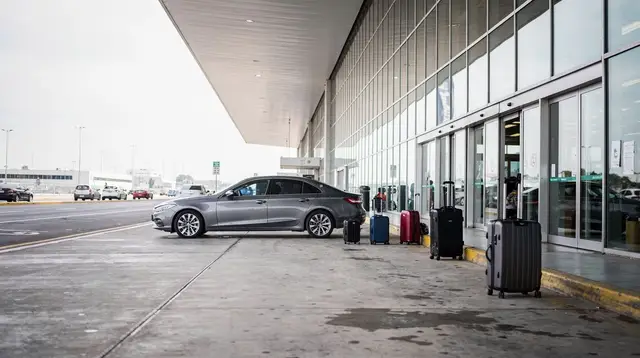
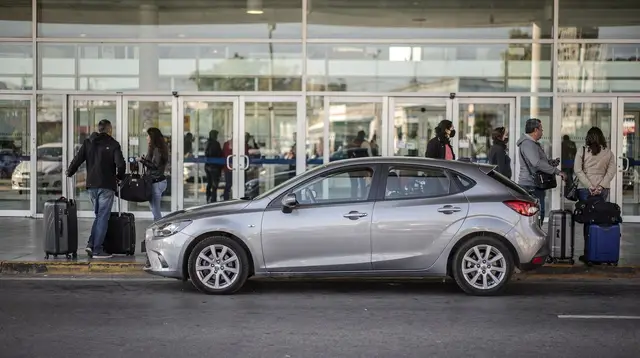
When a tour operator lists a show as including transfers, it generally means a driver picks you up from your accommodation (or a small number of central pickup points) before the show, drops you at the venue, and returns after the performance to take you back. It is almost always a shared minivan service picking up several parties along a route, not a private car reserved exclusively for you — worth knowing if you’re expecting door-to-door speed rather than a shared loop through a few hotels.
The pickup is usually confirmed the day before or the morning of the show, with a rough pickup window rather than an exact minute. The return leg works the same way in reverse: once the show ends, guests are gathered and driven back along a similar route, dropping people off roughly in the order that makes sense geographically, not necessarily in the order they boarded.
This matters for the length of the evening. If you are the last drop-off on the route, your night runs measurably longer than if you’re first. That’s one more reason we won’t give you a fixed door-to-door time below — it depends on where your hotel sits relative to everyone else’s on that night’s route, which no page can know in advance.
Why we won’t quote you a fixed transfer time
It would be convenient to write “the transfer takes 40 minutes” and move on. We’re not going to, because it would very likely be wrong for you specifically. Buenos Aires is a large, dense city, and the honest answer depends on three things that vary by booking:
- Where you’re staying. A hotel in Recoleta or the Microcentro sits close to most show venues; a rental apartment in Belgrano, Núñez or further out in the conurbano can add a meaningful chunk of driving time each way.
- What time you travel. Buenos Aires traffic is unpredictable outside rush hour too — an evening football match, a public holiday, or simple bad luck with traffic lights can change a route’s duration night to night.
- How many other pickups or drop-offs are on your route. A shared shuttle serving five hotels before or after yours adds real time that has nothing to do with distance.
Any fixed number quoted elsewhere is a guess dressed up as a fact. Ask your specific operator for a rough estimate once you’ve given them your accommodation address — that’s the only reliable version of this answer.
The Subte problem, plainly
Here is the detail that makes a transfer genuinely useful rather than a nice-to-have upsell: Buenos Aires’s metro, the Subte, closes early in the evening. It is simply not running by the time a tango show — dinner or otherwise — lets out. This is different from many European or North American cities where a late metro or night bus network is part of normal late-evening planning.
That doesn’t mean you’re stranded. Buses (colectivos) run through the night on many routes, and taxis, remises (pre-booked cars) and ride-hailing apps all operate normally at any hour. The point is narrower: the Subte is off the table for the return leg, so whatever plan you make for getting home from a show has to route around it. A transfer solves that automatically. Arranging your own taxi or app ride from outside the venue solves it too — it just means you’re the one doing the arranging, at 23:30, possibly in a part of town you don’t know, rather than a driver who already has your hotel address and is waiting for you.
Who actually benefits from booking the transfer
Booking a transfer earns its place for a specific set of visitors more than others:
- Guests staying outside the centre. If your accommodation is in Belgrano, Núñez, further out in Palermo, or anywhere that isn’t a short, familiar walk or ride from downtown, not having to find a late-night car yourself is a real convenience.
- First-time visitors unsure of the city at night. If you don’t yet have a feel for which streets are quiet-but-fine versus best avoided after dark, a transfer removes that judgment call entirely.
- Anyone travelling without a working local phone plan or data. Booking a ride-hailing app at 23:30 outside an unfamiliar venue is much easier with working internet. Without it, a pre-arranged transfer avoids the problem altogether.
- Groups who’d rather not split up finding two taxis after a show. A confirmed transfer keeps everyone together without negotiating on the sidewalk.
- Anyone travelling solo who prefers not to wait alone outside a venue late at night while arranging a ride.
Who can reasonably skip it
The transfer is genuinely optional — not a safety requirement — for other visitors:
- Guests staying in or very near the centre, where the venue is a short, well-lit walk or a five-minute taxi ride, with no meaningful savings in convenience from a scheduled pickup.
- Anyone comfortable using a ride-hailing app, which works reliably in Buenos Aires at night and can usually be called from directly outside the venue once the show ends.
- Travellers already planning to combine the evening with something else — dinner elsewhere beforehand, or a later stop on the way back — where a fixed transfer schedule would actually be less flexible, not more convenient.
- Budget-conscious visitors for whom the price difference between a transfer package and a standalone show ticket plus a taxi matters more than the convenience.
Transfer vs. arranging your own ride: a fair comparison
| Included transfer | Your own taxi / rideshare | |
|---|---|---|
| Booking effort | Arranged in advance with the show | Arranged on the night, after the show |
| Cost | Bundled into the ticket price | Paid separately, usually similar to or less than the bundled cost |
| Flexibility | Fixed pickup and return schedule | Leave whenever you’re ready |
| Vehicle type | Usually shared minivan, multiple stops | Private car, direct route |
| Local knowledge needed | None | Minimal — apps and taxi ranks are straightforward |
| Best for | Unfamiliar areas, no data plan, first-time visitors, groups | Central stays, confident independent travellers |
Neither option is objectively better — it genuinely depends on where you’re staying and how comfortable you are arranging a late-night ride yourself.
Dinner shows and the late-night factor
Shows that include dinner tend to run the longest evenings, simply because the meal service adds an hour or more before the performance even starts. If you’re booking a dinner-and-show format, the return-transport question becomes more pressing than for a shorter, show-only format, precisely because you’re more likely to be walking out well after 23:00 or into the small hours.
a dinner tango show with round-trip transfers included bundles the whole evening — pickup, dinner, performance, and the ride home — into one booking, which is exactly the format worth considering if your accommodation sits outside easy walking distance of the venue.
For a version that blends folk music with tango over the same dinner format, a tango and folklore show with dinner and transfer is a comparable option. If you’d rather keep dinner and transport simple without a folklore segment, a straightforward tango show with dinner covers the same late-evening logistics.
None of these packages change how tango itself works — for that, our dinner shows comparison and the difference between dinner shows and no-dinner shows are the better starting points. This page’s job is only to help you decide whether the transfer line item is worth paying for, given where you’re sleeping that night.
Combining a transfer with daytime plans
Some visitors extend the idea of a transfer beyond the tango show itself, pairing an evening performance with a guided day out that also includes pickup and drop-off. a classic guided city tour with transfer is a common way to see the Microcentro, Plaza de Mayo and other central landmarks earlier in the day, using the same logic — a driver who already knows your accommodation, useful if you’re staying somewhere that makes independent travel around the city more of a chore.
If your hotel or apartment sits near Belgrano or further from the show venues clustered around San Telmo, Recoleta and the Microcentro, stacking a transfer-included daytime activity with a transfer-included evening show can simplify a full day without you needing to arrange transport more than once.
Practical notes for the night itself
A few things are worth knowing regardless of which option you choose:
- Confirm your pickup point precisely. If you’re staying somewhere the driver might not find easily — a small guesthouse, an apartment building with an unclear entrance — confirm the address and any building details when you book, not on the night.
- Have a backup plan. Even with a confirmed transfer, it’s sensible to know that taxis and rideshare apps are a normal fallback in Buenos Aires if a pickup is delayed or a plan changes.
- Keep valuables out of sight while waiting outside a venue. Buenos Aires’s main safety concern is opportunistic theft — phones taken from a hand or a café table — rather than anything more serious, and that applies just as much standing outside a tango venue at night as anywhere else in the city.
- Remember the Subte simply isn’t an option for the return leg. Whatever you decide, build your evening around buses, taxis, rideshare apps or a booked transfer — not the metro.
- A modest tip for a transfer driver is appreciated, not required. As with the roughly 10% norm in restaurants, it’s a gesture rather than an obligation.
Tango show transfers in Buenos Aires: frequently asked questions
Does the transfer save real money compared with a taxi?
Rarely by much. The transfer is bundled into the ticket price and mainly buys certainty and a driver who already knows the venue, not a discount.
Can I skip the transfer and just take a taxi or rideshare home?
Yes. Taxis, remises and ride-hailing apps all operate late at night in Buenos Aires and are a normal way to get back from a show.
Why can’t I take the Subte back after a late tango show?
The Subte closes early in the evening, well before most tango shows end, so it is not an option for the return leg regardless of where you are staying.
How long does the pickup and drop-off actually take?
It depends entirely on where you are staying and on traffic that night, so no fixed duration is reliable. Treat any number quoted elsewhere as a rough guide, not a promise.
Is a transfer more useful for a dinner show or a show without dinner?
Either can include one. Dinner shows tend to run later into the night, which is exactly when the lack of Subte service and the desire for a known, pre-arranged ride matter most.
Do I need to tip the transfer driver separately?
It is not required. If service has been helpful, a modest gesture in cash is appreciated, in line with general tipping norms in Buenos Aires, but it is not expected the way a restaurant tip is.
Is the return leg safe without a transfer included?
Taxis, remises and rideshare apps are all normal and widely used at night. The main caution in Buenos Aires is opportunistic theft rather than a general danger, so the usual care with phones and valuables applies more than any special nighttime risk.
Getting Around Buenos Aires
Verified deep-linked GetYourGuide tours. Book through these links and we earn a small commission at no cost to you.
GetYourGuide does not provide a product photo for this activity — the image shows the meeting point, photographed by us.