El Ateneo Grand Splendid: Inside the Bookstore in a Buenos Aires Theatre
Is El Ateneo Grand Splendid worth visiting if I'm not a big reader?
Yes — it's a converted 1919 theatre on Avenida Santa Fe, so the draw is the architecture and atmosphere as much as the books. Entry is free, it's a working shop with real stock, and most visits last well under an hour.
I almost skipped El Ateneo Grand Splendid on my first trip to Buenos Aires. I’d seen the photos — the gilded ceiling, the red stage curtain, people reading in what used to be theatre boxes — and assumed it was one of those places that exists purely to be photographed, with a coffee-table’s worth of postcards for sale and not much else. I was wrong, and I think a lot of visitors make the same mistake before they ever walk in.
A theatre first, a bookshop second
El Ateneo Grand Splendid opened as the Teatro Grand Splendid in 1919, on Avenida Santa Fe in the Recoleta / Barrio Norte area, a few blocks from the grander mansions and embassies that give this stretch of the city its formal, European feel. It was built as a stage for opera, tango and, later, one of the first cinemas in Buenos Aires to show films with sound. The bones of that theatre are still entirely intact: a painted dome ceiling with frescoes, ornate plasterwork, tiered balconies, and a proscenium arch that now frames a small café instead of a stage.
The bookshop chain El Ateneo took over the building in the year 2000 and did something I think is genuinely rare — instead of gutting the theatre to make room for shelving, they built the shop around it. The stalls where the audience once sat are now lined with bookcases. The boxes along the sides, where wealthier patrons watched the show, are reading nooks. And the stage itself, red curtain and all, holds a café where you can sit with a coffee and a medialuna under the proscenium arch. It’s one of the few places in the city where a working commercial space and a piece of early-twentieth-century theatre architecture occupy exactly the same footprint, at the same time, without either one being a museum piece behind glass.
Why it pulls in people who never buy a book
I’ve watched the crowd here for a while, and it’s a mix: readers browsing the Spanish-language fiction and travel sections, students doing homework at the café tables, and a steady stream of visitors who walk in with a phone out and walk a slow loop of the balconies before leaving with nothing. All three groups are doing something reasonable. The architecture is the headline attraction for a lot of people, and that’s fine — it doesn’t cheapen the place to admit that the ceiling and the stage are the first thing anyone notices.
Where I’d push back a little is on the idea that it’s only a photo stop. It’s a real, functioning bookshop with a large and current stock — Spanish-language titles dominate, but there’s a reasonable English and multilingual shelf too, along with music, stationery and gift sections spread across the building’s several levels. Staff work the floor, tills run all day, and the café serves actual meals, not just a symbolic espresso. Treating it purely as a backdrop means missing that it still does the job a bookshop is supposed to do.
Where it sits, and how to fold it into a Recoleta visit
El Ateneo sits on Avenida Santa Fe, on the edge of what’s usually described as Recoleta or Barrio Norte depending on exactly which block you’re standing on — this is the calmer, more residential side of the barrio, a short walk from the grander sights around the Recoleta Cemetery. If you’re already planning a morning around the Recoleta neighbourhood — the cemetery, the surrounding cafés, maybe the Centro Cultural Recoleta — this bookshop slots in naturally as a stop of twenty minutes to an hour, not a separate outing that needs its own trip across the city.
I’d suggest treating it as a pause rather than a destination in its own right. Combine it with the Recoleta neighbourhood guide or a proper Recoleta cemetery walk for the fuller half-day, and you get architecture, history and a coffee break in a single loop without much backtracking. Avenida Santa Fe itself is worth a slow walk too — it’s one of the city’s long commercial spines, and El Ateneo is one of its more elegant stops rather than an isolated attraction.
What I’d actually tell a first-time visitor
Go, but keep your expectations calibrated. This is not the Teatro Colón — Buenos Aires’s working opera house, which runs proper guided tours and evening performances and rewards a couple of hours — and I wouldn’t build a whole afternoon around El Ateneo the way I would around the Colón. It’s a genuinely lovely stop precisely because it’s compact: walk in, take in the ceiling and the stage, browse a shelf or two, maybe have a coffee at a table that used to be part of the orchestra pit, and move on. Most visits I’ve seen last somewhere between fifteen minutes and an hour, and that feels about right.
It’s also worth knowing this is a shop inside a retail chain, not a heritage site run by a cultural institution, so don’t expect information panels or a formal tour. Nobody will explain the building’s history to you at the door — if that’s what you want, look it up beforehand or read a dedicated guide before you go, because the shop itself won’t offer much more than a very good setting.
Practical notes I won’t pretend to nail down
I’m deliberately not going to give you an opening time or tell you when it’s quietest, and here’s why: retail hours in Buenos Aires shift with the season and with the shop’s own decisions, and a bookshop this photogenic sees very different crowds depending on the day, the time, and whether a tour group has just arrived. Anything I wrote here as a fixed number would likely be wrong within a few months. Check the current hours online or by phone before you go, and if a quiet visit matters to you, aim for a weekday morning rather than a weekend afternoon — that’s a general pattern for busy central Buenos Aires attractions, not a guarantee for this specific shop.
Rounding out the day
If your Recoleta morning leaves you wanting a proper evening out afterwards, Buenos Aires does that well — a Rojo Tango show with dinner is a fairly classic way to close a day that started among bookshelves and mausoleums, and it’s a world away from El Ateneo’s quiet, literary atmosphere: a dinner-and-tango show at Rojo Tango. For something more intimate and less produced, there’s also the Aljibe tango show, staged in a smaller venue.
If Recoleta and El Ateneo end up being just one stop on a longer stay, it’s worth looking at how the rest of your days fit together — the Recoleta city tour and a broader Buenos Aires in one day itinerary both use this part of the city as an anchor, and pair naturally with day trips further out, like a gaucho day out on the pampas with an asado lunch.
For planning where to base yourself for a trip that includes this kind of neighbourhood wandering, our guide to where to stay by neighbourhood and general Buenos Aires itinerary advice are good next reads.
A half-day city tour or the wider Palermo Soho/Hollywood guide and San Telmo neighbourhood guide round out the picture if this is your first visit and you’re still deciding how to split your days, alongside a two-day Palermo and Recoleta itinerary and the general things to do in Recoleta listing.
El Ateneo Grand Splendid: frequently asked questions
Is entry to El Ateneo Grand Splendid free?
Yes, walking in and browsing costs nothing — it’s a normal, open bookshop, not a ticketed attraction. You only pay if you buy something or sit down at the café.
How long should I plan to spend there?
Most visitors spend somewhere between fifteen minutes and an hour. It rewards a slow look at the ceiling, stage and balconies, but it’s a compact building and there isn’t a long, structured visit to work through.
Can I actually buy books there, and are any in English?
Yes, it’s a fully stocked working bookshop. The majority of titles are in Spanish, but there’s a smaller selection of English-language and multilingual books, plus music, stationery and gifts.
What time is it least crowded?
I won’t put a specific time on this because it shifts with the season and with tour group schedules. As a general rule, weekday mornings tend to be calmer than weekend afternoons in busy central attractions, but check current conditions rather than planning around an old estimate.
Is it the same as the Teatro Colón?
No. The Teatro Colón is Buenos Aires’s working opera house, with ticketed guided tours and evening performances. El Ateneo Grand Splendid is a bookshop inside a former theatre — there are no performances, and the “show” is the building itself.
Where exactly is it located?
It’s on Avenida Santa Fe, on the Recoleta / Barrio Norte side of the city, within reasonable walking distance of the Recoleta Cemetery and the surrounding cafés and streets.
Do I need to check opening hours before I go?
Yes. Retail hours change, and I’d rather send you to check online or by phone than hand you a number that’s gone stale by the time you read this.
Is it worth visiting if I’m not interested in buying books?
I’d say yes, briefly. The architecture and atmosphere are the real draw for most visitors, and since entry is free and the visit is short, it’s an easy add-on to a Recoleta morning rather than a destination that needs to justify a special trip.
tours.Culture
Verified deep-linked GetYourGuide tours. Book through these links and we earn a small commission at no cost to you.
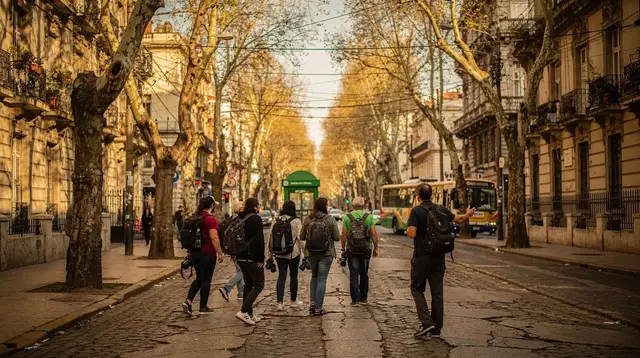
GetYourGuide does not provide a product photo for this activity — the image shows the meeting point, photographed by us.