The Superclásico: Understanding Boca vs River
What is the Superclásico and why does it matter so much?
The Superclásico is the match between Boca Juniors and River Plate, Argentina's two biggest clubs, and it is widely regarded as one of the most intense club rivalries in world football. It carries a century of class, geographic and cultural history layered on top of raw sporting rivalry, and it is policed with a level of security that reflects real, documented tension rather than hype.
A rivalry that goes well beyond ninety minutes
Every football city claims its derby is the fiercest, but Buenos Aires has a stronger case than most. The Superclásico, the meeting of Boca Juniors and River Plate, is regularly ranked among the most intense club rivalries anywhere in the world, and unlike a lot of manufactured “biggest rivalry” claims, this one is backed by a documented history of crowd violence, permanent supporter segregation, and a 2018 Copa Libertadores final that had to be relocated to another continent.
This guide is about understanding what the match means and why it is handled the way it is. It does not cover how to buy tickets or attend safely in practical terms — for that, see the dedicated Boca Juniors vs River Plate tickets guide.
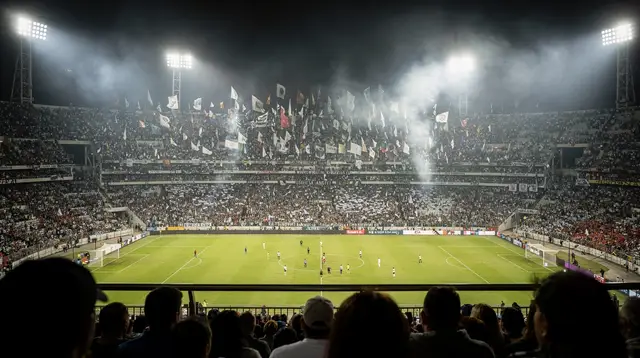
Boca Juniors play at La Bombonera in the dockside barrio of La Boca; River Plate play at El Monumental in the northern district of Núñez. The physical distance between the two grounds, roughly eight kilometres, is small. The cultural distance the clubs have built around themselves over more than a century is much larger, and that gap is the real subject of this page.
Where the divide actually comes from
Both clubs were founded within a few years of each other in the early twentieth century, in the same corner of the city: the working port district of La Boca, filled with Italian and Spanish immigrant labour, dockworkers and warehouses. Boca Juniors stayed there. River Plate did not. In the 1920s, River relocated north to Núñez, a wealthier, more residential part of the city near the river, and built a large modern stadium there — El Monumental, still the biggest ground in Argentina and the usual venue for the national team.
That single decision, to move away from the docks, hardened into a lasting identity split that outlives any specific generation of players. Boca is popularly cast as the club of the working port, the barrio, the people who stayed; River as the club of the north, associated — fairly or not — with money and social standing. Argentines have nicknames for this that translate roughly as “the people” versus “the millionaires,” and both clubs’ supporters lean into the caricature rather than deny it.
It is worth being clear that this is a broad cultural shorthand, not a literal description of who actually attends each club’s matches today — both have enormous, socially mixed fan bases across the country and well beyond it. But the shorthand is exactly what gets amplified, chanted, painted on walls and printed on banners every time the two sides meet.
Layered on top of the class narrative is a century of pure sporting stakes. Boca and River are, by a wide margin, Argentina’s two most successful clubs domestically and the two with the largest, most widely distributed fan bases in the country — a Boca or River shirt is common well outside Buenos Aires, in provinces that have no direct connection to either barrio. That means the Superclásico is rarely a low-stakes fixture between mid-table sides; it is very often a genuine title decider, a continental knockout tie, or both, which raises the emotional and financial temperature further.
Why this is not just “a big local derby”
It is worth saying plainly, because guides to Buenos Aires sometimes soften this for a general audience: the tension around this fixture is real, current and repeatedly documented, not folklore from decades past. Argentine football in general has a well-known and ongoing problem with organised, sometimes violent supporter groups known as barras bravas, who operate around ticket distribution, travel and stadium access as much as they do inside the ground itself. The Superclásico, as the highest-profile and highest-stakes fixture in the country, draws the sharpest edges of this problem.
The clearest single illustration is the 2018 Copa Libertadores final. The two legs of that continental final happened to be a Superclásico, and ahead of the second leg at El Monumental, the Boca team bus was attacked by River supporters near the stadium; several Boca players were injured by broken glass and had to be treated before any decision could even be made about playing. The match was postponed, then postponed again, and was eventually moved out of Argentina altogether, played weeks later in Madrid on neutral ground — an almost unheard-of outcome for a club final and a measure of how seriously the confederation judged the risk of playing it, in any form, back in Buenos Aires.
It remains the reference point whenever football administrators, police or journalists discuss the fixture’s risk profile, and it is not an isolated data point: incidents around Superclásico weekends, from trouble at away supporters’ homes and businesses to clashes near stadium perimeters, recur with enough regularity that Argentine police treat every fixture as a distinct operational challenge, not a routine derby.
None of this means the match cannot be watched safely by a visitor with the right arrangements — thousands of tourists do every season, through the club-approved hospitality route covered in the ticketing guide. It does mean this page will not pretend the fixture is simply a colourful, noisy party with some extra flags. The scale of the policing response described below only makes sense once the underlying history is taken seriously.
No away fans: the policy that shapes everything else
The single biggest structural fact about attending Argentine football today, and especially the Superclásico, is that away supporters are barred from the vast majority of league fixtures, a policy that has been in place, on and off and then more or less permanently, for years, following repeated incidents of serious violence tied to travelling fan groups. For the Superclásico specifically, this is applied without exception: there is no visiting end, no away allocation, and no legitimate route to sit among opposing supporters. Every ticket sold for the match, through whatever channel, is effectively a home-supporter ticket for whichever club is hosting that leg.
This single rule reshapes the entire experience compared with a derby in a country where segregated-but-present away support is normal. There is no cross-stadium banter, no travelling end waving flags back at the home crowd; the opposing club’s presence is felt almost entirely through noise, murals, chants about the other side, and, for the away team’s actual travelling party — players, staff, a small officially sanctioned group — under heavy escort that keeps them physically separate from any general public route in and out of the ground.
What the security operation actually looks like
Because there is no informal mixing to manage, most of the operational effort for a Superclásico goes into keeping the two fan bases from ever being in the same physical space at all, from hours before kickoff to well after the final whistle. In practice this tends to include:
- Large, dedicated police and stadium-security deployments well beyond what a routine league fixture receives, often including mounted police, riot units held in reserve, and coordination between city and provincial forces depending on which ground is hosting.
- Separate, pre-assigned arrival routes, timed entry windows and transport corridors for supporters, designed to prevent home and travelling-party movements from crossing in surrounding streets.
- Extensive perimeter control around both La Bombonera and El Monumental on matchday, with roads closed, vehicle checkpoints and a security cordon that starts well outside the stadium footprint itself.
- Close control of the away team’s own travelling delegation — players, coaching staff, sometimes club directors — including bus routes, escorts and timing, a direct legacy of the 2018 bus attack.
- Staggered release of crowds after the final whistle, holding one set of supporters inside or nearby while the other set is dispersed, specifically to avoid the two groups ending up on the same streets at the same time.
None of these measures are unique inventions for a single match; they are the standard toolkit used, at lower intensity, for other high-risk Argentine fixtures. What marks the Superclásico out is the scale at which they are applied and the near-total absence of tolerance for improvisation on the day. If you are in Buenos Aires on a Superclásico weekend, even without a ticket, expect visible extra police presence, road closures near both stadiums, and a noticeably different atmosphere across the city, particularly in La Boca and the streets around Núñez.
The atmosphere, and where visitors actually experience it
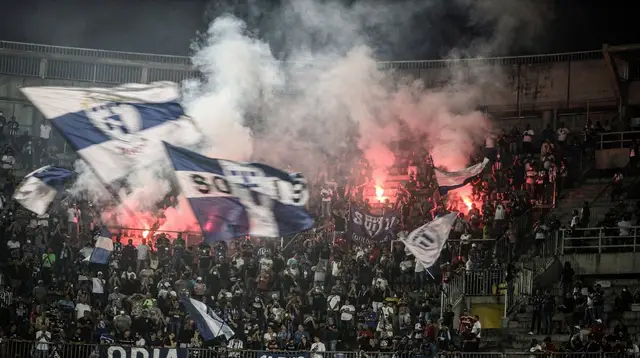
For a visitor who does not have a hospitality ticket for the match itself, the Superclásico is still very much visible and audible across the city. Bars in La Boca, especially those close to the Caminito tourist strip, and across working-class neighbourhoods generally, fill early with fans in blue and yellow well before kickoff; the same happens in blue-and-white-supporting bars closer to Núñez and across much of the rest of the city, since River’s support is not confined to one district.
Car horns, flares seen from a distance, and impromptu chanting in the streets are a normal part of matchday even far from either ground, and taxi and rideshare drivers will often have the match on the radio regardless of which club they support.
This ambient experience — following the match from a bar, hearing the city react in real time — is, for most visitors without an advance hospitality booking, actually the more realistic way to feel the rivalry’s intensity than trying to arrange a ticket at short notice.
It also comes with the same common-sense caution that applies to any charged football night anywhere: choose which bar you’re in deliberately (a room full of one set of colours is not the place to wear the other), keep celebrations or commentary measured around strangers, and treat the hours immediately after the final whistle, when emotions are highest and streets are busiest, as the moment to be most unhurried and least conspicuous, rather than the moment to linger outdoors near either stadium.
Stadium tours at both grounds run outside matchday hours and are the most reliable way to get close to the rivalry’s material culture without any of the operational complexity of the match itself — trophy rooms, dressing rooms, the pitch-side view, and museum exhibits that each club curates about its own history, inevitably including its version of the rivalry. See the separate guides to the La Bombonera museum and stadium tour and the El Monumental museum and stadium tour, and the comparison of football stadium tours if deciding between the two.
Maradona, and the rivalry’s biggest individual figure
No account of Boca’s side of this rivalry is complete without Diego Maradona, whose identity as a boyhood Boca fan turned Boca player and, later, outspoken lifelong Boca supporter remains central to how the club’s fan culture presents itself. Maradona’s connection to Boca is genuinely older than his fame — he grew up idolising the club before he ever played for it — and his image is everywhere in and around La Bombonera and across La Boca more broadly, from murals to shirt-shop windows to chants that still reference him directly.
Visitors curious about that layer of the story, separate from a match itself, can visit the house where he lived as a boy; see the guided tour of Maradona’s real 1978–1980 house for context, offered as a small-group visit with a guide:
a guided visit to the house where Diego Maradona actually lived in the late 1970sRiver’s own pantheon of legendary figures is less built around a single global name and more around a longer list of star players across decades, but the club’s identity — as the more resourced, historically trophy-laden side associated with the north of the city — is argued with just as much intensity by its own supporters, and that argument is, in the end, what a Superclásico actually is: two competing self-images, replayed on a pitch, in front of a country that rarely agrees on anything else in football as unanimously as it agrees this is the match that matters most.
Getting closer to football culture without the risk profile of the fixture itself
For visitors who want a genuine, guided introduction to Argentine football culture — stadiums, local knowledge, context on the rivalries — without navigating hospitality-ticket logistics for the single highest-risk fixture on the calendar, a private guided football tour is a lower-friction starting point, typically covering one or both stadiums from the outside, the surrounding neighbourhoods, and the history behind them with a local guide who can explain what a visitor is looking at:
a private, guide-led football tour of Buenos Aires with hotel pickupBuenos Aires’ football culture also extends well beyond its two giants. Argentinos Juniors, based in the La Paternal neighbourhood not far from La Boca, is another historic city club with its own passionate, more local following and its own smaller-scale rivalries, and following a lower-profile match day is, for some visitors, a genuinely calmer way to experience live Argentine football culture up close:
a guided outing to an Argentinos Juniors match day in Buenos AiresBeyond football specifically, the neighbourhoods that gave rise to this rivalry reward a slower look on foot; the broader La Boca neighbourhood guide and the things to do near La Bombonera and things to do near El Monumental pages both go into the surrounding streets, murals and everyday life of each barrio, independent of any matchday.
Superclásico weekend, in brief
| What | Detail |
|---|---|
| Fixture | Boca Juniors (La Bombonera, La Boca) vs River Plate (El Monumental, Núñez) |
| Away fans | Not permitted at this fixture; segregation is total |
| Security posture | Substantially heavier than a routine league match; extended perimeters, escorted team transport, staggered crowd release |
| Reference incident | 2018 Copa Libertadores final second leg, moved to Madrid after the Boca bus was attacked |
| Realistic visitor experience without match tickets | Bars in La Boca or near Núñez on matchday; stadium tours outside matchday; guided football-culture tours |
| Ticketing and attending safely | Covered separately in the Boca Juniors vs River Plate tickets guide |
| Broader safety context | See the football match safety guide and is Buenos Aires safe |
Frequently asked questions about the Boca–River rivalry
Is the Superclásico dangerous for visitors to attend?
Attending as part of an organised, licensed hospitality package is done safely every season by visitors, but the fixture is treated by the clubs, the police and the league as a genuinely high-risk event rather than a routine match, and the security measures around it — described above — exist because of a real, repeated history of trouble, not out of excess caution.
Why are away fans banned from the Superclásico?
Argentina has restricted or barred travelling supporters from most league fixtures for years, following a long run of serious incidents tied to organised fan groups, and the policy is applied without exception to the Superclásico, the highest-risk fixture on the domestic calendar.
Where does the Boca–River rivalry come from?
The two clubs were founded close together in the dockside barrio of La Boca in the early twentieth century, but River relocated north to the wealthier area of Núñez in the 1920s, and that split hardened into a lasting class-and-neighbourhood narrative — the port club versus the uptown club — that sits alongside a century of purely sporting rivalry between Argentina’s two most successful and widely supported teams.
What happened with the 2018 Copa Libertadores final?
The second leg of that continental final was a Superclásico, and ahead of kickoff the Boca team bus was attacked by River supporters near El Monumental, injuring players with broken glass. The match was postponed repeatedly and ultimately relocated entirely, played weeks later in Madrid — the clearest single illustration of how seriously this fixture’s risk is taken.
Do Boca and River fans mix in the stadium?
No, never. Segregation is complete and enforced well beyond the stadium itself, including separate arrival routes, timed entry and staggered departures designed to prevent the two sets of supporters from occupying the same streets at the same time.
Is it still worth learning about the rivalry if I can’t get to a match?
Yes. Stadium tours at both grounds, the surrounding neighbourhoods of La Boca and Núñez, and the murals and museums each club maintains tell a large part of the story without any of the logistics or risk profile of attending a live Superclásico.
Is Diego Maradona connected to the rivalry?
Maradona is one of Boca’s most revered figures, a boyhood fan who became a player and remained an outspoken supporter of the club for life, and his image is woven through Boca’s identity against River even though the rivalry itself long predates his career.
Can I watch the Superclásico safely without a hospitality ticket?
Yes — following the match from a bar in a neighbourhood that matches your own low profile, rather than trying to be near either stadium on the day, is the realistic option for most visitors, and it still gives a genuine sense of how much the city cares about this single match.
Football Matches and Stadium Tours
Verified deep-linked GetYourGuide tours. Book through these links and we earn a small commission at no cost to you.
GetYourGuide does not provide a product photo for this activity — the image shows the meeting point, photographed by us.