How to Plan a Trip to Buenos Aires: The Order I'd Do It In
What's the right order to plan a first trip to Buenos Aires?
Book your flight into Ezeiza (EZE), not Aeroparque (AEP), then pick a base neighbourhood, get a SUBE card on arrival, and budget in euros or dollars rather than pesos because of inflation. Slot in optional trips to Tigre, Uruguay or Iguazú only once the city plan is set.
Start With the Airport Confusion, Not the Itinerary
The first mistake I nearly made planning my own trip to Buenos Aires was assuming there was one airport. There isn’t. Almost every long-haul flight lands at Ezeiza, usually written EZE, which sits 30 to 35 km south-west of the centre and can take anywhere from 45 minutes to well over an hour depending on traffic. Aeroparque, AEP, is a different airport entirely, right on the riverfront near Palermo, used for domestic and regional hops.
If your itinerary has you flying in from Europe or North America and someone mentions Aeroparque, stop and double-check — connecting between the two means crossing the whole city, and I’d never build that into a single travel day. I’ve written up the full comparison separately if you want the detail: see my guide to EZE versus Aeroparque and the longer breakdown on the blog.
Once the airport question is settled, I book the flight and only then start thinking about the rest.
Pick a Neighbourhood Before You Pick Anything Else
Buenos Aires is flat, dense and organised into barrios with real personality, and where you sleep shapes the whole trip more than any single museum or tour. I didn’t try to see everything from one base — I picked a barrio and let the rest of the plan build outward from there. Palermo, split into Soho and Hollywood, is the obvious pick for nightlife, restaurants and a younger crowd; Recoleta is calmer and more formal, with the cemetery as its centrepiece; San Telmo leans into antique-market, old-town atmosphere.
None of these is objectively correct. I’d read a proper comparison before deciding — I found the neighbourhood-by-neighbourhood guide more useful than any single hotel review, and the dedicated pages for Palermo, San Telmo and Recoleta fill in the detail once you’ve narrowed it down.
I’m not going to hand you an hour-by-hour schedule here — that kind of rigid plan falls apart the moment one museum closes early or you fall in love with a café. What I will say is that once you know your base barrio, the shape of your days more or less writes itself.
Get a SUBE Card the Day You Land
This one is not optional, and it surprised me how firmly it’s enforced. The Subte, the city buses and the suburban trains all run on the SUBE contactless card — drivers do not take cash fares, full stop. I bought mine at a kiosk near my hotel within an hour of arriving and topped it up as I went. It’s a small, boring errand, but it’s the kind of thing that either takes five minutes on day one or costs you an hour of frustration on day two. The full mechanics — where to buy it, how top-ups work, which lines it covers — are in the SUBE card guide and the transport overview on the blog.
Budget in Euros or Dollars, Not Pesos
Here’s where I’ll be deliberately vague, and on purpose. Argentina has been through years of very high inflation and repeated changes to exchange and payment rules, and any peso figure — including anything you read on this site — is stale within weeks. I don’t quote fixed prices for that reason, and I’d be suspicious of anyone who does. What I do instead is think in euros or US dollars, treat everything as a rough range rather than a number, and check a live exchange rate a few days before I fly, not months ahead.
If you want a working framework rather than a snapshot number, the budget and currency guide and the budget tool and currency tool are built to stay current in a way a fixed figure in a blog post can’t. Worth checking the visa and entry requirements tool at the same time, since those rules also shift by nationality and over time.
Then, and Only Then, the Optional Extras
With the city plan settled, I look at what’s reachable beyond it. Tigre and the Paraná Delta are an easy train ride north and work well as a half-day or full day — I’d treat it as an add-on, not a cornerstone. Across the river, Colonia del Sacramento is genuinely a different country: passport, border formalities, a different currency on arrival, reached by fast ferry from Puerto Madero. Montevideo is further and tighter as a single day. And the Iguazú Falls aren’t a day trip at all in my book — they’re roughly a two-hour flight away and deserve two days of their own, not a rushed add-on to a Buenos Aires itinerary.
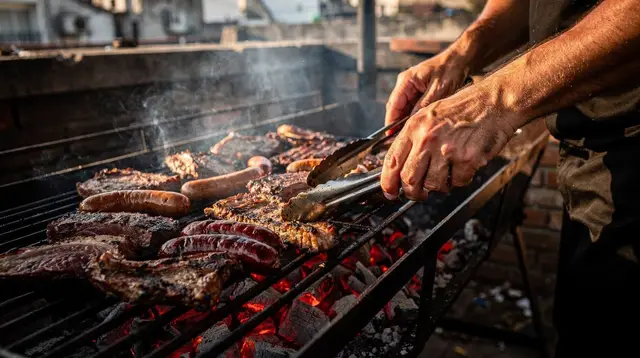
If you want a night out that doubles as an easy first taste of the city’s signature culture, I’d point you toward a tango dinner show with optional round-trip transport for one evening, and a gaucho day out with an asado barbecue for a taste of the pampas without organising it yourself.
For the Uruguay side, I booked a Montevideo day trip with lunch and ferry included rather than arranging the crossing piecemeal, and if you’d rather have the whole city covered in one go, a four-day Buenos Aires discovery package takes the sequencing decisions off your plate entirely.
How I’d String It All Together
I’m still not going to give you a fixed itinerary — how many days you have, what you’re into, and what the peso is doing that month all change the answer too much for a template to be honest.
What I’d do instead is start from a realistic day count (I’d lean toward the how many days in Buenos Aires piece over guessing), sketch a rough shape using the general itinerary framework, and then let the finished one-week itinerary or the four-day Buenos Aires and Uruguay combination do the heavy lifting once you know roughly how much time and budget range you’re working with. Get the airport, the neighbourhood, the SUBE card and the currency mindset right first — everything else genuinely does fall into place after that.
FAQ: Planning Your First Trip to Buenos Aires
Should I fly into EZE or AEP for Buenos Aires?
Almost every international flight from outside South America lands at Ezeiza (EZE), about 30-35 km south-west of the centre. Aeroparque (AEP) is for domestic and regional flights and sits inside the city near Palermo. If you’re arriving from Europe, the US or elsewhere overseas, you want EZE, not AEP.
How many days do I need in Buenos Aires?
I’d plan for at least four full days for the city itself, more if you want to add a day trip. It’s a big, flat, walkable city with distinct barrios, and rushing it defeats the point.
Which neighbourhood should I stay in?
Palermo, Recoleta and San Telmo are the three I’d actually consider for a first stay, each with a different character. There’s no universally correct answer; it depends on whether you want nightlife, calm elegance, or old-town atmosphere.
Do I need cash or a card in Buenos Aires?
You’ll want both. Urban transport requires a SUBE card, and Argentina’s currency situation has shifted often enough that I won’t quote a fixed rule about cards versus cash — check current guidance before you leave.
Is Buenos Aires expensive?
It varies a lot depending on the peso’s real value against your currency at the time, which has moved significantly and repeatedly. Think in euros or dollars, use ranges, and check a live exchange rate close to departure rather than trusting any number you read months in advance.
Should I add Tigre, Uruguay or Iguazú to my trip?
Tigre is an easy half-day or full day from the city. Uruguay (Colonia del Sacramento or Montevideo) is a genuine border crossing by ferry, worth a day or more. Iguazú Falls needs a roughly two-hour flight and is best treated as its own two-day trip, not a day excursion.
Can I plan Buenos Aires without speaking Spanish?
Yes, plenty of visitors do. It helps to know a few basics, and porteños speak rioplatense Spanish with its own accent and vos form, but English gets you through hotels, tours and most restaurants in the main visitor areas.
tours.Planning
Verified deep-linked GetYourGuide tours. Book through these links and we earn a small commission at no cost to you.
GetYourGuide does not provide a product photo for this activity — the image shows the meeting point, photographed by us.